
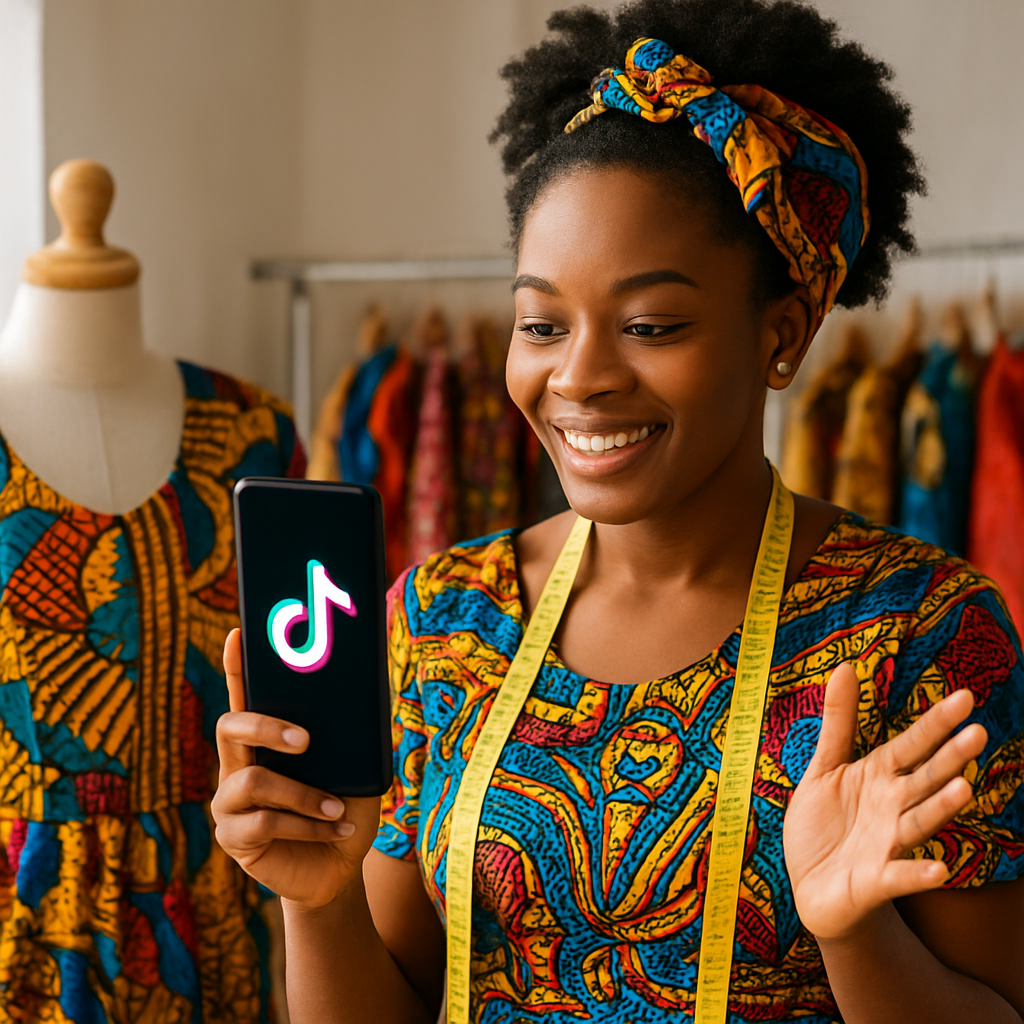
From Lagos studios to Nairobi street markets, African fashion designers are turning short-form video into global reach and revenue. TikTok’s For You feed removes the gatekeepers that once limited visibility to runway shows and glossy magazines, giving independent labels the chance to win attention with nothing more than a phone, good light, and a strong point of view. This article explains how African fashion brands use the platform as a full-funnel marketing engine—growing awareness, building trust, and driving sales—while navigating infrastructure realities, cultural nuance, and the fast pace of trend cycles.
Why TikTok is a growth engine for African fashion
TikTok offers a rare combination of discovery, virality, and cultural resonance that maps perfectly to fashion. The For You feed prioritizes content quality and viewer interest over follower counts, allowing emerging labels to break out with a single strong video. For designers across West, East, North, and Southern Africa—many of whom operate as lean teams—this means less dependency on paid media and more leverage from creativity.
Several structural factors make the platform especially potent:
- Discovery by design: The recommendation algorithm is tuned to fast feedback (watch time, rewatches, comments, shares). Niche content can find its micro-audience quickly, even without prior reach.
- Culture moves at TikTok speed: Fashion trends emerge from music, dance, and film; the platform’s audio-first format lets designers ride Afrobeats and Amapiano moments with styling and behind-the-scenes edits that feel native.
- Low production burden: A phone, natural light, and clear narrative often outperform polished studio shoots. This aligns with the bootstrap realities of many independent ateliers.
- Social search: Younger shoppers increasingly treat TikTok as a product and style search engine, typing queries like “Ankara prom dress,” “Nairobi thrift haul,” or “modest Eid outfits.” Optimizing for in-app search captures intent that used to be owned by Google and Pinterest.
If you want a sense of scale, consider that TikTok reports over a billion monthly active users worldwide. Independent benchmarks have consistently shown higher average engagement rates on TikTok than on traditional photo-first platforms; many brand accounts see mid-single to high-single digit engagement on short videos compared to low single digits on feed images elsewhere. TikTok-commissioned studies also suggest the platform drives discovery efficiently, with a clear share of users reporting that they have purchased a product after seeing it in a video. While figures vary by market and methodology, the throughline is unmistakable: attention converts when content is relevant and fast-moving.
From atelier to For You: the content blueprint that works
Fashion wins on TikTok when craftsmanship meets narrative. The best-performing African fashion accounts use a simple but effective creative skeleton.
1) Start with a hook in the first 2 seconds
- Hard cuts: Before/after transitions (fabric to finished look), “day-to-night” styling, or quick reveals with a swipe of the hand.
- Pattern power: Close-ups of kente, kitenge, bogolan, shweshwe, or aso-oke textures in the first frame grab attention instantly.
- Motion as magnet: A twirl that shows drape, slits, and lining detail beats a static pose every time.
2) Make the craft visible
- Time-lapses of cutting, darting, and stitching let viewers appreciate skill and labor, raising perceived value.
- Explain fit decisions: Why you chose box pleats, how you stabilized a neckline, where you matched prints—micro-education builds authenticity.
3) Lean into lifestyle and identity
- Occasion-led edits: Wedding guest looks, graduation fits, Eid ensembles, Heritage Day styling, or “Friday office to rooftop” transitions.
- Geo-tags and local color: A quick B-roll of Accra’s Makola Market or Cape Town’s Bo-Kaap anchors the brand in place and culture.
4) Use captions that search can understand
- Describe the garment and intent: “Handmade Ankara corset dress for weddings,” “Upcycled denim jacket Nairobi,” or “Modest abaya styling tips.”
- Add 2–4 relevant hashtags: Mix broad (#africanfashion, #madeinafrica) with specific (#ankaradress, #kenyanbrand, #plusstylesa). Avoid stuffing; clarity wins.
5) Audio strategy
- Trends are tools: Pair reveals with trending Afrobeats hooks; cut to the beat at transitions. Keep volume balanced so stitching or voiceover details remain audible.
- Original voice: Founder talk-throughs perform well. A calm 10–20 second explanation earns saves and comments from serious shoppers.
6) Access without over-polish
- Use natural light, 0.5x and 1x lenses, and vertical framing. Consistent, not perfect.
- Subtitles in English, French, Arabic, or Swahili depending on audience. Bilingual captions expand reach and signal inclusivity.
Track creative metrics that actually predict sales: 3-second view rate, average watch time, completion rate, and save-to-view ratios. These often correlate better with downstream conversion than likes alone.
Search, intent, and distribution: turning views into demand
TikTok is now a significant discovery surface for fashion intent. Designers who treat it like a hybrid of social feed and search engine win more qualified eyeballs.
- Write searchable captions: Use exact phrases shoppers type (“African print maternity dress,” “Xhosa inspired wedding attire,” “plus size Ankara two-piece”).
- Pin evergreen tutorials: “How to measure yourself at home,” “What to wear to a Nigerian traditional wedding,” or “Fabric 101: kente vs. kitenge” become assets that rank for months.
- Interlink with Pinterest and Instagram: Repurpose top TikToks as Reels and Idea Pins, using UTMs to see which platform actually drives checkouts.
Distribution compounds when you reply with video to common questions. Every Q&A becomes a mini-funnel that brings intent-rich viewers deeper into your catalog.
Community first: collaborations and cultural credibility
Audience is not just numbers; it’s a living community that validates style choices, sets norms, and spreads the word. African fashion brands grow fastest when they co-create with their ecosystem.
- Micro-creators: Work with stylists, MUAs, tailors, and campus ambassadors with 2–50k followers. Their trust with niche audiences often outperforms larger influencers.
- Spark Ads on UGC: Whitelist top creator posts and boost them as Spark Ads to scale what already resonates—social proof plus paid reach.
- Credit the hands: Shout out pattern cutters, bead artists, and dyers on-screen. Attributing labor differentiates artisanal brands from mass marketplaces.
- Diaspora bridges: Partner with creators in London, Paris, Toronto, and Atlanta who style African pieces for local climates and events. Cross-border relevance grows export sales.
Collaboration is also a safeguard. Shared audiences buffer you against trend volatility and platform algorithm shifts.
From attention to revenue: monetization pathways that fit African contexts
For many African designers, checkout happens off-platform or via a hybrid stack. Your goal is to reduce friction between inspiration and purchase:
- Link in bio: A one-page storefront with your bestsellers, size guides, and shipping calculator reduces DMs and speeds decisions.
- Messaging funnels: Many fans will click through to WhatsApp, Instagram DMs, or Telegram. Pre-build pricing menus, fabric catalogs, and measurement forms.
- Payments: Pair Shopify or WooCommerce with regional gateways (Paystack, Flutterwave, Peach Payments) and mobile money options (M-Pesa, MoMo, Orange Money). COD where reliable.
- Live shopping (where available): In markets where TikTok Shop or live checkout is piloted, use limited-time drops, exclusive colorways, and freebies to boost basket size.
- Pre-orders and micro-batches: Convert novelty into predictability. Accept deposits to finance fabric buys and schedule production windows.
Remember that not all revenue is instantaneous. High-intent saves and shares predict future purchases; email/SMS capture from TikTok traffic gives you owned channels to follow up with lookbooks, restocks, and size runs.
Paid growth on TikTok: amplify what already works
Ads don’t replace organic; they scale it. The most efficient campaigns start with winning content, then use paid to find more of the same audience.
- Formats: In-Feed Ads for scale, Spark Ads for social proof, TopView for tentpole moments (fashion weeks, Eid, festive season), and Lead Ads for size-guide downloads.
- Targeting: Start broad with interest clusters (fashion, weddings, streetwear) and lookalikes built from engaged viewers or purchasers. Layer with language and geo if shipping is limited.
- Creative testing: Rotate 5–10 hooks, 3 angles (craft, styling, social proof), and 2 lengths (9–15s; 20–35s). Kill underperformers fast; feed winners with budget.
- KPIs: Hook rate (3s VTR), hold (avg watch time), CTR, add-to-cart rate, CVR, and ROAS. Optimize to value, not just clicks.
Benchmarks vary by market and season, but many African brands report efficient CPMs relative to North America and Europe, especially when creatives feel native. Always install the TikTok Pixel or Events API so you can attribute revenue accurately, suppress recent purchasers, and train delivery toward profitable buyers.
Data discipline: measure, learn, and iterate
Creative momentum without measurement wastes budgets. Build an analytics rhythm:
- Daily: Hook rate, comments by theme (sizing, pricing, shipping), top saves.
- Weekly: Content cohorts (BTS vs reveal vs tutorial), best posting windows, audio impact.
- Monthly: Revenue attribution by content type, cross-platform halo (search spikes, direct traffic), and repeat purchase indicators.
Use UTMs on every link variant, sync events to your CRM, and run periodic holdout tests (pause boosting for a week on one SKU) to estimate organic lift. The goal is a feedback loop where creative decisions are informed by commerce outcomes, not just aesthetics.
Operations: delivering after you go viral
Viral demand without fulfillment is a reputation risk. Build light but resilient operations that match TikTok’s volatility:
- Inventory and materials: Keep core fabrics and trims in stock; standardize zippers, linings, and interfacing to speed replenishment.
- Sizing systems: Publish consistent charts, add try-on videos for key sizes, and collect measurements via forms that integrate with your CMS.
- Quality control: Show your QC steps on TikTok—measuring seams, checking hems, steam finishing—both as proof and as content.
- Shipping: Use reliable couriers for export (DHL, Aramex) and aggregate local delivery partners for domestic. Share honest timelines in captions and DMs.
- Returns and alterations: Offer paid alterations at cost; a transparent policy can turn a near-return into a long-term fan.
Brand safety, IP, and cultural stewardship
Fashion is culture, and culture deserves respect. Protect your work and honor your sources:
- Design protection: Watermark subtly, archive process files, and publish dated sketches for provenance.
- Music licensing: Prefer TikTok Commercial Music Library for ads; get written permission when using artists’ tracks in paid campaigns.
- Pattern ethics: When drawing from specific ethnic textiles or ceremonial dress, acknowledge origins and collaborate with artisans where possible. Transparency strengthens authenticity and shields against backlash.
Regional playbooks across the continent
Africa is not a monolith; adapt your content and commerce stack to local realities while speaking to the diaspora.
- West Africa (Nigeria, Ghana): Bold prints, celebratory occasions. WhatsApp sales funnels are standard. Consider drop calendars around wedding seasons and December homecoming.
- East Africa (Kenya, Tanzania, Uganda): Strong thrift/upcycling and streetwear scenes. Emphasize sustainability stories and price transparency.
- Southern Africa (South Africa, Botswana): Cross-over street-luxe aesthetics. Retail pop-ups and market collabs convert TikTok audiences into IRL fans—document both.
- North Africa (Morocco, Egypt, Tunisia): Modest fashion and craftsmanship-led storytelling. Bilingual Arabic/French captions widen reach; shipping into EU is a lever.
- Global diaspora: Climate and occasion differ—offer styling for winter layers, prom/homecoming, and festival circuits. Size inclusivity is non-negotiable.
The power of narrative: founders as media
Founder-led accounts punch far above their weight on TikTok. When the designer speaks to camera about inspiration, sourcing, or a client story, retention climbs. This is the heart of storytelling—a human voice that turns aesthetics into meaning. Rotate between three recurring pillars:
- Why we made this: Problem, inspiration, and craft.
- How to wear it: Styling for multiple occasions and body types.
- Who it’s for: Customer spotlights and testimonials filmed naturally.
Traffic choreography: cross-platform and retail synergy
TikTok rarely works in isolation. Pair it with platforms that excel at different jobs:
- Instagram: Catalog feel and DMs; Carousel size guides; Reels for repurposed hits.
- Pinterest: Long-tail search for occasionwear; evergreen pins from TikTok tutorials.
- YouTube Shorts: Longer tutorials and studio diaries with deeper watch time.
- Offline: Pop-ups and markets filmed as content; QR codes on tags linking to try-on playlists.
90-day execution plan for an independent label
Use this practical roadmap to move from zero to compounding results.
Days 1–30: Foundation and cadence
- Audit: Define 3–5 content pillars (BTS craft, reveals, tutorials, testimonials, culture moments).
- Setup: TikTok Business account; Pixel/Events API; link-in-bio storefront; FAQ highlights.
- Production: Film 30–45 assets in one weekend; batch-edit; schedule 5 posts/week.
- Measurement: Track hook rate, saves, comments; catalog FAQs to answer with video.
Days 31–60: Optimization and early paid
- Creative sprints: Rapid A/B tests on hooks, audio, and captions.
- Influencers: Seed 10 micro-creators; request usage rights for Spark Ads.
- Paid: $10–$50/day Spark Ads on top 3 organics; target broad interests.
- Monetization: Launch pre-order for viral SKU; streamline WhatsApp menus.
Days 61–90: Scale and systemize
- Pipeline: Weekly studio days; monthly lookbooks; quarterly drops aligned to festivals and wedding peaks.
- Community: Host a TikTok Live Q&A and a styling challenge; feature customers.
- Attribution: UTM discipline; cohort analysis by content pillar; ROAS-based budgeting.
- Operations: Lock supplier SLAs; standardized sizing videos; returns/alterations playbook.
Sustainability and ethics as growth levers
Consumers increasingly value responsible fashion. African brands have authentic stories to tell about local sourcing, artisan partnerships, and upcycling. Turn these into concrete proof:
- Material traceability: Show fabric origins and artisan partners; demonstrate dye techniques safely.
- Waste reduction: Film pattern nesting, offcut scrunchies, or patchwork capsules.
- Longevity: Tutorials on garment care—washing wax prints, steaming, storage—reduce returns and build trust.
Metrics that matter: moving beyond vanity
Likes feel good; profitability pays bills. Build a dashboard that ties attention to revenue:
- Top-of-funnel: 3s VTR, average watch, comment quality.
- Mid-funnel: Profile views-to-follows, link clicks, size guide downloads.
- Bottom-of-funnel: Add-to-cart rate, checkout initiation, CVR, AOV, repeat purchase rate.
- Economics: Blended CAC, LTV/CAC ratio, and contribution margin after shipping and returns.
When a video spikes saves and comments but not checkouts, capture emails with a lookbook or waitlist and re-market later. Not every hit is a same-day sale—it can be a seed for the next drop.
Common pitfalls and how to avoid them
- Over-editing: High-gloss montages often underperform. Keep the hand-made feel.
- Hashtag soup: Ten broad tags dilute intent. Use a few precise ones that match searcher language.
- Ignoring DMs: Treat DMs as warm leads. Scripts, voice notes, and quick videos close faster than text alone.
- Stockouts without alternatives: Always suggest similar items, pre-order timelines, or colorways.
- Silencing criticism: Thoughtful replies turn skeptics into advocates and signal maturity.
Future forces: what’s next for social-first African fashion
The landscape keeps evolving, and designers who adapt early keep their edge:
- AR try-ons: Face and body effects, even basic ones, help buyers imagine fit and pattern scale.
- AI assistance: Drafting captions, trend scouting, and even pattern ideation. Human taste remains the differentiator.
- Live commerce: Real-time drops with limited SKUs and countdown timers; VIP lists for early access.
- Cross-border e-commerce: Diaspora demand remains a growth engine; streamline duties calculations and delivery promises upfront.
- Social search: Expect more users to start their outfit hunt on TikTok; double down on intent-rich captions and tutorials.
A strategic summary for marketers
Success on TikTok for African fashion brands rests on a few durable principles. Make the craft visible and the person behind it relatable. Optimize for search as much as for serendipity. Turn attention into owned audience and predictable sales with funnels that fit local payments and logistics. Use paid media to pour fuel on proven creative, not to compensate for weak content. Above all, guard your cultural capital—co-create with artisans and fans, credit your sources, and let your authenticity compound.
When executed well, this approach creates a virtuous circle: creative videos attract the right viewers, the right viewers become customers, customers become co-creators, and co-creators power the next wave of trends. In that loop lie the core levers of modern fashion growth—community, storytelling, precise hashtags, smart collaboration, rigorous analytics, and continuous conversion. For African designers ready to play the long game, TikTok is not just a stage; it is an engine that turns cultural momentum into measurable conversion and brand equity.