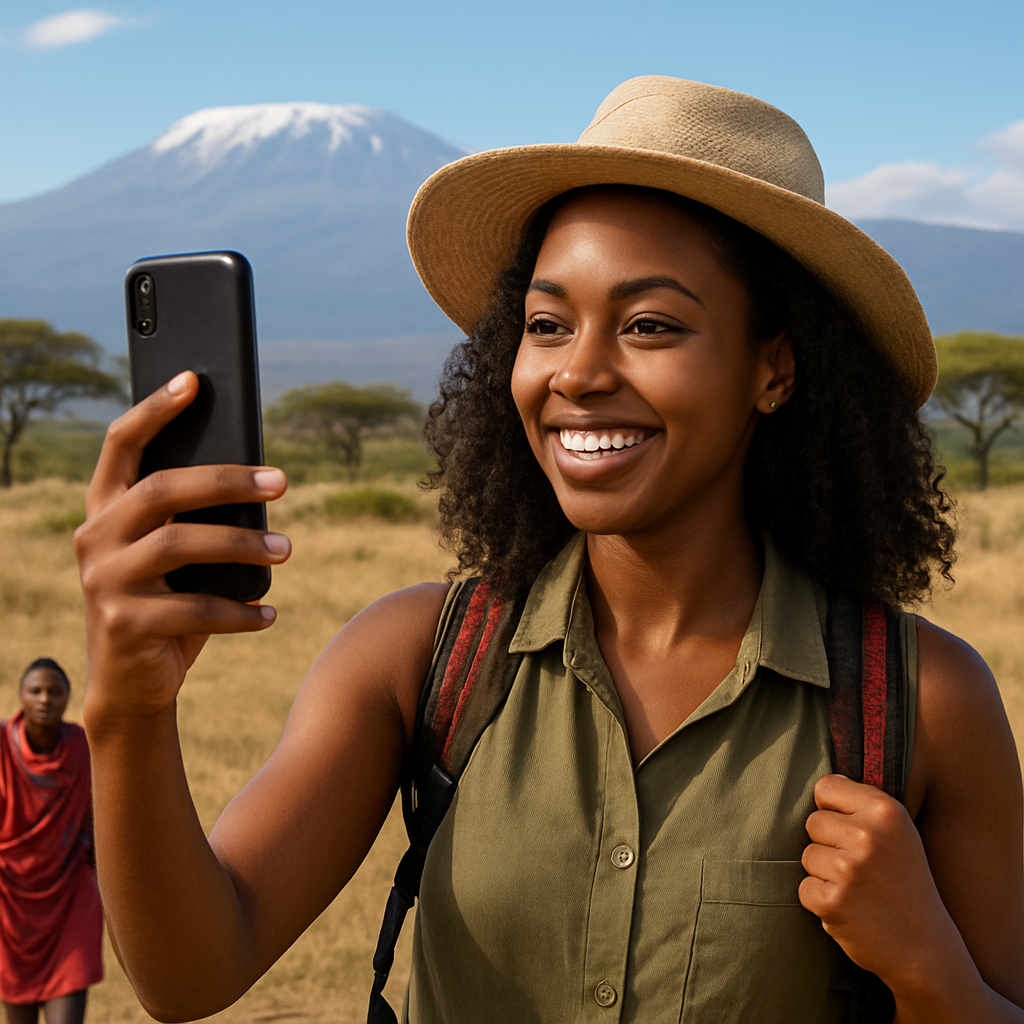
African travel creators have become some of the most persuasive marketers on the continent, translating lived experience into bookable demand and reshaping what global travelers expect from safaris, city breaks, coastal escapes, and cultural journeys. They do more than post beautiful images; they build trust at scale, reduce uncertainty about lesser-known destinations, and connect fragmented local suppliers to world markets. For tourism boards, airlines, hotels, and tour operators, the result is a new performance channel that blends cultural fluency with algorithmic reach—and a chance to rewrite the narrative of African travel from the inside out.
The rise of African travel creators as market makers
The creator economy has matured into a global performance engine, with industry estimates placing influencer marketing spend around $24 billion in 2024. Within Africa, creators have stepped into a gap long dominated by foreign media, bringing local voices to the fore and expanding what counts as a “must-see.” Reports from UNWTO indicate Africa has been among the world’s fastest-recovering regions for international tourism since 2022, approaching pre-2019 arrival levels by 2023. That rebound has coincided with the regional acceleration of short-form video and creator-led discovery, making creators both a mirror and a motor for renewed demand.
Mobile access is the backbone. GSMA and DataReportal analyses show smartphone adoption and social media use rising steadily across the continent, with roughly one in four Africans using at least one major social platform and urban hubs well above that average. Nigeria, South Africa, Kenya, Egypt, Morocco, Ghana, and Tanzania cluster as creator hotspots where Instagram, TikTok, YouTube, and X (Twitter) audiences are large enough to consistently move the needle for tourism. Even where connectivity is uneven, creators stitch together multi-platform strategies—publishing high-fidelity video to YouTube and TikTok while nurturing bookings and service through WhatsApp and email.
What sets African travel creators apart is not only aesthetics but authenticity. They speak the languages of their audiences, relate local prices and planning hacks, and spotlight family-run lodges, community conservancies, street food vendors, and upstart tour operators rarely seen in glossy brochures. That groundedness trains algorithms to surface their content globally and trains travelers to expect fresh, real-time guidance—especially in destinations that have historically suffered from underexposure.
Platforms, formats, and the new rules of reach
The platform stack is diverse, but a few patterns hold:
- Instagram and TikTok for top-of-funnel inspiration: Reels and TikToks capture attention with vertical video, transitions, and first-person voiceover. Carousel posts break down itineraries, budgets, and safety tips, while Stories and Lives handle Q&A and time-sensitive offers.
- YouTube for depth and long-tail discovery: 8–20-minute videos rank for “best things to do,” “two-week itinerary,” or “hidden beaches” queries months after upload, functioning like evergreen mini-documentaries. Chapters, timestamps, and geotagging drive search and suggested-video traffic.
- Blogs and newsletters as durable assets: Well-structured destination guides with schema markup, internal links, and fast-loading images feed Google Discover and organic search. Email newsletters convert repeat readers into bookers and enable creator-led flash sales.
- WhatsApp and Telegram for service and community: Private groups act as micro forums for safety updates, real-time trip advice, and waitlists for limited-capacity experiences.
Short-form video remains the attention frontier. Platform benchmarks often show micro and mid-tier creators delivering 3–5x higher engagement than mega accounts because their audiences are tighter and more topic-aligned. Creators who master on-screen hooks, subtitle design, and “first frame storytelling” routinely outperform ad buys with similar budgets, particularly when they combine local knowledge with cinematic editing.
Language and cultural fluency multiply visibility. Francophone creators open gateways to Senegal, Côte d’Ivoire, Morocco, and Tunisia; Lusophone voices elevate Angola, Mozambique, and Cape Verde; Amharic and Arabic creators grow Ethiopia and Egypt; English- and Swahili-speaking storytellers expand East and Southern African circuits. Diaspora audiences—eager for reconnection trips—respond strongly to heritage content, festivals, and food narratives that feel both familiar and new.
From inspiration to itinerary: turning views into bookings
Creators move audiences through a full purchase journey:
- Discovery (attention): A 15-second TikTok of a cliffside hike in KwaZulu-Natal, a drone pass over the Quirimbas Archipelago, or a street food crawl in Accra catches the eye.
- Consideration (education): The follow-up carousel or YouTube guide answers cost, safety, seasonality, connectivity, visas, and transport—reducing friction and risk.
- Decision (action): A link-in-bio drives to a landing page, itinerary builder, or discounted package; a WhatsApp button connects to a DMC; a creator-affiliate code unlocks an exclusive perk.
- Loyalty (advocacy): Post-trip UGC gets reshared; buyers join the creator’s community for future deals, reviews, and referrals.
Strong creative is only half the job; the rest is engineered conversion. Effective tactics include custom booking pages with creator branding, pre-filled itineraries (“Cape Town 4-day food + hike”), FAQs addressing precisely what the video comments asked, flexible payment options, and transparent T&Cs. On-platform formats—Branded Content Ads on Instagram, Spark Ads on TikTok, and YouTube’s product tagging—extend organic reach with paid support, keeping the creator’s face and social proof intact while running through the brand’s ad account for targeting and frequency control.
Measurement, data, and proving performance
What you measure shapes what you get. Campaigns that rely solely on last-click reports will understate influence, because discovery seldom equals the final click. A blended approach is crucial:
- Link hygiene: UTM parameters on every link; creator-specific landing pages; QR codes for offline activations; shortlinks unique to each platform.
- Attribution: Compare assisted conversions in GA4, use view-through attribution in platform dashboards, and run incrementality tests with holdout geographies or audiences.
- Offer tagging: Track creator-coded perks (“AFRICA15”) at the booking engine; reconcile with revenue by date and channel.
- Survey intercepts: “Where did you first hear about us?” prompts on confirmation pages pick up dark social and multi-device journeys.
- Cost logic: Compute eCPE (effective cost per engagement), eCPC (click), and eCPA (acquisition) alongside creator fee + media + production to reveal true blended performance.
Creators should have access to first-party data signals that help them iterate: audience geography, watch-time heatmaps, retention dips, click-through to bio, and conversion by creative variant. When brands reciprocate—sharing which scenes correlate to bookings—creators adjust intros, CTAs, and sequencing. That is how influencer marketing becomes a reliable growth channel with demonstrable ROI, not just a line item for awareness.
Narratives that are reshaping demand
Influencers don’t just sell rooms or flights; they sell ideas about how to travel Africa. A few storylines consistently convert:
- City-first itineraries: Lagos nightlife, Nairobi coworking safaris, Cape Town art districts, Kigali coffee culture, and Dakar design studios expand beyond the safari-only trope.
- Coastal loops: Island-hopping in Zanzibar and Mafia, surf weeks in Taghazout, dhow safaris in Mozambique, or kitesurfing in Dakhla appeal to adventure‑leisure hybrids.
- Culinary pilgrimages: Suya trails in Nigeria, injera mastery in Ethiopia, South African wine routes, and Tunis medina tastings emphasize flavor-led travel.
- Heritage and diaspora reconnection: Ghana’s “Beyond the Return,” Senegal’s island histories, and coastal museums transform remembrance into curated, respectful travel.
- Conservation-forward safaris: Community conservancies in Kenya and Namibia, rewilding projects in South Africa, and birding circuits in Uganda and Rwanda align curiosity with impact.
- Budget clarity: “$50 a day in Stone Town” or “How to see Victoria Falls under $300” breaks down costs with receipts and route maps, lowering entry barriers.
These lenses work because they braid practical guidance with storytelling. A creator who lives an itinerary on camera, costs it transparently, and introduces the people behind the experience shifts a destination from abstract to inevitable.
Sustainability, equity, and the creator’s responsibility
Creator influence cuts both ways. Done right, it builds livelihoods, funds conservation, and disperses demand away from saturated hotspots. Done poorly, it strains ecosystems and sidelines local suppliers. The most respected creators now treat sustainability as non-negotiable and show their work: carbon-light transport choices, waste awareness, slow-travel pacing, and partnerships with community-owned lodges or guides. They price transparency into packages so that travelers see who gets paid, and they elevate underrepresented voices both on camera and behind it.
Equity includes fair creator compensation, too. African creators frequently report lower offers than peers elsewhere for equivalent deliverables, despite equal or higher performance. Brands that correct this imbalance and commit to longer-term partnerships reap compounding benefits: better audience rapport, faster feedback loops, more efficient content production, and reduced creative risk.
The operating system: how destinations and brands should work with creators
The best collaborations feel like co-productions, not one-off posts. A practical workflow:
- Discovery and vetting: Move beyond follower counts. Examine audience geography, comment quality, save/share rates, and buyer signals (e.g., “DM me the driver’s number”). Ask for anonymized booking screenshots when possible.
- Briefing: Clarify objectives (awareness vs sales), key proof points (visa on arrival, new nonstop routes, safety track record), must-film experiences, and no-go claims. Provide a shotlist, yet leave space for serendipity.
- Co-creation calendar: Sequence teasers, hero content, and post-trip FAQs over 6–10 weeks. Align with events, festivals, new flight launches, or shoulder seasons to smooth demand.
- Creative freedom + factual guardrails: Encourage experimentation with formats; require source-checked facts for pricing, conservation claims, and cultural sites.
- Rights and usage: Negotiate paid usage windows for ads and owned channels; keep editorial independence intact. Consider revenue shares on packages the creator helped design.
- Service design: Ensure rapid response on WhatsApp or chat for leads from creator links; add a creator-friendly landing page with live availability and local payment options.
- Measurement: Predefine KPIs by funnel stage; set up UTMs, pixels, and unique offers; schedule mid-campaign reviews to pivot what’s not working.
- Aftercare: Capture UGC from actual travelers; collect NPS; retarget attendees with complementary trips; invite repeat co-creation.
Local supply chains and creator-led product design
One of the most impactful shifts is creators building and curating actual trips. They bundle drivers, guesthouses, guides, and experiences into priced itineraries, then sell through affiliates, OTAs, or their own checkout pages. This improves distribution for small suppliers and stabilizes quality because the creator’s reputation is on the line.
Examples include Lagos-to-Accra road trips with curated music venues, Namibia overlanding circuits with rental partners, and Swahili Coast retreats with women-led boat crews. When these packages succeed, creators spin up seasonal editions, recruit alumni as ambassadors, and bring in sponsors—airlines for seats, banks for co-branded cards, or handset makers for content production support.
Risk, realism, and brand safety
Every campaign needs a risk plan. Topics include:
- Safety and accuracy: Verify medical, visa, and transport claims; avoid geotagging fragile sites; blur nesting locations or sacred places.
- Crisis playbooks: Prewrite statements for weather events, political unrest, or health advisories; maintain a pause-and-pivot protocol for scheduled posts.
- Disclosure and compliance: Follow platform and local advertising laws; disclose partnerships clearly; avoid unfair comparative claims.
- Usage of drones and permits: Creators should obtain flight permissions; brands should support compliance with fees and guides who know the rules.
- Creator well-being: Contracts should include rest days, insurance, and emergency contacts; ethical storytelling requires consent and context.
What the numbers say (and what they don’t)
Across markets, surveys consistently show that more than half of consumers have purchased after seeing creator content, and that people trust recommendations from individuals more than from brand accounts. In tourism, that trust intersects with high-stakes decisions—safety, logistics, and value—making credible creators unusually persuasive. Africa’s travel sector, which accounted for roughly 6% of the continent’s GDP before the pandemic according to WTTC estimates, benefits as creators lower friction and expand the map of “known” places.
However, numbers can mislead if measured shallowly. Vanity metrics such as views and likes often fail to capture intent. Savvy teams watch saves, shares, comment quality, DMs, mailing list growth, time on site from creator referrals, and repeat purchases. Proper tagging of multi-touch journeys reveals how creator content influences searches, metasearch clicks, and even offline travel agent inquiries. This is where disciplined community management and CRM integrations pay off.
Emerging trends to watch
- Creators as DMCs: Established voices formalize operations—hiring local fixers, contracting transport, and carrying liability insurance to scale multi-country trips.
- Diaspora-first marketing: Targeted campaigns during holiday windows and cultural festivals convert pent-up demand for reconnection journeys.
- Language localization: Subtitling in Arabic, French, Portuguese, Swahili, and Amharic massively expands reachable audiences for the same asset.
- AI-assisted editing and planning: Faster cuts, multilingual captions, itinerary generators, and dynamic pricing recommendations boost output and relevance.
- AR and experiential previews: Lightweight filters to “try on” safari lodges or museum wings; 3D maps of hiking routes embedded in Reels.
- Live commerce for travel: Limited drops—“10 seats, travel in 90 days, visa-ready only”—sold during a 30-minute live with FAQs and instant deposits.
Practical checklist for high-performing campaigns
- Define success by stage: awareness (reach, saves), consideration (site time, email signups), conversion (bookings), loyalty (UGC volume).
- Map the funnel and assets: 3 short videos + 1 longform + 2 carousels + 1 live Q&A + emails + landing page with creator code.
- Instrument everything: UTMs, pixels, call tracking, unique codes, post-purchase surveys.
- Empower fast iteration: Two creative variants minimum; mid-flight optimization; community questions turned into content within 48 hours.
- Align offer with content: If the video sells sunrise dhow sails, the landing page leads with that, not generic room types.
- Plan distribution: Organic + creator-allowlisted ads; retarget viewers; syndicate to YouTube Shorts, Pinterest, and blog recaps.
- Guarantee response: Under two hours on WhatsApp/DM during campaign surge windows; local language support where possible.
- Close the loop: Share booking feedback with the creator; build sequel content from real traveler footage.
Why this moment matters
Travel stories have always shaped where people go. The difference now is speed, scale, and who holds the mic. African travel creators compress inspiration and logistics into handheld episodes that convert doubt into decisions. They expand markets by clarifying costs, modeling safety, and foregrounding local hosts. They professionalize the sector by connecting small suppliers to global demand and professional standards. And they help re-balance narratives of the continent—not through slogans, but through a thousand granular scenes filmed on market streets, in bush camps, at ferry docks, and on mountain trails.
For brands and destinations, the mandate is clear: invest in creator ecosystems, not one-offs; prize authenticity over polish when they conflict; let data and traveler feedback, not vanity metrics, steer spending; and anchor every campaign to measurable traveler value. Do this well, and you’ll find that creator-led marketing doesn’t just fill rooms or seats—it builds long-term community, more resilient demand, and a more inclusive story of African travel that benefits hosts and guests alike.