
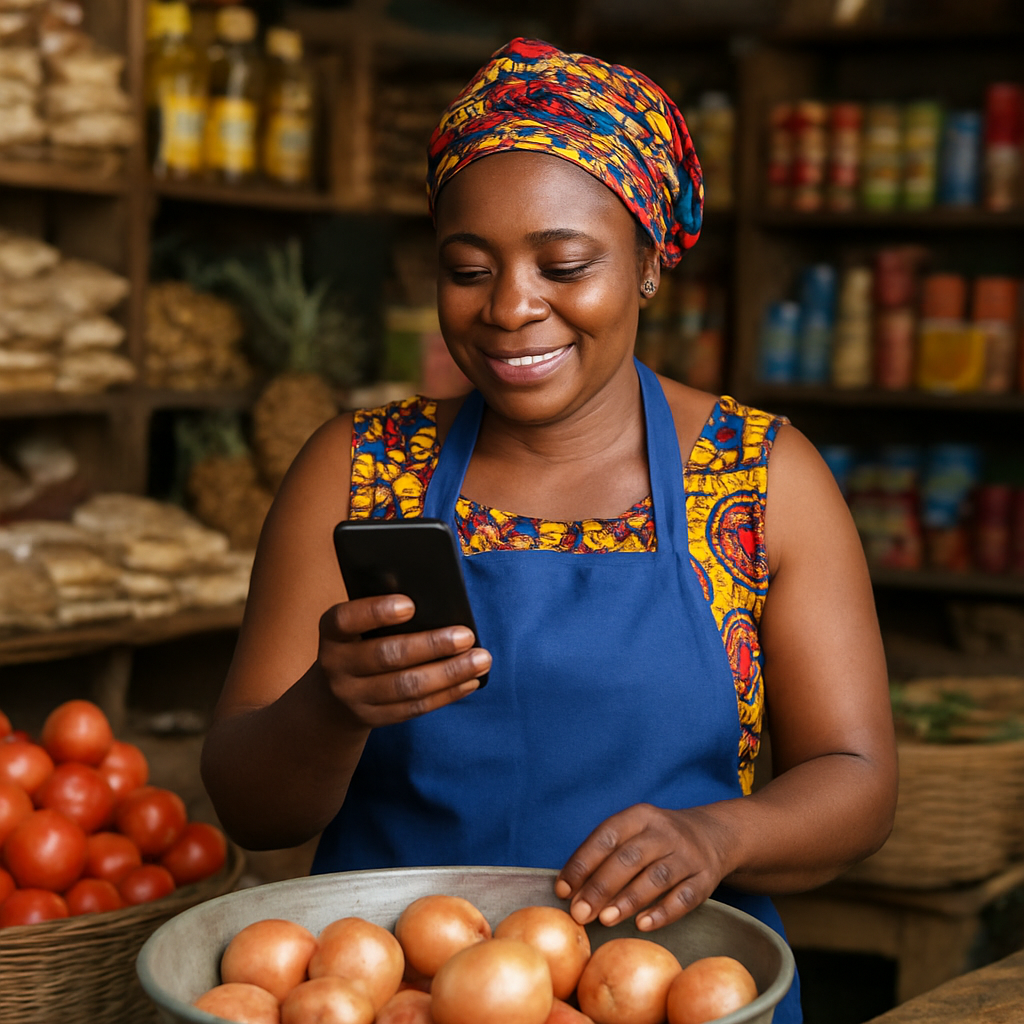
African grocery markets are reinventing everyday commerce with a blend of street‑level ingenuity and practical digital tooling. From open-air stalls and spaza shops to urban minimarkets and regional wholesalers, merchants are leaning into chat apps, mobile money, and lightweight analytics to sell more efficiently, reach beyond foot traffic, and strengthen customer loyalty. This transformation is not a copy‑paste of Western ecommerce; it is a localized, mobile-first, message-driven playbook that adapts to patchy logistics, multilingual communities, and the realities of cash‑constrained households. The result is a distinctive model of internet marketing where conversations often replace shopping carts, and discovery happens as much in WhatsApp groups as in search engines.
The Digital Context: Mobile-First Commerce, Cashless Momentum, and Social Discovery
Digital adoption in African retail begins with the phone. According to multiple GSMA analyses, smartphone adoption across Sub‑Saharan Africa has been roughly half of all mobile connections and is projected to pass 60% mid‑decade, while SIM penetration overall remains high. Internet access is uneven by region and income, but the arc bends steadily upward, and most online browsing happens on handheld devices. That means grocery marketing strategies start where the shopper already is: chat apps, short video, local groups, and map listings rather than desktop websites.
Payments have moved from experimentation to habit. GSMA’s State of the Industry reports show global mobile money transaction value topping the trillion‑dollar mark annually, with Sub‑Saharan Africa contributing the majority of that volume. In Kenya alone, M‑Pesa counts more than 30 million active users, and similar rails—MTN MoMo, Airtel Money, Orange Money—anchor everyday transactions in West and Central Africa. This normalizes digital settlement for low-ticket grocery baskets and creates a data trail for remarketing, credit scoring, and loyalty.
Social platforms function as the aisle and the billboard. Meta announced in 2023 that WhatsApp Business surpassed 200 million monthly users, and African grocers have embraced it as a storefront, CRM, and promotions engine. E‑commerce still represents a small slice of total retail—typically under 3% in Africa—but social commerce and direct messaging compress awareness, evaluation, and purchase into a single thread. In practice, an Instagram reel or TikTok short sparks interest, a click-to-chat ad opens a WhatsApp conversation, a price list or catalogue seals the decision, and the order is paid via mobile money for pickup or courier delivery.
Despite progress, structural constraints shape behavior. Data costs remain high relative to income in many markets; electricity outages and weak last‑mile logistics complicate delivery promises; languages and informal settlements challenge geo‑addressing. Merchants that win combine digital speed with physical convenience: pickup lockers at markets, curbside collection, partnerships with motorcycle couriers, and location pins shared directly inside chat threads.
Urban, Peri‑Urban, and Rural Patterns
Urban grocers skew toward platform diversification—Google Business Profile for discovery, Facebook and Instagram for storytelling, WhatsApp for conversion, and aggregator apps for delivery. Peri‑urban stores often prioritize community WhatsApp groups, radio tie‑ins, and affordable flyer distribution with QR deep links to chat. Rural merchants rely more on voice calls, USSD and SMS for ordering, and scheduled delivery days; digital marketing here emphasizes reliability and continuity over flash promotions. Across all three, referrals and reputation—neighbors vouching for fresh produce and fair weights—drive conversion more than sleek websites.
Core Digital Tools Shaping Grocery Marketing
WhatsApp Business as Storefront and CRM
For many merchants, WhatsApp Business is the entire funnel. Catalogues with images and prices replace product pages; labels and quick replies function as a CRM; broadcast lists support recurring offers to segmented groups (e.g., fruit box subscribers vs. office snack buyers). Click‑to‑WhatsApp ads on Facebook and Instagram remove friction for shoppers with inconsistent mobile browsers, and message templates allow stores to confirm orders, share payment QR codes, and request reviews without reinventing the wheel each time.
- Use catalogue groups: fresh produce, proteins, pantry, household, seasonal.
- Automate FAQs: delivery windows, payment methods, substitutions, refund policy.
- Pin location with a map link; request customers to pin theirs for accurate delivery.
- Encourage voice notes for older customers or in low‑literacy contexts.
Short Video and Micro‑Influencers
Short video humanizes routine groceries. A 20‑second clip of tomatoes arriving at dawn, a behind‑the‑scenes of hygienic meat prep, or a “budget basket under $5” resonates more than generic banners. Micro‑influencers—trusted neighborhood food bloggers, delivery bikers, or community organizers—convert better for local stores than celebrity endorsements. Paid boosts can be targeted by radius to avoid wasting impressions outside delivery zones.
Search, Maps, and Review Surfaces
Shoppers often search “butcher near me,” “fresh fish [neighborhood],” or “24h mini‑mart.” A complete Google Business Profile—categories, hours, phone, WhatsApp link, product highlights, photos, and consistent NAP details—ranks well in map packs. Encourage photo reviews and practical tips (“call ahead for goat offal on Fridays”). Even when websites exist, they should be lightweight and fast, with click‑to‑chat as the primary call‑to‑action.
USSD, SMS, and Voice
Not every customer uses smartphones. USSD menus allow basic reordering (“press 1 for staples, 2 for produce”) and balance checks for store credit. SMS reminders—“milk restocked,” “delivery van in your area at 5pm”—are cost‑effective. IVR hotlines route calls to staff, record orders in simple CRMs, and send payment prompts via mobile money. These channels widen reach without excluding feature‑phone users.
Payment Rails and Trust Signals
Mobile money QR codes at point of delivery, links sent in chat, and agent-assisted payments reduce cash handling. Matching the name on the payment prompt to the store name builds credibility. E‑receipts help returns, and loyalty points tied to wallet IDs simplify accrual. In card‑centric markets, low‑cost POS terminals create an omnichannel footprint that’s still reconciled in a single ledger.
Lightweight POS and Inventory
Modern POS apps that run on Android devices track line items, automatically update stock, and generate day‑end reports. Many integrate with payment providers and support SKUs through barcode scanning or image search. The operational win is clarity: which items drive margin, which expire unsold, and which combos fuel weekday baskets. B2B procurement platforms also digitize replenishment, offering price transparency, bulk discounts, and scheduled drop‑offs.
Marketplaces and Delivery Partners
Listing on aggregator platforms extends reach during key events (holidays, match days) when shoppers prefer one app to compare offers. Delivery partners—on‑demand motorbikes in cities, scheduled vans in peri‑urban zones—turn digital demand into fulfilled orders. Partner pages should emphasize reliability, not just price: cut‑off times, substitution policy, and live ETA links to reduce customer anxiety.
A Practical Internet Marketing Playbook for Grocers
Acquire: Be Discoverable Where People Already Spend Time
- Map presence: Complete Google Business Profile; add WhatsApp link; upload fresh photos weekly.
- Neighborhood groups: Join or sponsor WhatsApp and Facebook groups; post weekly “fresh today” lists.
- Short video: Two or three 15–30s clips per week; focus on freshness, bargains, hygiene, and staff personalities.
- Click‑to‑chat ads: Hyper‑local radius targeting; optimize for message replies, not link clicks.
- QR everywhere: Stickers on the counter, delivery bags, and motorbikes leading to chat or catalogues.
- Offline boosts: Flyers with USSD codes and first‑order vouchers; community radio shout‑outs with memorable codes.
Convert: Make It Effortless to Ask, Decide, and Pay
- Menu clarity: Categorize items, show price per unit and by bundle (e.g., 3‑item stew pack).
- Trust badges: Hygiene certificates, “weigh‑in on camera” offers, staff names and photos.
- Fast quotes: Prebuilt replies for “total with delivery to [area]” plus payment options.
- Bundling: Curate budget baskets by cuisine (jollof set, ugali set) or dietary needs.
- Timers: Limited‑time offers aligned to spoilage windows to reduce waste and signal value.
- Seamless payment: Mobile money links, QR codes, and cash‑on‑delivery when appropriate.
Retain: Turn One‑Off Buyers into Regulars
- Broadcast lists: Weekly restock alerts and recipe tips to segments (families, students, offices).
- Loyalty: Points on all digital payments with USSD balance checks; free delivery at milestones.
- Subscriptions: Produce boxes or breakfast packs delivered on fixed days with easy pause options.
- Service recovery: Proactive make‑good vouchers when items are out of stock or delayed.
- Community: Invite reviews and user photos; feature “customer of the week.”
Measure: Prove ROI with Simple, Actionable Metrics
- Acquisition: Cost per initiated chat, chat‑to‑order conversion, first‑order value.
- Retention: 30/60/90‑day repeat rate, average order value by segment, churn drivers.
- Channel mix: Revenue share by WhatsApp, walk‑in, marketplace, and phone orders.
- Basket insights: Top 10 SKUs by margin, attachment rate of add‑ons (sauces, spices, bags).
- Operational: On‑time delivery rate, substitution acceptance rate, refund rate.
Measurement must respect privacy rules (POPIA in South Africa, Kenya’s Data Protection Act, Nigeria’s NDPR, and others). Avoid storing unnecessary personal data; anonymize aggregates; and secure devices that hold transaction histories.
Tactics for Low‑Bandwidth, Low‑Budget Realities
- Compress media: Small, vertical videos with captions; image collages over heavy carousels.
- Progressive web apps: If a site is needed, ensure it loads quickly on entry‑level Android phones.
- Scheduled posts: Publish when audience is likely to be on free or discounted data packs.
- Power resilience: Keep a power bank for the cashier phone; print QR codes for offline continuity.
- Redundancy: Offer both chat and voice ordering; maintain two mobile money SIMs to mitigate outages.
Case Snapshots from the Continent
Kenyan Kiosk Network Going From Cash Only to Chat First
A cluster of neighborhood kiosks in Nairobi digitized the morning fresh list with WhatsApp Business catalogues. Orders arrive before 9 a.m., bundled baskets help inventory turnover, and M‑Pesa QR at drop‑off reduces reconciliation headaches. On Saturdays, short TikTok clips featuring “market‑to‑mat” produce tours drive foot traffic and preorders for Sunday stew essentials.
South African Spaza Shop Building Habit with Subscriptions
A township spaza used a simple Google Business Profile plus recurring WhatsApp broadcasts to launch a weekly breakfast pack (milk, bread, eggs) subscription with optional add‑ons. Card acceptance via low‑cost POS and bank transfers for new employers in the area broadened payment options. In‑app loyalty points (tracked by phone number) subtly nudged shoppers from ad‑hoc purchases to routine baskets.
Nigerian Mini‑Mart Winning on Micro‑Influence and Local Delivery
In Lagos, a mini‑mart partnered with a local food vlogger and two delivery riders popular on TikTok. The creators posted authentic, low‑production clips of limited‑time bargains and 30‑minute delivery challenges. Click‑to‑WhatsApp ads within a 5‑km radius filled the evening slot with office workers ordering pantry top‑ups, while NQR and bank transfers settled payments quickly at the door.
From Informal to Instrumented: Using Data Without Drowning in It
Small stores face the paradox of too little and too much information. The path forward is to collect only what improves decisions and customer experience:
- SKU truth: Track stockouts and expiration to fine‑tune purchasing.
- Time windows: Learn peak messaging times and delivery choke points.
- Offer performance: Tag each promotion in chat with a code to attribute redemptions.
- Segment light: Families, students, offices—three or four buckets are enough.
- Feedback loop: After each order, ask one quick question: freshness, price, or speed?
Simple dashboards—daily sales, top SKUs, on‑time deliveries—beat complex BI projects. The goal is smarter replenishment, tighter offers, and fewer surprises, not vanity metrics.
Building Trust: The Real Currency of Digital Groceries
Trust is the hinge on which digital grocery turns. First‑time buyers worry about bait‑and‑switch quality, false weights, and delivery no‑shows. Merchants can disarm these fears with transparency and redundancy: show today’s stock on video, allow live weigh‑ins, publish fair substitution rules, and provide human names alongside store profiles. Payment transparency—matching merchant names on wallet prompts, immediate e‑receipts, clear refund windows—further reduces perceived risk.
Community endorsements carry more weight than polished creative. A neighbor’s review in a WhatsApp group, an elder’s shout‑out on community radio, or a religious leader’s recommendation after an event can out‑convert paid ads. Digital tools amplify this social proof; they do not replace it.
Challenges and Practical Workarounds
High Data Costs and Patchy Connectivity
Solution: prioritize chat and ultra‑light media, leverage free or subsidized data windows, and keep offline fallbacks (printed price lists with USSD codes). Offer voice ordering for low‑literacy segments and use missed‑call callbacks to reduce customer costs.
Last‑Mile Logistics and Addressing
Solution: share location pins, confirm landmarks via chat, and cluster deliveries by neighborhood windows. Partner with motorcycle couriers during peaks, and default to pickup for frozen items unless insulated transport is guaranteed.
Fraud, Chargebacks, and Privacy
Solution: verify large orders with short video or OTP, use wallet names that match store branding, and keep communications inside platforms customers recognize. Train staff on privacy basics and device security; a lost phone with open chat threads is a data breach.
Seasonality and Price Volatility
Solution: prebuy staples when feasible, communicate transparent price changes, and create flexible bundles that absorb temporary spikes. Content calendars should reflect feast days, school terms, and harvest cycles.
What’s Next: Voice Commerce, Vernacular AI, and Connected Cold Chains
Three near‑term shifts will matter most. First, voice commerce inside chat apps will unlock ordering for millions who prefer speaking to typing; vernacular speech‑to‑text and voice bots tuned to local accents will be essential. Second, lightweight AI will help classify incoming messages, suggest reply templates, and auto‑build baskets from free‑text shopping lists. Third, connected cold‑chain solutions—solar freezers, inexpensive temperature loggers, and courier incentives for insulated transport—will widen assortments and reduce spoilage, improving both margins and nutrition.
Payments will continue to converge. National QR schemes and instant bank rails will complement mobile money, creating more choice at checkout and lower fees. Digital IDs and interoperable wallets can streamline onboarding and loyalty, while open‑banking style mandates gradually increase competition and reduce friction for merchants.
Checklist: Launch or Upgrade Your Digital Grocery Presence in 30 Days
- Day 1–3: Register or update Google Business Profile; shoot 10 fresh photos; set up WhatsApp Business with categories and quick replies.
- Day 4–7: Produce three short vertical videos; print counter QR and delivery bag stickers; join two local groups with admin consent.
- Day 8–14: Pilot click‑to‑chat ads within a 3–5 km radius; define delivery windows; document substitution and refund policy.
- Day 15–21: Launch one weekly basket; set up loyalty points via mobile money IDs or USSD; start a simple spreadsheet dashboard.
- Day 22–30: Partner with two micro‑influencers; run a referral offer; review metrics and refine menus, pricing, and promos.
Key Takeaways
- Conversations convert. For many shoppers, a quick message replaces a long checkout.
- Local proof beats glossy ads. Reviews and group recommendations drive trust.
- Start light, iterate fast. Catalogues, QR codes, and broadcast lists deliver 80% of the value.
- Measure what matters. Focus on repeat rate, on‑time delivery, and SKU profitability.
- Blend digital with physical. Pickup options, clear delivery windows, and visible hygiene standards close the loop.
Across the continent, the grocery aisle is becoming a chat thread, the scale is a phone camera, and the cash drawer is a wallet app. Merchants that master messaging, master grocery ecommerce. By aligning tools to realities—short video for freshness, map listings for discovery, mobile money for settlement, and community groups for social proof—African grocers can grow beyond their street corner while staying rooted in the neighborhoods they serve.
Glossary of high‑impact terms used in this article: mobile, WhatsApp, payments, data, logistics, inventory, SEO, USSD, omnichannel, trust.