
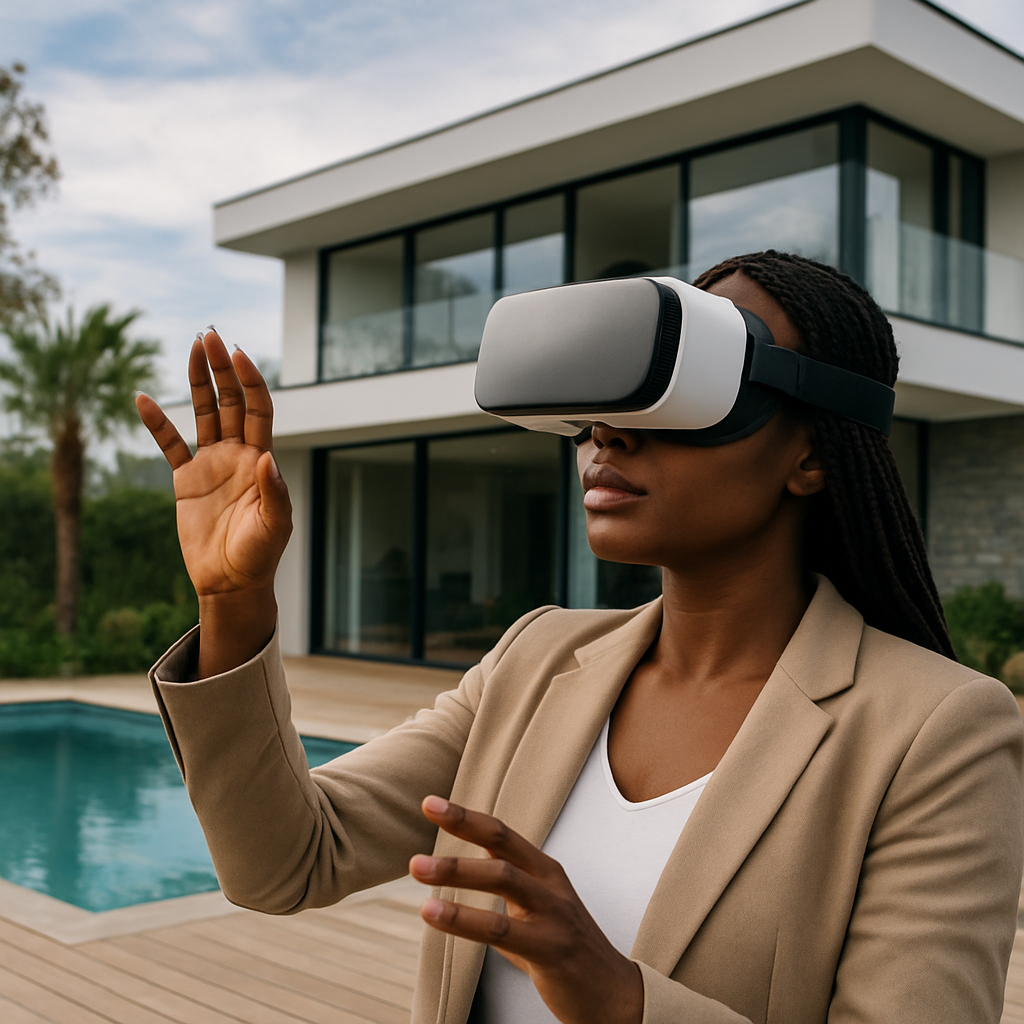
A wave of immersive media is reshaping how homes are researched, compared, and purchased across Africa. Virtual tours—360-degree walkthroughs, 3D “digital twins,” and guided video tours—are moving from novelty to necessity as urbanization accelerates, the diaspora fuels cross-border demand, and brokers compete for attention on mobile-first channels. For real estate marketers, the question is no longer whether to use virtual tours, but how to deploy them at scale to drive qualified leads, cut time-to-sale, and earn vendor mandates while operating within bandwidth, device, and regulatory realities unique to the continent.
Market Signals: Why Virtual Tours Fit the African Property Journey
Several trends have converged to make virtual tours especially potent in Africa’s property market:
- Urbanization and new supply: Rapid urban growth in cities like Lagos, Nairobi, Accra, Cairo, Casablanca, and Johannesburg intensifies competition for buyers and renters, requiring richer content to differentiate listings and reduce wasted site visits.
- Mobile-first research: Many buyers and tenants complete most of their search on smartphones. GSMA’s 2023 report notes smartphone adoption in Sub-Saharan Africa passing the 50% mark, while mobile internet usage remains below global averages—meaning tours must be optimized for smaller screens and variable bandwidth.
- Diaspora demand: The World Bank estimates remittances to Sub-Saharan Africa at roughly $54 billion in 2023, much of which ultimately supports housing and property investment. Virtual tours help diaspora buyers and family decision-makers evaluate options remotely and build trust.
- Time and cost pressures: Traffic congestion, security considerations, and long travel distances make physical viewings expensive. Virtual tours pre-qualify interest, cutting no-show rates and enabling tighter schedules for serious buyers.
Global and local data support the marketing value of immersive content. The National Association of Realtors (U.S.) has repeatedly found that around half of recent buyers consider virtual tours “very useful,” with floor plans rated even higher. Google has reported that business listings with photos and a virtual tour are about twice as likely to generate interest on Search and Maps—an effect that carries over to property discovery on mobile. Vendors such as Matterport report large uplifts in on-page time, return visits, and lead submissions when 3D tours are embedded on listings; while results vary by market and execution, the direction is consistent: deeper engagement correlates with more qualified inquiries.
Crucially, virtual tours do not replace site inspections. They filter and focus them—improving calendar utilization for agents, reducing site access burden for occupied properties, and giving out-of-town and diaspora buyers confidence to place conditional offers faster.
Formats That Work: From 360 Photos to Full 3D Digital Twins
“Virtual tours” span a spectrum of production complexity and bandwidth needs. Each format has a fit depending on your audience, price point, and channel strategy:
- 360 photo slideshows: Panoramic images linked room-to-room. Lightest in file size, fastest to produce, good for rentals and affordable listings. Ideal for WhatsApp sharing and portal embeds where heavy scripts are discouraged.
- Guided video walkthroughs: Stabilized, narrative videos hosted on platforms like YouTube. Excellent for social ads and remarketing; easy to caption in multiple languages. Less interactive but highly compatible with low-end devices.
- 3D digital twins (scan-based): Room-scale capture creates a spatial model with measurement tools and dollhouse views. Premium feel for new developments and luxury resales; supports hotspots for floor plans, finishes, mortgage calculators, and booking CTAs.
- Hybrid “lite twins”: Photo-based 3D flows that mimic scan tours while keeping bandwidth modest. A good compromise when connectivity is inconsistent.
Hardware and software choices are broadening. Entry-level 360 cameras now cost a few hundred dollars; many modern smartphones can capture quality panoramas, and some platforms offer smartphone capture modes. For African markets with cost sensitivity, a mixed kit—smartphone for rentals and 360 camera for premium stock—often delivers the best affordability.
On the delivery side, prioritize progressive loading, adaptive resolution, and content delivery networks (CDNs) with African edge nodes or strong peering (Johannesburg, Nairobi, Lagos, Casablanca, Cairo). Provide a “data saver” toggle and be explicit about data sizes at the tour start. For portals that restrict scripts, render a poster image with a clear “View 360” button that opens a lightweight web app, and always provide a fall-back photo gallery.
How Virtual Tours Power the Digital Funnel
Virtual tours touch every stage of the marketing funnel—from first impression to signed offer—if you plan them deliberately.
Awareness: Own search and social with immersive assets
- SEO: Add schema.org structured data (VideoObject, ImageObject) for tours and embed them near primary photos. Include neighborhood and landmark keywords in captions and hotspot titles. Faster pages rank better; avoid heavy embeds above the fold on slow connections.
- Google Business Profile: Developers and agencies with local offices can post tours and videos to showcase showrooms and model units. Google has published evidence that listings with tours see more profile interactions, which spills over to web sessions.
- Social discovery: Short vertical clips stitched from 360s perform well on Reels, Shorts, and TikTok. Lead with view, light, and layout; add a location hashtag and price range. Retarget viewers with the full tour in a carousel or link ad.
Consideration: Let buyers self-qualify in-depth
- On-site engagement: Surface a “Start 3D tour” CTA above the photo gallery. Add hotspots for floor plans, finish schedules, building amenities, and neighborhood highlights (transport links, schools, hospitals, markets).
- Lead capture: Embed tap-to-call, WhatsApp chat, and a short form inside the tour. Many African buyers prefer messaging first; a visible WhatsApp entry point often lifts conversion on mobile.
- Guided versions: Offer a 60–90 second narrated “auto-play” for impatient visitors and a full interactive version for explorers. Include an upfront “data size” notice to set expectations.
Conversion: Move from interest to commitment
- Scheduling: Integrate a viewing scheduler—virtual-first if occupants are present—then in-person for shortlisted units. Auto-confirmations via SMS/WhatsApp reduce no-shows.
- Pre-qualification: Link to mortgage calculators, affordability checks, or developer payment plans from inside a hotspot. The closer these tools are to the moment of excitement, the higher the form completion rate.
- Offers: For off-plan sales, allow “reserve this unit” workflows combined with escrow or reservation fees via mobile money where legally and operationally supported.
Evidence and Benchmarks: What the Numbers Suggest
Because property types and channels vary widely, treat benchmarks as directional. Still, several reference points are useful:
- Buyer expectations: NAR surveys over recent years show about half of homebuyers rate virtual tours as “very useful,” with floor plans near the top of desired features. This aligns with African buyer behavior observed on portals: detailed imagery reduces casual inquiries.
- Listing discovery: Google has reported that businesses with photos and a virtual tour are roughly twice as likely to generate interest on Search and Maps. Real estate pages benefit similarly when immersive media appears in rich snippets and social previews.
- Vendor-reported lift: Matterport and other providers cite 2–3x longer on-page times and higher return-visit rates for listings with interactive tours. While not independently verified in every market, African agencies frequently report fewer wasted site visits and faster decision cycles.
- Bandwidth reality: GSMA data place Sub-Saharan smartphone adoption at over 50%, with mobile internet users under a third of the population. This underscores the need for adaptive resolution, compression, and multi-format publishing.
A grounded approach is to A/B test: split similar listings or audiences, run a control without a tour and a variant with a tour, and track lift in qualified inquiry rate, calendar-show rate, and offer rate. In many cases, even a modest increase in inquiry quality pays for the production cost quickly by reducing staff time and days-on-market.
Implementation Blueprint: From Capture to CRM
Marketers who succeed with virtual tours plan for production, performance, and measurement together. A lean yet comprehensive process looks like this:
- Pre-production
- Define the buyer persona: diaspora investor, young professional renter, family upsizer—each needs a slightly different story and call-to-action.
- Map the route: Entry → living areas → kitchen → bedrooms → bathrooms → balcony → amenities → exterior. Keep transitions logical.
- Prepare the property: Declutter, light well, stage lightly. Consider AI staging for empty rooms, disclosed clearly to maintain compliance with advertising rules.
- Capture
- Use a tripod for 360s; maintain consistent camera height around 1.4–1.6 m for natural perspective.
- Shoot during daylight; avoid mixed color temperatures. Capture a few short videos for social teasers.
- Collect building context: lobby, gym, pool, rooftop, street frontage, and nearby transit stops.
- Post-production
- Color-correct and stitch panoramas; export multiple resolutions.
- Add hotspots to floor plans, brochures, and financing info. Include subtitles for narrated content in English, French, Arabic, and a regional language where relevant.
- Compress aggressively; offer a “Lite” version under 20–30 MB where possible.
- Publishing and distribution
- Host on a CDN-backed platform; generate script and no-script embed options.
- Embed above the fold with a static hero image fallback; add structured data and descriptive ALT text for images.
- Share a short link via SMS/WhatsApp and generate QR codes for print ads, yard boards, and showroom posters.
- Syndicate to portals that support 360s; where unsupported, include a clear “View 360 tour” link in the description.
- CRM and lead handling
- Connect tour forms to your CRM; tag all tour-origin leads with UTM parameters.
- Send instant WhatsApp or email responses with the tour link, brochure, and viewing scheduler.
- Prioritize callbacks for high-intent actions (e.g., measurement tool usage or repeat tour sessions).
Performance Measurement: Instrument Everything
You cannot improve what you don’t measure. Set up unified tracking early:
- Event design: Track tour_start, hotspot_click, time_in_tour, form_open, form_submit, whatsapp_click, schedule_viewing, and repeat_visit events in GA4 or your analytics stack.
- Attribution: Use UTM parameters consistently across ads, portals, and QR codes. Model incremental lift by comparing conversion-to-viewing and viewing-to-offer rates for listings with and without tours.
- Key KPIs to monitor:
- Qualified inquiry rate (inquiries meeting budget/criteria ÷ total inquiries)
- Viewing-to-offer rate
- Days-on-market (median) by listing type and neighborhood
- Agent time per closed deal
- Return-visit share and assisted conversions
To articulate ROI, compare total tour program costs (capture, hosting, ad spend) to incremental gross margin from faster sales cycles and higher close rates. Even a small lift at high-value price points materially impacts profitability and reinforces your market differentiation.
Channel Tactics Tailored to Africa
Distribution determines impact as much as production quality. Focus on the channels your audience truly uses:
- Property portals: Many leading African portals accept 360 content or external links in the description. For those that don’t, pin the tour at the top of the description, add a QR to gallery images, and direct visitors to your site for the full experience.
- Meta and YouTube: Run short tour clips as lead-gen ads with instant forms or WhatsApp objectives. Optimize thumbnails for small screens, and keep first three seconds motion-rich.
- WhatsApp-first sales: Share a compact “Lite” tour plus price, floor plan, and a voice note. Catalog features via WhatsApp Business. Automate FAQs but escalate quickly to a human agent to protect retention.
- Google Search: For high-intent keywords (e.g., “2-bedroom apartment Ikoyi 3D tour”), use sitelinks pointing directly to the tour, floor plan, and booking page.
- Offline-to-online: In showrooms and at property fairs, use tablets with cached tours and large QR codes so visitors can revisit later and share with family decision-makers.
Design for Bandwidth, Devices, and Languages
Success hinges on real-world constraints:
- Bandwidth: Offer multiple quality tiers and a “Play Lite” default for cellular visitors. Preload only the first panorama, then stream on demand. Indicate approximate data usage up front to respect prepaid users.
- Devices: Test on low-end Android phones and older iPhones common in your market. Ensure smooth gyroscope controls for 360s and big, thumb-friendly CTAs.
- Accessibility: Add keyboard navigation, captions for narration, and high-contrast UI. Accessibility improves overall usability and signals quality.
- Localization: Provide copy in English and French for West and Central Africa; Arabic in North Africa; Swahili in East Africa; Amharic or local languages where relevant. Multilingual captions expand reach and accessibility.
Trust, Safety, and Compliance
Immersive media magnifies both credibility and risk. Safeguards are non-negotiable:
- Seller consent and redaction: Obtain written consent for virtual capture. Blur personal items, photos, license plates, and valuables. Avoid capturing detailed security systems.
- Truth in advertising: Disclose AI staging, wide-angle corrections, or stitched lawns. Mismatches erode trust and lead to chargebacks or complaints.
- Data privacy: If you collect user data in South Africa, comply with POPIA; in Nigeria, NDPR; and consider GDPR for EU-resident diaspora leads. Secure storage and encryption are essential.
- Fraud prevention: Watermark tours minimally and route payments through verified channels. For rentals, warnings about deposit scams belong in the tour description.
Use Cases Across the African Property Landscape
- New developments: Market multiple unit types efficiently. Attach payment plans, construction timelines, and sample finishes in hotspots. For off-plan, update tours as phases complete to maintain buyer confidence.
- Affordable housing and rentals: 360 photo sets and guided videos offer strong value with very low data footprints. Self-qualification inside the tour reduces site traffic and improves staff productivity.
- Commercial and industrial: 3D twins excel at showcasing ceiling heights, loading bays, and power capacity. Measurement tools accelerate fit-out decisions and lease negotiations.
- Student and co-living: Fast turn cycles benefit from templated tours and checklists. Emphasize shared amenities and commute times to universities and CBDs.
- Hospitality crossovers: Short-stay apartments and branded residences use the same assets for OTA listings and direct bookings, improving channel profitability.
Team and Workflow: Build Once, Use Everywhere
The winning operational pattern is consistent:
- Central standards: Define capture specs, editing rules, quality tiers, and metadata templates. Consistency compounds brand equity and search performance.
- Repeatable distribution: An internal “tour launch” checklist ensures every listing gets the same SEO, social, portal, and CRM treatment.
- Agent enablement: Train agents to present tours on mobile, handle WhatsApp-first leads, and schedule showings from inside the tour. Tool adoption drives scalability.
- Continuous testing: Rotate thumbnails, first-panorama angles, CTA language, and load order. Small UI tweaks often deliver big conversion lifts.
Cost, Pricing, and Monetization Models
Budgets vary, but a few patterns help:
- Capex-light start: Begin with smartphone 360 apps and a mid-range 360 camera. Upgrade to LiDAR or scan-based solutions for premium stock as ROI becomes clear.
- Hosting and tools: Expect per-listing or per-seat pricing; negotiate volume discounts. Favor platforms with local or well-peered CDNs.
- Packaging: Offer tiered media bundles to sellers—photos-only; photos + 360; full 3D + video + paid distribution. Anchor value on faster sales and fewer disruptions to occupants.
- Internal ROI: Track days-on-market and agent hours saved. Fewer wasted trips convert directly into margin and better client reviews, aiding retention and referrals.
Common Pitfalls and How to Avoid Them
- Heavy tours on weak networks: Always provide a Lite option and defer non-essential assets. Show a data estimate up front.
- Unclear CTAs: Tours should not be museums. Place “Book viewing,” “WhatsApp agent,” and “Check financing” within one thumb reach.
- Isolated assets: A tour that lives only on a vendor site misses value. Cross-link everywhere and track with UTMs.
- Poor mobile UX: Test with real users on low-end Androids. If pinch/zoom is jittery or buttons are tiny, you’re losing leads.
- Over-staging: If on-site reality disappoints, you’ve burned the customer. Transparent notes preserve credibility.
What Leading Teams Do Differently
Organizations that convert tours into revenue share several habits:
- They align storytelling to buyer pains: commute, utility reliability, security, and community amenities—especially important in African metros.
- They embed financing early: payment plans and mortgage partners appear inside the tour, not buried on a separate page.
- They treat analytics as product feedback: hotspots with low clicks get reworded, repositioned, or removed to reduce friction and enhance analytics.
- They repurpose relentlessly: one capture yields a full 3D tour, a short vertical video, carousel images, a floor-plan PDF, and a QR code poster.
- They invest in training: agents rehearse remote showings and screen-share tours for diaspora families, building confidence and trust.
The Road Ahead: AI, LiDAR, and Data-Driven Selling
Several developments will further boost virtual tours in African markets:
- Smarter capture: Wider availability of LiDAR-equipped phones and AI de-noising will lift quality while keeping costs workable.
- AI staging and personalization: Tasteful, disclosed AI staging plus automated highlight reels tailored to renter vs. buyer profiles will increase engagement.
- Lead scoring: Heatmaps of tour interactions—what rooms get attention, which hotspots convert—will inform agent outreach and even developer unit mix.
- Closer BIM tie-ins: For new builds, linking 3D twins to construction data will let marketers update finishes, availability, and views in near-real time.
- Payments and identity: Integrated KYC and escrow partners will make “reserve now” flows safer across borders, vital for diaspora investors.
As connectivity, devices, and buyer sophistication improve, virtual tours will shift from differentiator to baseline expectation across more price bands. The marketers who win will be those who design for real-world bandwidth, bake in clear CTAs, measure the right outcomes, and syndicate content across every channel that matters—from portals and search to WhatsApp and print via QR codes.
Above all, virtual tours are a means to an end: building trust faster, helping people visualize life in a space, and compressing the timeline from discovery to decision. By combining immersive storytelling with disciplined distribution and measurement, real estate teams in Africa can turn tours into a durable competitive edge—one that scales with inventory, performs across devices, and meets buyers where they already are.