
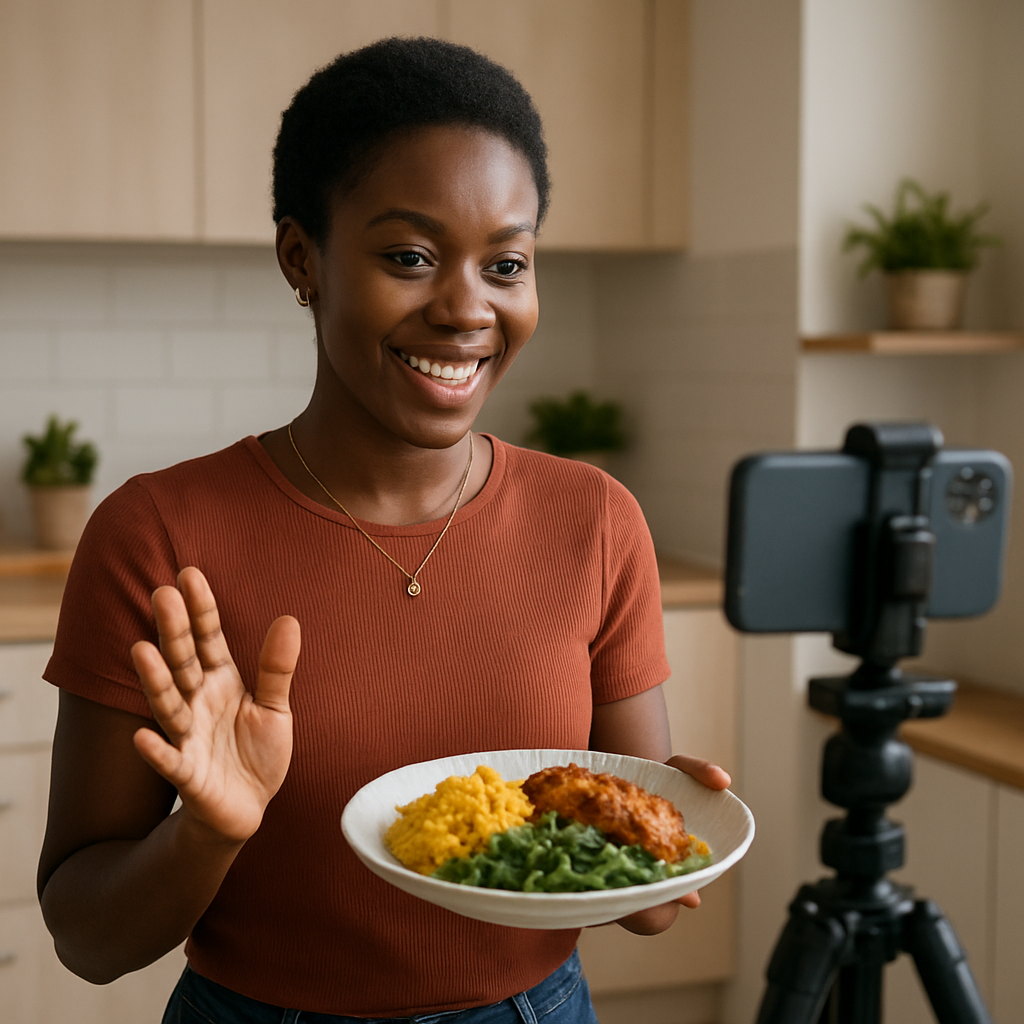
A new generation of African creators is reshaping how people discover, cook, and buy food online. From bustling city markets to home kitchens, online food influencers now act as culinary guides, neighborhood critics, and commerce catalysts—often at the same time. Their recipes and reviews travel on short-form video, their recommendations move orders on messaging apps, and their identities fuse culture with entrepreneurship. For marketers, this shift is more than a trend: it is a structural change in how attention, trust, and transactions flow across the continent’s digital economy.
The Digital Context: Platforms, Penetration, and Purchasing Power
Understanding the rise of online food influencers in Africa begins with mobile and social fundamentals. Sub‑Saharan Africa has been a mobile-first internet market for over a decade, and smartphones continue to expand access. Industry forecasts around 2024–2025 placed smartphone adoption in Sub‑Saharan Africa near the 50% mark, with mobile broadband coverage far ahead of usage—signaling a persistent “usage gap” that price-sensitive content and zero-rated platforms try to narrow. DataReportal’s Digital 2024 reports indicated hundreds of millions of internet users across Africa and roughly the low‑to‑mid hundreds of millions of social media accounts, with penetration still well below the global average. That gap, however, is precisely why upside remains high: many countries are still early on the S‑curve of social adoption and creator monetization.
TikTok, Instagram Reels, and YouTube Shorts dominate short-form discovery, while YouTube and Facebook remain durable homes for longer storytelling and community building. WhatsApp Business sits in a category of its own: part CRM, part storefront, and part logistics layer. For food specifically, this platform mix has a unique effect—people discover a dish on short video, save it on Instagram or YouTube, then buy ingredients or place an order via WhatsApp. In metropolitan areas, on-demand delivery services complete the loop; in peri-urban and secondary cities, pickup and community delivery groups (for example, riders coordinated in messaging groups) fill the last mile.
Cost and convenience are critical. Data-light video formats, captions, and regionally relevant music help content break into high-scroll contexts. Creators often localize recipes for budget and availability, swapping imported ingredients for seasonal produce and heritage staples. This adaptation isn’t merely creative flair—it’s a conversion tool that translates aspiration into action under real constraints.
Finally, money must move. Sub‑Saharan Africa remains the global epicenter of mobile money: GSMA’s State of the Industry on Mobile Money has repeatedly found that the region accounts for the majority share—around 70%—of global mobile money transactions by value. That infrastructure underpins a surge in small-ticket digital commerce and creator payments (tips, subscriptions, classes, and affiliate commissions), enabling food influencers to monetize audiences that traditional ad markets once overlooked.
Why Food Wins Online: Culture, Community, and Conversion
Food is a universal entry point with hyper-local flavors, and African creators have turned that combination into digital currency. Several factors explain why food content outperforms many categories:
- Authenticity and intimacy: Cooking takes place in everyday spaces—kitchens, courtyards, street stalls—where creators reveal personality and context. This proximity deepens trust, a key predictor of whether viewers try a recipe, visit a vendor, or buy a recommended ingredient.
- Visual immediacy: Short-form clips of sizzling suya, jollof “sizzles,” injera platters, bunny chow fillings, or koeksisters being glazed are inherently watchable. Captions in local languages and code-switching between English, French, Arabic, Swahili, Yoruba, isiZulu, or Amharic increase reach across audiences.
- Search and shelf life: While short-form provides virality, YouTube, blogs, and Pinterest-like platforms offer evergreen discovery for “how to make X” searches. A single high-quality tutorial can generate views and affiliate sales for months.
- Local price signaling: Creators who show current market prices for tomatoes, onions, peppers, or protein help audiences plan. That practical orientation boosts actionability and gives brands room for timely promotions (“this week’s combo pack”).
- Cross-border appetite: The African diaspora fuels intercontinental demand for nostalgic flavors and modern takes on classics. Diaspora audiences lift CPMs and cross-border e-commerce, while at-home audiences validate cultural credibility—an advantageous dual market for creators and brands.
For marketers, these dynamics translate into additive performance effects. Global benchmarks (e.g., Influencer Marketing Hub) have reported average earned media value and ROI improvements versus traditional digital ads, often citing a return above 5:1 when campaigns are well-targeted and measured. While market-by-market results vary, the mechanism holds: optimized creator selection and offer design compress the distance from inspiration to conversion, particularly when checkout is possible in a messaging app or via a delivery partner.
The Influencer Playbook for Food Brands and Retailers
Winning with African food influencers demands a structured yet flexible approach—one that respects local context and platform nuance. Below is a practical framework:
1) Audience and Creator Mapping
- Segment creators by scale and role: nano (1–10k), micro (10–100k), mid-tier (100k–1M), macro (1M+). Micro creators often outperform on cost per engaged viewer and are ideal for localization and A/B testing.
- Classify archetypes: recipe educators, street-food explorers, nutrition coaches, budget shoppers, gadget reviewers, farmers’ market guides, and delivery critics. Match archetype to your product’s use case.
- Map language clusters and diaspora links. A Senegalese Wolof-French creator in Dakar may over-index among Paris and Brussels audiences; a Swahili-English creator in Nairobi often reaches Tanzanian and diaspora communities in London or Minneapolis.
2) Creative Strategy
- Embrace “teach, taste, transact.” Tutorials earn saves, tastings earn credibility, and clear calls-to-action earn sales. Keep CTAs platform-native: “Reply ‘menu’ on WhatsApp” or “use code MARKETDAY on the delivery app.”
- Design for thumb-stopping first seconds: texture shots, sizzling audio, budget breakdown overlays, or a myth to debunk (“Can you really make egusi for under 1,000 NGN today?”).
- Balance aspiration and access. Showcase premium ingredients but offer substitutions. Provide portioning tips for families and batch-cooking for students.
- Optimize aspect ratios and captions for data-light viewing. Add bilingual captions when targeting mixed-language metros.
3) Offer Architecture
- Bundle for outcomes: “Jollof Starter Pack,” “Street-BBQ Kit,” “Ramadan Essentials,” “Plant-based Week.” Outcome bundles simplify choice and improve basket size.
- Time sensitivity: coordinate with pay cycles, market days, and holidays. Flash bundles with limited quantities work well when paired with live streams or Stories.
- Loyalty hooks: stamp cards in WhatsApp, creator-exclusive discount tiers, or “friends and family” referral codes.
4) Measurement and Attribution
- Track multi-touch behavior: from a Reel view to a WhatsApp inquiry to a POS redemption. Use unique promo codes per creator and per platform.
- Define funnel KPIs: reach, 3s/AVOC views, saves, DMs, menu requests, add-to-cart, first orders, repeat orders, and UGC volume.
- Lift tests: geo-split campaigns (creator runs content in City A vs. holdout City B), or sequential rollouts.
- Quality signals: comment sentiment, “I tried it” replies, and photo replies in DMs are leading indicators of future ROI.
5) Compliance and Safety
- Ad disclosures: In South Africa, the Advertising Regulatory Board’s social media code expects clear markers like #ad or equivalents. Nigeria’s ARCON has tightened oversight of digital ads; when in doubt, pre-clear major creative and ensure disclosures are visible.
- Claims and nutrition: avoid unsubstantiated health claims; provide ingredients and allergy information when recommending packaged foods.
- Children and HFSS considerations: be cautious targeting minors with high fat, sugar, or salt items; follow local standards where applicable.
Commerce Rails: From View to Value
The most successful creators operate not only as media channels but also as commerce orchestrators. Several monetization pathways stand out:
- Affiliate and promo codes: Low-friction overlays for groceries, cookware, appliances, and condiments. Codes double as attribution anchors.
- WhatsApp ordering: Persistent chat threads become living storefronts. Catalogs handle SKUs; payment links offer mobile money or card; broadcast lists deliver weekly menus.
- Delivery integrations: In cities served by delivery platforms, creators run limited-time menus in collaboration with local kitchens or cloud kitchens. Time-boxed drops heighten demand and reduce operational strain.
- Classes and subscriptions: Paid cooking lessons, weekly meal plans, nutrition coaching, or behind-the-scenes content on member platforms. Micro-subscriptions can be priced for local affordability.
- Productization: Spice blends, sauces, frozen meals, or cookware lines. White-label manufacturing can de-risk inventory for first runs.
Payments increasingly ride on mobile rails. With Sub‑Saharan Africa hosting the majority share of global mobile money activity, creators can accept small recurring payments and reconcile payouts across markets. Diaspora demand adds another layer: cross-border remittances can indirectly finance household food purchases, and diaspora shoppers often buy gift baskets or pre-paid deliveries for family back home. Creators who offer diaspora-friendly checkout (cards, PayPal-like options, and clear pick-up instructions) unlock premium margins.
Content Formats That Drive Results
- 60–90 second recipes: Start with payoff shots, overlay quantities and prices, end with substitutions. Pair with a “swipe up to menu” or a WhatsApp keyword.
- Street-food vendor spotlights: Name, map pin, hygiene cues, and signature items. These build community goodwill and can be sponsored by FMCG brands providing ingredients or packaging.
- Comparison challenges: “Market vs. Supermarket,” “Coal vs. Air Fryer,” “Budget vs. Premium.” Comparisons spark saves and comments—a proxy for intent.
- Weekly market basket updates: Visual price board plus a three-meal plan derived from that basket. Ideal for retailers during inflationary periods.
- Unbox and test: Appliances, grills, pressure cookers, blenders. Authentic stress tests are more persuasive than glossy ads.
- Live Q&A: Quick recipes and bundle drops during Ramadan, Christmas, Easter, or Eid. Scarcity + real-time chat compresses time to purchase.
Economics and Benchmarks
Pricing remains heterogeneous, but several patterns are visible across the continent:
- Micro-influencer efficiency: micro creators typically yield lower cost per engaged viewer and higher comment-to-view ratios, especially in local-language content. They excel in neighborhood targeting and authentic endorsements.
- Short-form compound returns: A viral short boosts the next 10–20 posts via algorithmic momentum. Smart brands pre-approve a post bank so creators can capitalize quickly.
- Cross-format stacks: Combining a short-form announcement with a YouTube deep dive and a WhatsApp-only coupon often outperforms any single channel.
- Global ROI signals: While local CPMs can be lower than Western markets, conversion rates can rival or surpass them when checkout friction is minimized and offers match purchasing power.
Two macro tailwinds reinforce creator economics. First, ad platforms have raised the bar for paid performance after privacy changes; creator-led trust can re-open funnel efficiency. Second, retailers and QSRs increasingly view creators as micro-franchises: local partners who can consistently turn content into weekly orders.
Regulatory, Tax, and Platform Policies
Compliance is not a footnote. Marketing teams should track three areas:
- Advertising disclosure and standards: South Africa’s ARB code and Nigeria’s ARCON rules emphasize clarity and responsibility in influencer ads. Hashtags like #ad or #sponsored should be obvious, and paid partnerships should avoid misleading claims.
- Taxation: Some countries, such as Kenya, have introduced withholding regimes on digital content monetization. Brands must align contracts with local tax requirements, including withholding and proof of payment documents.
- Platform monetization: YouTube revenue-sharing (including Shorts) and creator funds vary by market eligibility. Encourage creators to diversify revenue streams to withstand policy changes.
Cultural Intelligence and Localization
Food is identity—and identity is local. Effective campaigns build cultural fluency rather than one-size-fits-all gloss:
- Flavor authenticity: Respect canonical techniques (e.g., jollof methods, fufu textures, ugali firmness) while empowering creative riffs. Bring elders, market women, or street vendors into the story as co-stars.
- Religious and seasonal rhythms: Observe fasting periods, feast days, and community events. Offer halal-certified and plant-forward options where appropriate.
- Language layers: Titles may be in English for reach, captions in local languages for resonance. Emoji and call-and-response phrasing often mirror oral storytelling traditions.
- Price sensitivity: Anchor value propositions to local baskets, bulk buys, and leftovers planning. Bundle spices and staples to lower cognitive load.
Case Snapshots (Composites)
Because practices vary and NDAs are common, the following composites illustrate repeatable patterns:
- Neighborhood Grocer + Micro Creators: A Lagos grocer partners with ten micro creators (10–50k followers each) producing bilingual 45‑second recipes using weekly specials. Creators push a WhatsApp keyword to receive a digital flyer and a one-click mobile money link. Result: 18% higher weekly basket size among campaign customers, marked by code redemptions and recurring DM orders.
- Street-Food Map Series: A Cape Town creator films 12 stalls over a month, with a spice brand sponsoring captions and offering vouchers at two partner stalls. Content includes hygiene shots, vendor backstories, and ingredient origins. Result: weekend footfall lifts at featured stalls and brand recall spikes among urban 18–34s.
- Diaspora “Home Taste” Boxes: A Nairobi kitchen collaborates with a YouTube creator targeting diaspora viewers, offering prepaid family meal boxes redeemable in-country. Payments via cards, delivery via local riders, and weekly behind-the-scenes videos. Result: steady premium-margin orders pegged to diaspora pay cycles.
Common Pitfalls and How to Avoid Them
- Platform monoculture: Over-reliance on a single app exposes campaigns to algorithm changes. Always stack at least two formats and one direct channel (e.g., WhatsApp).
- Generic influencer selection: Follower counts without community fit lead to low comment quality and shallow trial. Vet audience geography and language, not just reach.
- Friction at checkout: Great content with clumsy purchasing paths leaks demand. Reduce steps, accept local payment methods, and pre-fill delivery info where possible.
- Under-investing in measurement: Without unique codes, UTM links, and geo-lift tests, budgets drift. Build measurement into creator briefs from day one.
- Compliance blind spots: Missing #ad tags or making health claims invites penalties and damages trust. Train creators on disclosures and product facts.
What’s Next: New Formats, New Models
Several trends will shape the next chapter of Africa’s food-influencer economy:
- Live commerce and group ordering: As bandwidth improves, scheduled live shows featuring bundled deals and neighborhood delivery windows will rise. Expect creator-hosted “market runs” with real-time price haggling and polls.
- Creator-led CPG: More sauces, spice blends, frozen meals, and cookbooks. Co-manufacturing with local SMEs accelerates go-to-market while sharing risk.
- AI-assisted production: Captioning in multiple languages, voice cloning for dubbing, and AI-generated grocery lists. Use responsibly, protecting creator identity and avoiding deepfake misuse.
- Nutrition and wellness layers: Transparent labeling, calorie ranges, and substitutions to meet health goals. Collaboration with dietitians for credibility.
- Data co-ops: Small creators pooling audience insights and negotiating better rates with brands and delivery platforms.
A Practical 90-Day Plan for Brands
- Days 1–15: Audit your category’s content. Identify 20 creators across nano-to-mid tiers in two priority cities. Shortlist by language, audience geography, and average saves/DMs per post.
- Days 16–30: Co-design three formats (recipe, vendor spotlight, comparison). Build offer bundles and a WhatsApp flows map. Pre-approve 25 posts to capitalize on momentum.
- Days 31–60: Launch with 10 creators. Track funnel KPIs and comment sentiment daily. Run geo-lift tests and optimize bundles weekly.
- Days 61–90: Expand to 20–30 creators. Introduce live Q&A drops, diaspora-friendly payment options, and a loyalty mechanism. Negotiate long-term ambassadorships with top performers.
Key Takeaways for Marketers
- Food is the most scalable bridge from culture to commerce. Lean into storytelling and local flavor to earn saves and shares.
- Think mobile-first and messaging-heavy. Let WhatsApp carry CRM, conversion, and post-purchase care.
- Micro creators deliver outsized value. Their communities prize authenticity, and their content costs scale efficiently.
- Bundle for action and price to context. Translate aspiration into affordable outcomes without diluting quality.
- Measure relentlessly. Smart attribution turns creator content into a predictable growth engine and compounds ROI over time.
- Mind compliance and claims. Sustainable influence depends on transparency and safety.
- Invest in local localization and language. Regional nuance is not a detail—it is the strategy.
- Diversify monetization. Ads, affiliates, products, classes, and delivery partnerships stabilize monetization.
The Bigger Picture
Online food influencers in Africa are not simply riding a trend—they are reconfiguring how the food economy communicates, merchandises, and delivers. In a landscape defined by mobile adoption, cultural multiplicity, and entrepreneurial hustle, food creators are trusted nodes connecting buyers and sellers, cities and villages, and homes and markets. Their power lies in compressing time from inspiration to purchase and in translating global formats into local meaning. For brands and retailers willing to collaborate thoughtfully—respecting language, price realities, and community norms—the opportunity is profound: a repeatable engine of demand built on trust, practical value, and everyday joy at the table.