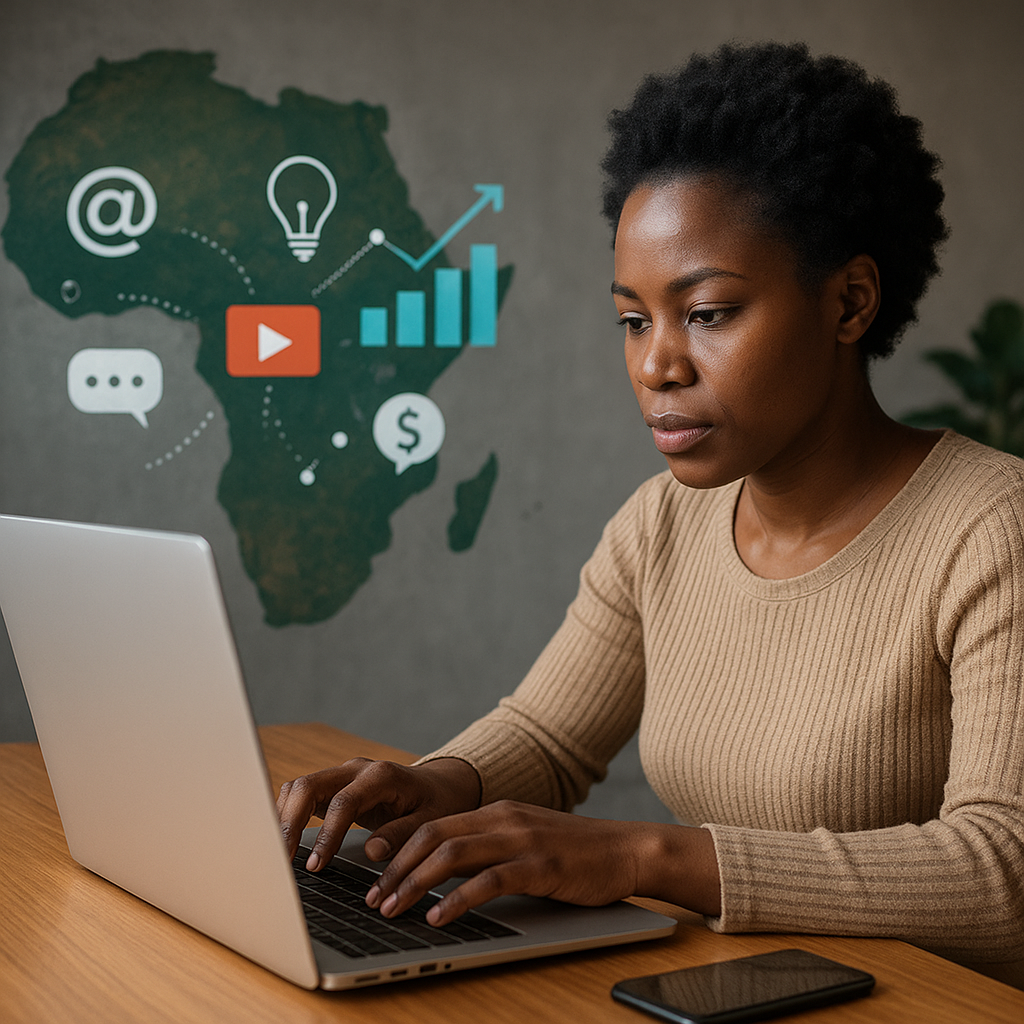
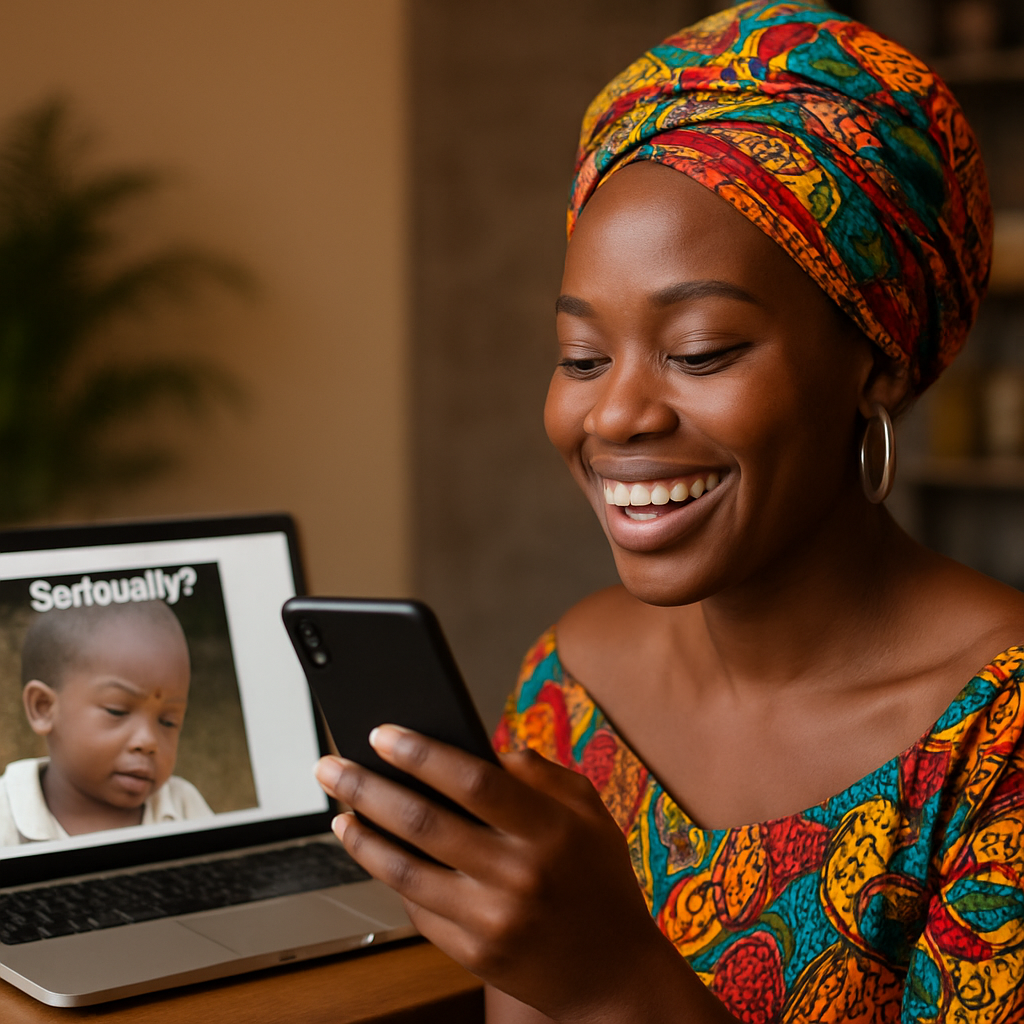
African screens glow with humor, remix, and remix-of-the-remix. What begins as a playful image macro in Lagos can become a political riff in Nairobi, a product joke in Accra, and a dance trend in Johannesburg by the weekend. This fluid circulation is not trivial entertainment; it is a powerful market signal and a highly efficient layer of digital communication. For internet marketers, understanding how memes encode local references, compress narratives, and trigger action is now essential to speaking credibly across the continent’s multilingual, mobile-first audiences. This article walks through the cultural logics, platform mechanics, data, playbooks, and ethical guardrails that make meme-powered marketing work in African digital culture.
The meme as a cultural API: compressed meaning, scalable participation
Memes function like an informal API for attention: a shared format that compresses meaning so that anyone can plug in and remix. On African timelines—where the median age is young, where humor softens hard realities, and where oral traditions have long prized call-and-response—memes are a natural continuation of how stories travel. A familiar image template, a well-known song snippet, or a dance step with a name becomes an addressable slot for commentary. This is why a joke from a Ghanaian street video or a short dialogue from a Nigerian comedy skit can prompt thousands of localized responses, each tailored to a neighborhood, a football rivalry, or a brand punchline.
For marketers, the key is recognizing that memetic formats lower the barrier to participation. People are not just spectators; they are willing co-authors. Give them a remixable frame and a reason to re-share, and you’ll activate a chain reaction. The trick is never to lecture. Instead, provide a scaffold—a template that rewards the inside joke, preserves face in group dynamics, and lets fans signal their belonging while reinforcing your value proposition.
Across the continent, three ingredients repeatedly power meme adoption: a locally legible hook (language, gesture, or proverb), a rhythm or motion that begs imitation (dance, chant, call-and-response), and a topical stake (football, fuel prices, elections, school life). When these converge, brands can ride the wave without owning it, offering gentle prompts and subtle brand cues rather than loud sales pitches.
Platforms and formats: where and how memes travel
Memes are multi-modal and platform-native. In many African markets, WhatsApp and Telegram function as the private back-end of memetic spread, while TikTok, Instagram Reels, YouTube Shorts, Facebook, and X (formerly Twitter) serve as the public front-end that seeds discovery. Audio memes (catchphrases, stitched sound bites) are especially potent because low-bandwidth users can still engage and because radio and street audio culture historically prime audiences to latch onto hooks and refrains.
Practical implications for marketers:
- Lean into vertical short video for discovery; prepare static or lightweight GIF adaptations for messaging apps where video is compressed or auto-muted.
- Design captions with code-switching in mind—mixing English or French with Swahili, Yoruba, Hausa, Zulu, Amharic, Arabic, or Sheng to meet audiences where they are.
- Respect the affordances of each platform: TikTok favors native audio and in-camera edits; Instagram rewards design polish and carousel narratives; Facebook still moves mass reach in many countries through Groups and Pages.
- Seed in public; nurture in private. Provide download-friendly assets so super-fans can forward easily into WhatsApp groups where a large slice of real action occurs but isn’t publicly visible.
Why memes work for marketing: social psychology and semiotics
Memes make complex points easy to say and safe to laugh at. They confer status to those who “get it,” building micro-tribes of recognition. In environments where people juggle limited data budgets and intermittent connectivity, memes also deliver information density: a single frame or four-second clip can say more than a 30-second ad. Humor reduces resistance to persuasion; self-irony lowers the perceived “sales pressure” from brands.
Two psychological levers matter most:
- Identity play: Mimicking a meme signals group affiliation—club, city, music scene, or team. Brands that give fans identity-adjacent props (filters, overlays, punchline options) earn earned media at scale.
- Effortless co-creation: The easier it is to adapt your template on a cheap phone with shaky bandwidth, the wider your participation base grows. Keep edits simple: one slot for text, one for an image swap, a single motion.
When brands align these levers with local holidays, football fixtures, market days, or TV moments, they catch a rising current. Keep the “why share?” clear: to make friends laugh, to teach something quickly, or to flex affiliation.
Data pulse and performance: what the numbers suggest
Because meme spread often happens in private channels, measurement will never be perfect. Still, several credible signals and regional benchmarks help shape plans:
- Smartphone and connectivity: GSMA has reported that roughly half of mobile connections in Sub-Saharan Africa are on smartphones, with adoption rising year over year. This underwrites the shift to short video and audio-driven memes.
- Social media base: Cross-continental syntheses such as DataReportal’s 2024 updates estimate roughly 300 million social media users across Africa, with strong growth in populous markets like Nigeria, Ethiopia, Egypt, Kenya, and South Africa. WhatsApp is ubiquitous in many countries; Facebook, YouTube, and TikTok anchor public discovery.
- Demographics: Africa’s median age hovers around 19–20. Younger cohorts over-index on entertainment, music, fashion, gaming, and sports—prime meme categories.
- Cost of data: Affordability has improved but remains uneven. This makes compression and reusability design choices (loopable clips, text-on-video for mute playback) not just aesthetic but strategic.
Marketing performance patterns seen by regional teams and agencies often include lower CPMs for short-form video placements than in North America or Western Europe and strong completion rates for sub-10-second clips. Meme-framed creative typically lifts watch time and saves relative to non-memetic variants when localized well. Exact figures vary by market, vertical, and seasonality, so treat public numbers as directional and run controlled tests to calibrate your own baselines.
From broadcast to co-creation: a playbook for meme-led campaigns
Think of meme marketing as facilitated co-creation rather than broadcast advertising. A practical, repeatable framework:
- Listen first: Map emerging meme templates weekly. Track sound bites, captions, and visual frames that trend in your target languages. Build a living “meme bank” with usage notes and connotations.
- Define your red lines: Off-limit themes (tragedy, sensitive politics, religion) and do-no-harm rules. Document these so rapid-response teams move fast without guesswork.
- Find product-truth hooks: Connect your differentiator to a punchline audiences already enjoy. If your benefit is speed, tie it to a “before/after” split-panel template. If reliability, use a “what I ordered vs what I got” inversion.
- Create bare-minimum assets: A 5–8 second vertical template with a clear slot for user text; a static two-panel version; subtitle layers for silent viewing; brand bug no larger than a TV channel watermark.
- Seed with micro-creators: Partner with 10–50 local creators across languages and niches to publish their takes first. Arm them with prompt lines, but leave room for improvisation.
- Enable frictionless remix: Host raw assets in light files; provide editing tips suited to entry-level phones. Offer optional sticker packs and sound bites.
- Respond in public: Duet, stitch, and “yes-and” top community riffs within hours. Spotlight the best fan takes on your official channels.
- Measure and iterate: Watch velocity (shares/minute), retention, save rates, and comments that show creative comprehension. Refresh the template at the first sign of fatigue.
Localization without caricature: language, references, and respect
Memes are ultra-local. Dialect choices, football loyalties, transport cues (matatu art in Kenya, tro-tro sayings in Ghana, danfo slang in Nigeria, taxi culture in South Africa), and school nicknames signal in-group fluency. The safest course is to hire local writers and creators to originate the joke, then adapt across regions.
Practical guardrails:
- Test idioms: A word that is playful in one city can be loaded in another. Quick-lab your caption with native speakers from at least two neighborhoods or ethnic backgrounds.
- Prefer humility: Let the community lead the joke; position the brand as the supportive straight character, not the clown.
- Time sensitivity: Memes age in days. If you arrive late, frame your entry as a retrospective nod or a helpful “how-to remix” rather than trying to hijack momentum.
- Keep translation inline: Place dual-language captions when possible. A single smart bilingual line can travel farther than two separate versions.
Case notes: how African memes shaped brand and civic moments
Jerusalema Challenge: A South African track by Master KG and Nomcebo Zikode sparked a global dance meme in 2020, with strong roots across Southern and West Africa. Brands, NGOs, and even municipal teams participated, often staff-led rather than agency-staged. The pattern: a simple step set, a joyful public vibe, and low production demands. Lessons for marketers: invest in motion-based prompts; empower front-line staff to perform; keep brand presence subtle to avoid “cringe.”
Ghanaian Coffin Dancers: The pallbearers’ choreographed send-offs became a world meme for “high-stakes fail” and comic fatalism. African audiences, already familiar with the cultural context, remixed the template fluidly. Brand-safe usage required sensitivity—leaning into “don’t risk it” safety PSAs or product dependability messages rather than mocking misfortune. Lessons: meme potency rises with unmistakable symbolism; ethical guardrails must be explicit.
#EndSARS in Nigeria: Memes and short videos acted as protest primers—explaining rights, mocking disinformation, and celebrating solidarity. While brands mostly stayed quiet or supportive, the episode showed memes’ civic power: they condense complex grievances into shareable frames, mobilizing at speed. Lesson: when stakes are high, the brand role is to amplify helpful information and offer material support, not to co-opt.
Creative patterns that travel well across countries
- Split-screen truths: “Expectation vs Reality,” “Monday vs Friday,” “Old me vs New me.” These formats work for telco speed, fintech savings habits, and FMCG product upgrades.
- Rhyme and call-and-response: Hooks that can be chanted or clapped—ideal for sports co-sponsorships and campus tours.
- Football as lingua franca: Club banter is a safe, high-energy canvas if you avoid inflaming rivalries. Tie benefits to match-day rituals (data bundles, snacks, deliveries).
- Transport metaphors: Matatu/tro-tro/danfo humor resonates widely—“who you sit next to,” “conductor lines,” “fare surprises.” Great for payments, insurance, or navigation apps.
- School and exam memes: Timeless and pan-continental. Brands can provide light comic relief and free study resources in the same breath.
Media buying for memetic reach
Treat paid as a precision accelerant, not the engine. The goal is to help a promising meme find early momentum and then let social sharing take over. Tactics:
- Micro-bursts: Spend lightly in the first 12–24 hours to seed in multiple cities/languages and observe where velocity spikes.
- Audience lookalikes: Build lookalikes on early engagers rather than pre-defined interest buckets; memes often locate unexpected subcultures.
- Creative rotation: Refresh the meme template variations every 3–5 days; let creators pull forward the winning punchlines.
- Cap frequency: Memes sour quickly when overexposed; protect organic goodwill by capping paid impressions.
Measurement, not mythology: from laughs to lift
Laughs are not the KPI. Structure measurement layers to connect meme momentum to outcomes:
- Leading indicators: save rate, shares per view, comment quality (“tag a friend” vs spam), creator duets/stitches, WhatsApp click-outs from public posts.
- Mid-funnel: uplift in branded search, direct traffic spikes during meme peaks, growth in opt-in channels (WhatsApp Business, Telegram, email).
- Bottom-funnel: promo-code redemptions embedded in meme captions, UTM-tagged links in creator bios, conversion-lift tests by geography.
- Incrementality: Run geo or time-split tests. Even simple on/off matched-market tests clarify whether the meme campaign moved business metrics independent of other media.
Tooling suggestions that fit bandwidth-constrained teams: lightweight dashboards that pull in platform insights, manual sampling of comment threads for sentiment, simple panel surveys post-exposure, and scraping trending audio to time content drops. Over time, build a “meme-to-outcome” dataset to guide future bets.
Legal, ethical, and community care
Intellectual property: Many memes remix copyrighted material. When working with distinctive music, logos, or video clips, secure rights or stick to platform-cleared audio libraries. When a meme stems from a specific creator or community group, ask permission, pay fairly, and attribute visibly.
Harm avoidance: Steer clear of tragedy, sensitive identity topics, or medical disinformation. Memes that punch down travel briefly but backfire long-term. Make inclusion a design feature: accessible captions, clear audio, and flexible copy for screen readers.
Pay creators on time: Emerging African creators often juggle inconsistent brand processes. Provide simple briefs, fair rates, and fast payouts. Respect language choice and creative agency; don’t over-polish what should feel handmade.
The role of music and dance: an unfair advantage
African music cultures—from Afrobeats to Amapiano, Bongo Flava to Gqom—naturally produce loops that stick. Audio memes built on percussive hooks travel across language lines and invite easy imitation. For brands, a consistent sonic signature that meshes with regional styles can become an earworm that threads through creator remixes. Commission short stems with open-ended call-and-response beats that creators can sample legally. In micro-budgets, sponsor dance collectives or campus DJs to craft challenges that are genuinely fun, not branded chores.
Cross-border flow and diaspora amplification
Memes often hop from Accra to London, from Nairobi to Minneapolis, from Lagos to Johannesburg via diaspora networks. Harness this by designing creative that reads locally but doesn’t require hyper-specific context to land. Diaspora creators can act as cultural translators, adding subtitles or gentle exposition without killing the joke. When your product is cross-border (remittances, e-commerce, travel), this bidirectional flow is a built-in amplifier—build for it.
IT, ops, and security: the MemeOps mindset
Memes move fast; your organization must, too. Adopt a lightweight approval lane for low-risk reactive content, staffed by local talent with authority to publish. Keep a living risk register to note words, formats, and public figures to avoid. Store pre-cleared assets—logos, legal lines, stickers, audio stems—in a shared hub. Practice incident drills: if a joke misfires, who replies first, in what tone, and where? Transparency and a quick, human apology maintain goodwill.
Future signals: AI, creators, and the new attention stack
Three dynamics are shaping the next wave:
- Generative tools: Entry-level AI will let small teams localize captions, voices, and visuals across dozens of dialects rapidly. Guard against uncanny or culturally tone-deaf outputs by pairing AI drafts with local editors.
- Creator middle class: More African creators are building semi-professional studios and niche audiences. They are ideal partners for meme seeding because they balance trust with reach.
- Commerce hooks: Social commerce pilots—live shopping, in-app checkout—will tighten the loop between a laugh and a purchase. Expect memes to become shoppable moments with native product tags and affiliate codes.
Practical templates: start here, then localize
- Two-panel truth: “How auntie thinks online shopping works” vs “How it actually works with [brand].” Keep the left panel from a trending template; place product reveal on right.
- Sound-first: Commission a 5-second chant about speed or price that ends on a clap. Invite creators to add one-line punchlines in their languages.
- Remixable challenge: A motion anyone can do seated on public transport. Reward top remixes weekly with product credit.
- Micro-skit: A one-room, two-line skit structure common in Nigerian and Kenyan comedy. Provide a premise (“the friend who never has data”) and let creators improvise.
Seven pitfalls to avoid
- Arriving late to a dying meme and appearing opportunistic.
- Over-branding the template, killing its shareability.
- Misreading a joke born from hardship and trivializing lived experiences.
- Ignoring language nuance; a single word can flip meaning across regions.
- Running only public metrics; missing WhatsApp-forward momentum.
- Skipping creator compensation or burying attribution.
- Neglecting mobile constraints: heavy files, tiny text, low contrast.
A simple measurement rubric you can deploy tomorrow
Define three tiers of success and measure each weekly:
- Tier 1 (Attention): views, unique reach, watch time, sound adoption count, shares per 1,000 views, save rate.
- Tier 2 (Consideration): profile visits from meme posts, branded search uplift, WhatsApp inquiries, community group joins.
- Tier 3 (Action): code redemptions tied to meme captions, UTM conversions, lift vs control geos, repeat purchase within 14–30 days.
Complement numbers with qualitative reads: comment themes, creator feedback, and screenshots of adaptations in messaging apps. Over a month, decide whether to scale, pivot, or sunset the template.
Strategic posture: from renters to builders
Great meme marketers don’t just rent attention; they build assets the community wants to use. That could be a signature sticker set based on a beloved mascot, a short sound pack that DJs love to sample, or a stable of micro-creators trained to co-develop weekly riffs. Over time, these assets compound, reducing your dependency on expensive bursts and anchoring your brand inside day-to-day banter.
Closing synthesis
Meme culture across African digital life is not a sideshow; it is a primary channel of meaning-making. For internet marketers, the mandate is clear: become fluent in the forms, move at the speed of the feed, and pair creative bravado with rigorous measurement. Do it with respect, and you will earn not only laughs but loyalty. Do it consistently, and your brand becomes part of how people talk to one another—woven into the same threads that carry music, football, jokes, news, and neighborhood lore.
Keyword compass for teams
When in doubt, check yourself against these ten words that capture why memes work in African marketing. Are you honoring the memes? Are you earning engagement? Are you enabling virality without forcing it? Are you protecting authenticity? Are you strengthening community? Are you adding to culture, not borrowing from it carelessly? Is your storytelling simple enough for a cheap phone and a busy commute? Are you cooperating with the algorithm rather than fighting it? Did you design for localization by language and inside jokes? Can your analytics connect laughs to lift?