
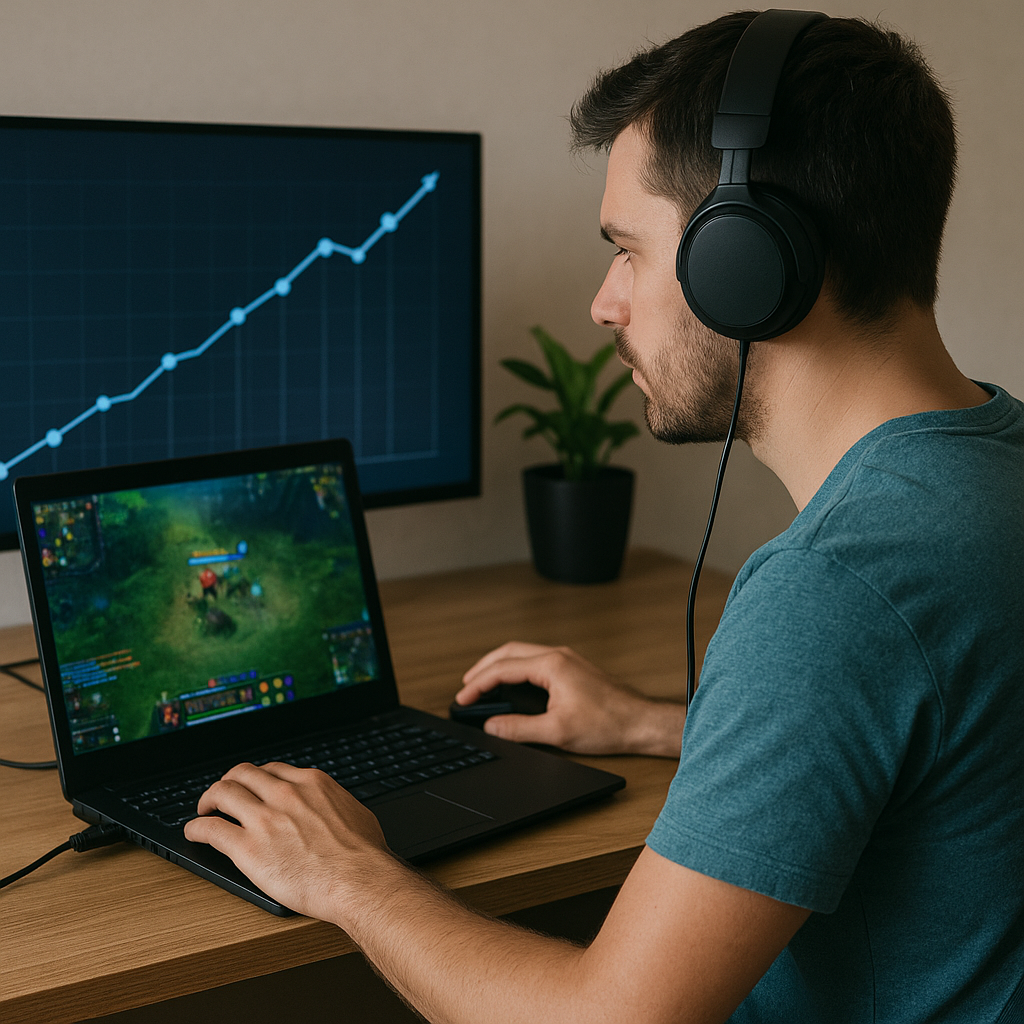
Online gaming has moved from hobbyist corners of the internet to a cultural infrastructure that shapes media habits, shopping behavior, and brand discovery. For marketers, this shift is not simply about reaching a bigger audience; it is about tapping into a highly interactive medium where attention is active, communities self-organize at scale, and creative formats merge play with promotion. The result is a marketing surface that is measurable, participatory, and increasingly commerce-enabled—if brands learn the craft of showing up natively, respectfully, and usefully.
From Niche to Mainstream: Size and Shape of the Online Gaming Economy
Industry trackers consistently place games among the world’s largest entertainment categories. Estimates from respected market analyses suggest annual global games revenue in the mid-$180 billions, with mobile titles contributing roughly half of that total. Player bases continue to expand as well: more than three billion people worldwide now play video games, and a significant share do so online, whether via mobile, console, or PC. This ubiquity matters to marketers because it normalizes gaming across age, gender, and income brackets, turning “gamers” from a subculture label into a near-universal audience descriptor.
Device convergence has accelerated the trend. Mobile gaming lowers entry barriers and drives daily frequency; cross-play allows friends to remain connected across console and PC; cloud services reduce hardware friction and open premium experiences to more markets. By distribution channel, the landscape is roughly balanced among premium, free-to-play, and subscription ecosystems, with free-to-play models dominating user counts and monetization via microtransactions, ad-supported mechanics, and battle passes.
Time spent is shifting as well. Global reports of streaming and social platforms show that live play and game-adjacent content—how-tos, lore explainers, creator challenges—earn billions of hours of viewership each year. Major live-streaming platforms regularly register millions of concurrent viewers and tens of billions of hours watched annually. This attention is participatory, with chat, emotes, and co-creation blurring the line between audience and performer.
Esports occupies a high-visibility slice of the ecosystem. While its direct revenues are modest relative to the broader games market, esports functions as a cultural amplifier, driving sponsorships, merch, and media rights, and serving as a seasonal tentpole for endemic and non-endemic brands alike. Importantly, esports audiences skew digital-first and commerce-aware, responding well to authentic integrations, creator co-signs, and utility-driven activations.
The Marketing Surface: Where, How, and Why Brands Show Up
Online gaming offers a spectrum of inventory and integration depth, from light-touch placements to fully fledged branded experiences. The right entry point depends on goals, budgets, risk tolerance, and the brand’s cultural fluency in a given community.
Major Activation Lanes
- In-game display and dynamic placements: Billboards, stadium signage, and environmental assets that refresh programmatically in live service titles. Best for reach and contextual presence without heavy production overhead.
- Rewarded and opt-in video: Users exchange attention for in-game value (currency, lives, boosts). These formats deliver high completion rates and positive sentiment when the reward is meaningful and well balanced.
- Playable and interactive ads: Lightweight versions of gameplay or brand mini-games drive trial and qualify intent. Often used in mobile user acquisition, but also effective for brand storytelling in game-like contexts.
- Creator collaborations: Partnerships with streamers, YouTubers, and short-form video makers who translate brand stories into native content. Co-created challenges, “let’s plays,” and behind-the-scenes narratives raise authenticity.
- Esports sponsorships: Team and league deals, broadcast segments, co-branded drops, and arena activations. These thrive when paired with community perks such as exclusive emotes, digital items, or member-only Q&A.
- UGC platforms and branded worlds: Custom maps, skins, and quests in sandbox and creation ecosystems. This path requires thoughtful design to be truly fun; when done well, it can behave like a persistent owned channel.
- Shoppable streams and affiliate integrations: Creator storefronts, tracked links, and live product demos bridge inspiration and purchase, especially for peripherals, apparel, snacks, and entertainment bundles.
Why Gaming Works for Marketers
- High-intent attention: Players are engaged, not passively scrolling. Well-placed units can elevate recall and favorability without interrupting critical gameplay moments.
- Mass reach with micro-targeting: You can meet broad audiences across hit titles while still targeting by genre, skill tier, platform, or community interest clusters.
- Rich creative canvas: Games are 3D, systemic, and social—ideal for interactive storytelling, co-creation, and utility-driven promotions.
- Full-funnel potential: From an awareness billboard inside a racing game to a shoppable link on a live stream to a loyalty perk inside a mobile RPG, gaming supports the entire path to purchase.
Measurement That Matters: From Awareness to Profit
Performance in gaming is not just about clicks. Smart teams blend media KPIs with product and community signals to prove sales impact and long-term brand equity.
Core Metrics by Objective
- Brand outcomes: Reach, on-target percentage, viewability, attention minutes, brand lift, search uplift, and sentiment analysis in Discord/Reddit/Twitter threads.
- Engagement outcomes: Ad completions, playable interaction depth, creator content watch time, UGC submissions, quest completions, and coupon redemptions.
- Commerce outcomes: Cost per acquisition, basket size, subscription starts, upsell/attach rates, and halo effects on adjacent product lines.
Attribution and Incrementality
Privacy shifts on mobile and the web complicate deterministic identity graphs, making mixed methods essential. Use geo-split tests or holdouts to quantify causal lift; pair with media mix modeling to estimate cross-channel effects; and supplement with platform-level SKAN or aggregated reporting where available. The goal is a robust system that balances modeled and observed data while maintaining user trust.
- Plan for attribution uncertainty: Calibrate expectations and budgets with upper and lower bounds on performance.
- Prove incrementality: Use randomized controlled trials or quasi-experimental designs to isolate causal impact, especially in creator and in-game channels.
- Track lifetime value: Short-term ROAS can be misleading in gaming-heavy audiences where word-of-mouth and repeat purchase play out over months.
Standards and Verification
Industry bodies have updated guidelines for measuring in-game placements, including viewability and exposure duration within 3D environments. Verification vendors support fraud detection and brand suitability, while attention metrics help contextualize whether a placement likely influenced brand memory. Align with these frameworks to keep results comparable across titles and platforms.
Audience Insights and Creative Strategy
Players are not a monolith. Segment by motivation (competition, exploration, socializing, mastery, creation), session length, platform, and community norms. Then adapt creative accordingly.
Motivation-Led Messaging
- Competitors: Performance and status cues. Limited-edition drops, leaderboards, and speed-run challenges resonate.
- Explorers: Discovery and world-building. Easter eggs, lore tie-ins, and map-based scavenger hunts work well.
- Socializers: Belonging and expression. Skins, emotes, co-op quests, and co-creation prompts can travel far.
- Achievers: Mastery and progress. Tutorials, pro tips, and rewards that acknowledge skill keep engagement high.
- Creators: Toolkits and freedom. Modding resources, template kits, and creator revenue shares spark momentum.
Creative Craft
- Native fit: Respect the HUD, pacing, and field of view. Avoid blocking sight lines or interrupting clutch moments.
- Value exchange: Make ads useful—boosts for watching, cosmetics for participating, behind-the-scenes access for sharing.
- Storyworld alignment: Honor each game’s art direction, humor, and lore. A consistent visual language earns goodwill.
- Social remixability: Build assets that creators can adapt: green-screen layers, sound packs, mod kits, and API hooks.
- Accessibility: Consider color contrast, subtitles, and low-spec paths; friction kills fun faster than anywhere else.
Localization and Culture
Gaming cultures vary by region and title. Before launching, audit slang, memes, and taboos; involve local players and community managers; and test variants in private lobbies or whitelists. Localization is more than translation—it is cultural embedding.
Playbooks That Scale: From First Steps to Signature Moments
Brands can stage their involvement from “observe and learn” to “co-create and own.” Here is a proven progression:
Level 1: Lightweight, High-Learning
- Run dynamic in-game placements in genre-aligned titles to benchmark reach and attention.
- Test rewarded video in a handful of mobile games; map watch time to coupon redemptions.
- Sponsor two mid-tier creators for authenticity checks before scaling to top-tier talent.
Level 2: Community-First Depth
- Commission a custom map or challenge with measurable objectives and a charitable angle.
- Host an invitational mini-tournament with viewer rewards and creator co-streams.
- Integrate shoppable overlays during live streams; A/B test scripts and offers.
Level 3: Signature Experiences
- Launch a seasonal in-game event with narrative beats, unlockable cosmetics, and real-world tie-ins.
- Build a creator accelerator: training, production support, and revenue sharing tied to campaign goals.
- Develop an owned gaming IP or recurring “world” that can host future product storylines.
Commerce and Conversion: The New Shopping Loop
Gaming shortens the gap between inspiration and action. Consider the paths consumers now traverse in a single session: watch a live stream, chat about a product, trigger a coupon by completing a quest, and buy through a pinned link—without leaving the ecosystem.
Keys to Turning Attention into Sales
- Frictionless checkout: Use native storefronts, wallets, or affiliate rails; reduce redirects that break immersion.
- Utility-led incentives: Quest completions, drops, and loyalty points tied to meaningful in-game rewards outperform generic giveaways.
- Signal-rich audiences: Retarget based on opted-in behaviors—viewed challenge, engaged with playable, returned after 7 days.
- Creative persistence: Keep assets “live” in VOD, clips, and UGC hubs; a good stream segments into weeks of shoppable micro-content.
Data, Privacy, and Safety: Trust as a Growth Engine
Regulatory shifts and platform policies are rewriting the rules of identity and targeting. The best marketers adopt privacy-by-design and lean into high-quality, permissioned signals.
Data Strategy Essentials
- First-party relationships: Encourage opt-ins via real value—exclusive items, early access, and community badges. Then protect that data rigorously.
- Context over identity: Lean on genre, session context, and creative format; contextual signals often rival user-level IDs in predictive power.
- Measurement resilience: Mix MMM, lift tests, and on-platform aggregates; plan confidence intervals into forecasts.
Safety and Suitability
- Standards: Align with updated in-game measurement guidelines for viewability and exposure.
- Verification: Use third-party tools to monitor fraud, invalid traffic, and environment suitability.
- Youth protections: Where minors are present, adapt creative and data practices to meet or exceed legal requirements; when in doubt, choose the higher bar.
Operations: Teams, Tools, and Timelines
Winning in gaming requires tight collaboration among media, creative, analytics, and community management. Develop a playbook that assigns clear owners and integrates feedback loops from players back into creative and product teams.
Workflow Tips
- Creative sprints: Build modular assets suited for iterative testing across platforms and formats.
- Community listening: Maintain always-on monitoring for sentiment shifts; empower community leads to inform asset tweaks in near real time.
- Experiment cadence: Pre-schedule test cells for ad units, offers, and scripts; treat each stream or placement as a lab.
- Vendor governance: Maintain a reviewed roster across UGC, analytics, and ad tech; run quarterly safety and performance audits.
Trends to Watch: Where the Next Gains Will Come From
Several forces are expanding gaming’s marketing potential and changing what success looks like.
Cross-Platform and Identity
Cross-play and cloud access make it easier to reach the same person across contexts. This is good news for frequency capping, creative sequencing, and offer management—so long as brands adopt lightweight identity that respects consent and regional norms. As ecosystems interconnect, expect tighter interoperability between loyalty programs, digital items, and commerce rails.
AI-Enhanced Experiences
Procedural generation and AI-powered NPCs will enable dynamic worlds that adapt to player behavior in real time. For marketers, that could mean ad units that respond to player state (newcomer vs. veteran), generative creative variants that localize tone and art style instantly, and real-time QA on brand safety within user-generated scenes.
Creatorship at Scale
The creator economy remains the cultural backbone of game discovery. Expect more revenue-sharing models, branded toolkits, and in-engine analytics that quantify the reach and quality of fan-made content. The most effective advertisers will treat creators as co-developers, not only as media channels.
Commerce Everywhere
As streaming, social, and store functionality converge, shoppable overlays, virtual try-ons, and membership bundles will become default. Brands that master lightweight checkout, service, and returns within gaming ecosystems will see conversion rates rise while acquisition costs fall.
Optimization Principles: Turning Insights into Advantage
Behind every breakout campaign sits a disciplined operating system. A few principles reliably move the needle in gaming:
- Audience segmentation before creative: Let motivation clusters drive your messaging and reward design.
- Native-first personalization: Match tone, timing, and value to the game’s rhythm; show up as a helpful ally, not an interruption.
- Community capital: Invest in moderators, codify house rules, reward superfans, and resolve issues publicly; a healthy community compounds returns.
- Channel mix discipline: Balance evergreen placements with tentpole moments; track saturation thresholds to avoid fatigue.
- Smart buying: Blend direct deals for marquee moments with programmatic pipes for scale and testing agility.
- Retention thinking: Whether you sell snacks or software, design for repeat touchpoints and measurable retention curves.
What the Numbers Say: A Quick Statistical Snapshot
Aggregated industry reporting over the past few years paints a consistent picture:
- Global games revenue has hovered around the mid-$180 billion mark annually, with mobile contributing roughly half of spend and console/PC splitting the remainder.
- Player counts exceed three billion worldwide, spanning casual mobile sessions and deep-core multiplayer communities.
- Live-streaming platforms collectively deliver tens of billions of hours watched per year, with millions of average concurrent viewers across peak months.
- In-game ad measurement standards have been updated by leading industry bodies to reflect 3D environments, paving the way for more consistent benchmarking.
- Opt-in ad formats such as rewarded video routinely achieve high completion rates and positive sentiment when the value exchange is clear.
While numbers vary by methodology and year, the signal is unambiguous: gaming is one of the largest, most engaged, and most measurable digital canvases available to marketers.
Putting It Together: A Strategy You Can Execute
A practical, de-risked approach might look like this:
- Quarter 1: Run baseline in-game placements and rewarded video across three genres; seed two creator pilots; set up MMM and lift testing frameworks.
- Quarter 2: Launch a UGC challenge with measurable milestones; layer shoppable streams with affiliate incentives; expand creator roster with clear briefs.
- Quarter 3: Introduce a limited-time in-game event and exclusive digital items; localize variants for two new markets; refresh media based on learning.
- Quarter 4: Consolidate wins into an annual tentpole moment; negotiate multi-title packages; roll out a loyalty integration to improve repeat purchase.
Throughout, keep KPIs tied to causal outcomes, monitor sentiment in community hubs, and iterate creative in weekly sprints. Maintain a shared dashboard that reports reach, engagement, sales lift, and LTV—not just clicks.
Conclusion: The New Marketing Playfield
Online gaming is not merely another channel; it is a living medium where audiences gather, create, and transact. The brands that thrive will be those that respect the culture, deliver utility within the play experience, and build measurement systems that prove value beyond last-click. With clear goals, disciplined testing, and collaborative partnerships, marketers can unlock a durable advantage in a space that rewards creativity, agility, and long-term thinking.