
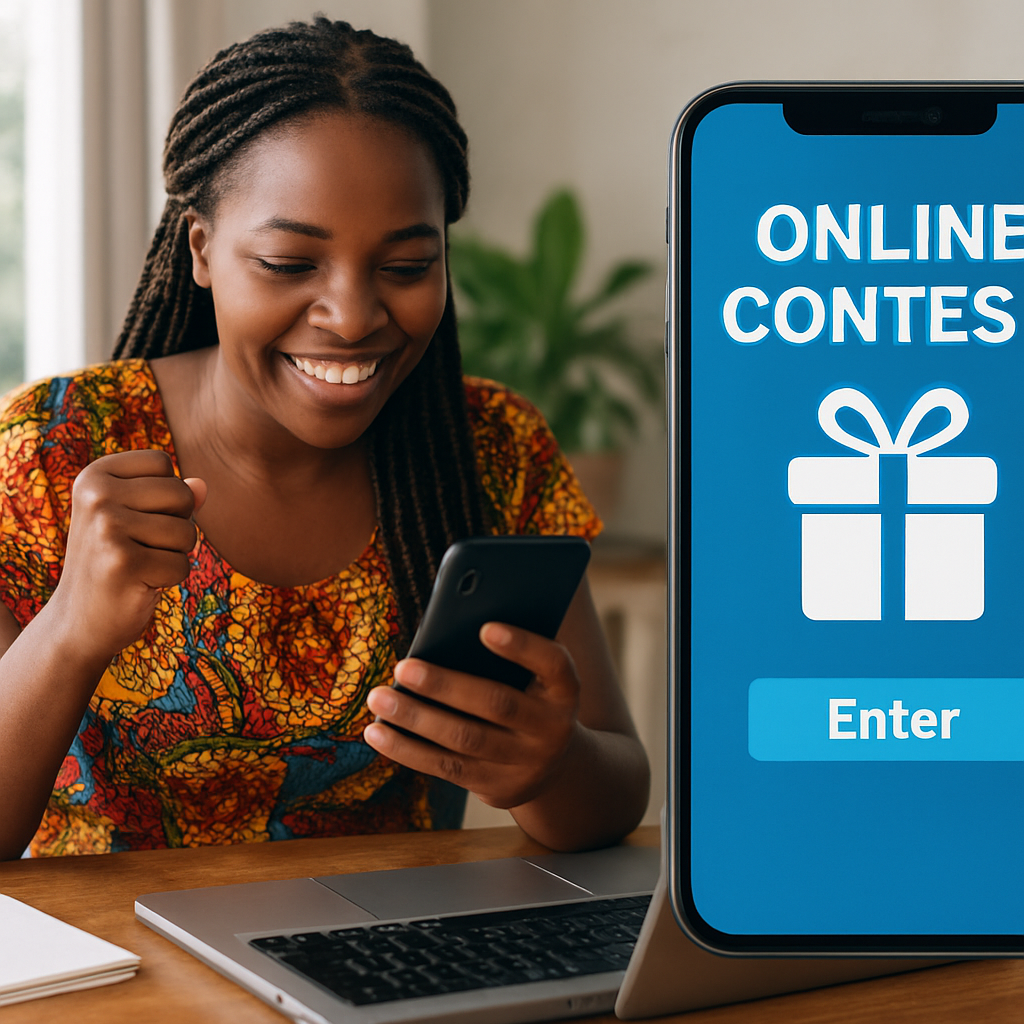
Digital promotions that ask people to play, vote, refer, or create content have become one of the most effective ways to spark measurable engagement in African markets. Online contests channel existing social energy—community pride, love of friendly competition, and appetite for rewards—into actions marketers care about: data capture, trial, repeat purchase, and advocacy. They also travel well across Africa’s uniquely mobile-first landscape, where messaging apps, mobile money, and nano-influencers shape how brands and customers meet. This article unpacks why contests work, the formats that thrive, how to measure true business impact, and how to run them responsibly at continental scale.
The mobile-first foundation that makes contests soar
The single most important context for marketing in Africa is mobility. Over the past decade, the handset has become the default screen for communication, commerce, and entertainment. According to GSMA’s Mobile Economy reports, Sub‑Saharan Africa counts roughly half a billion unique mobile subscribers, with smartphone adoption approaching the 50% mark and rising. While 4G coverage continues to expand, 3G remains prevalent, and millions still rely on feature phones—facts that shape contest mechanics, creative choices, and prize logistics.
Demographics amplify this opportunity. Africa’s median age sits around 19, making it the youngest continent. Youthful audiences adopt trends quickly, organize virally, and are comfortable jumping between platforms—Instagram one hour, TikTok and YouTube Shorts the next, all while WhatsApp hums in the background. Social is more than a pastime; in many markets, WhatsApp penetration among internet users exceeds 80%, and Facebook, Instagram, and TikTok rank among the most-downloaded apps. When a contest is designed to be shared, it moves.
Payments and prizes are also mobile-first. GSMA’s State of the Industry reports show that global mobile money transactions exceeded one trillion US dollars recently, with Sub‑Saharan Africa accounting for the majority of value and activity. That matters for rewards. Micro‑incentives like airtime top‑ups, data bundles, and mobile‑money vouchers are not just appreciated; they are practical, fast, and trust‑building. In markets where delivery logistics can be complex, digital prizes scale frictionlessly across regions and languages.
Finally, channels behave differently. SMS remains astonishingly effective, with open rates consistently above 90% and most messages read within minutes. USSD still reaches millions of feature‑phone users. Meanwhile, platform algorithms on Instagram and TikTok reward high interaction density—exactly what contests create. Industry analyses have long noted that giveaway posts can earn multiples of average comment rates; one widely cited study found contest posts driving up to 60x more comments and several times more likes than standard posts. While your mileage will vary by niche and quality, the directional truth holds: contests compress attention into intense bursts that algorithms amplify.
Why online contests work: human motivations and digital mechanics
Great contests align human psychology with commercial goals. They convert curiosity into clicks, social currency into shares, and micro‑rewards into behavior change. Four forces make them effective:
- Reciprocity and reward: Even small-value benefits—airtime worth a dollar, a data bundle, early product access—can motivate action. When rewards arrive instantly, satisfaction spikes and opt‑in rates jump.
- Social proof and status: Leaderboards, public shout‑outs, and creator collaborations give participants public wins. People share what elevates them in their circles, feeding organic reach and virality.
- Scarcity and urgency: Limited entry windows, tiered prizes, and daily resets help concentrate activity and improve unit economics.
- Mastery and play: Light skill components—trivia, creative prompts, mini‑games—make participation feel earned rather than transactional.
On the mechanics side, contests succeed when they are low‑friction, omnichannel, and inclusive:
- Frictions reduced: One‑tap entry via WhatsApp deep links, Instagram comments, or USSD codes outperforms web forms. Autofill and progressive profiling collect data over time without scaring people off.
- Inclusive access: Give feature‑phone users a path via USSD and SMS. Offer data‑light pages and compress images/videos. Consider zero‑rating for campaign microsites if an operator partnership is available.
- Local trust: Leverage radio mentions, micro‑influencers, and community admins. In many African markets, trust is relational; voices people already follow move participation more than polished brand assets alone.
Formats that thrive across the continent
There is no one-size-fits-all contest. The most resilient programs blend multiple mechanics to reach different device types and motivations.
- Social comment-to-enter: Ask participants to comment with a creative answer, tag a friend, or submit a photo or short video. Works best when repost rights are clear and winners are selected transparently on live streams to build credibility.
- WhatsApp chatbot journeys: Participants message a short code or scan a QR, then a guided chatbot asks a few fun questions, collects consented data, and issues a unique code for redemption. This is a robust path for first‑party data and post‑contest remarketing.
- USSD trivia for feature phones: Participants dial a short code, answer 3–5 questions, and receive immediate airtime or entries into a weekly draw. USSD’s ubiquity makes it ideal for mass‑market FMCG brands.
- Receipt upload and rewards: To nudge trial or increase basket size, ask buyers to upload or WhatsApp a receipt photo. Optical character recognition (OCR) validates retailer and value; legitimate entries get cash‑back or entries in a grand draw.
- Referral ladders: Participants earn escalating rewards as they refer friends who complete a defined action (e.g., account creation, first purchase). This is a reliable engine for cost‑efficient acquisition when fraud controls are in place.
- Spin-to-win and scratch cards: Simple animations on micro‑sites or mini‑apps that reveal prizes. When odds are transparent and gratifications arrive instantly, these mechanics deliver excellent conversion rates.
- User-generated content (UGC) challenges: Dance, recipe, or “life‑hack” themes tailored to local culture. Prizes include creator spotlights, equipment, or collaborations. Ideal for categories like food, beauty, fashion, music, and sports.
- Offline-to-online bridges: QR codes on packs, posters at markets, and radio call‑ins that push people into a digital flow. In high‑footfall contexts—bus parks, university events—this hybrid approach scales participation quickly.
Measuring impact: from fun to financial outcomes
Contests should be entertaining, but their success rests on measurable business value. Anchor your design to a few core metrics and plan your data capture on day one.
- Top-of-funnel: Impressions, reach, participation rate (unique entrants ÷ reach), cost per entrant, growth in qualified followers or opt‑ins.
- Mid-funnel: Verified leads collected, consent rates, cost per verified lead, first-session depth (screens viewed, time on task), product quiz completion as intent proxy.
- Bottom-of-funnel: Redemptions, trials, purchases, CAC from the contest cohort, and 30‑/60‑/90‑day retention deltas versus non‑contest cohorts.
- Incrementality: Holdout groups and geo‑splits help separate organic growth from contest‑driven uplift. Pre‑post baselines are not enough; design an experiment.
- Quality safeguards: Device fingerprinting, phone‑number verification, and velocity rules reduce duplicate entries without harming honest users.
Benchmarks help frame expectations. On social platforms, well‑executed contests often yield engagement rates several times higher than regular posts. Email click‑through rates may double when a contest is the hook, while SMS reminders can push timely participation because of near‑instant opens. For acquisition‑focused contests, it is common to see cost per verified lead come in 20–50% lower than standard lead‑gen ads when fraud is controlled and rewards match audience value. These are directional ranges; your actuals depend on audience fit, media quality, and mechanics.
Crucially, map data back to source channels with strong attribution. Use unique deep links per influencer, per creative, and per region. In WhatsApp or USSD, embed referral codes and tag every step server‑side. Where possible, stitch contest IDs to CRM profiles for long‑term cohort analysis. The goal is simple: prove not just that people played, but that the contest produced customers who stayed and spent.
Trust, transparency, and regulatory hygiene
Nothing undermines a contest faster than perceived unfairness. Publish clear rules, selection criteria, and prize odds where relevant. Announce winners publicly (with consent) and deliver prizes quickly. Consider third‑party auditing for large draws.
Also, plan for legal and data obligations. Many African countries distinguish “promotional competitions” from gambling, with rules on odds, free entry, and prize disclosure. Nigeria’s National Lottery Regulatory Commission oversees lotteries; South Africa’s Consumer Protection Act governs promotional competitions; Kenya’s Betting Control and Licensing Board regulates certain prize draws. On data, South Africa’s POPIA, Kenya’s Data Protection Act, and Nigeria’s data protection regulations set consent and processing requirements. Bake compliance into your process: plain‑language consents, opt‑out paths, retention limits, and secure storage.
Fraud is another reality. Multiple SIM cards, bot comments, screenshot‑manipulated receipts, and emulator traffic can muddy results. Recommended safeguards include:
- Phone verification with OTP and rate limits per device and IP
- Basic CAPTCHAs where web forms are used
- Image forensics and machine‑learning checks for duplicate receipts
- Progressive rewards that require downstream behaviors (e.g., first purchase) to unlock bigger prizes
- Manual reviews for top‑tier winners, with clear identity verification steps
Creative that respects culture and context
African audiences are diverse. Messages that resonate in Lagos may miss in Kigali. Invest in localization across languages, holidays, and cultural references. Choose incentives that feel relevant: airtime and data for students; food vouchers and transport credits for daily commuters; school‑fee contributions for families; tools or training for small business owners. Pair national campaigns with regional flavor—Swahili and Sheng in Kenya, Pidgin in parts of Nigeria, isiZulu or Afrikaans in South Africa, Arabic and French across North and West Africa.
Visual identity and sound matter too. Short vertical videos with local music cues perform strongly on TikTok and Instagram Reels. Embrace humor and everyday settings—market stalls, matatus, danfos, and boda‑bodas—because they signal “this is for people like me.” When you partner with creators, prioritize authenticity over follower counts; micro‑influencers and community admins often convert better per dollar because their audiences trust them.
Costing, ROI, and prize economics
Budgeting for contests is a blend of media, rewards, and technology. A practical breakdown looks like this:
- Media: Paid social, creator fees, radio mentions, and out‑of‑home where helpful. As a rule of thumb, spend 40–60% of budget here if organic reach is uncertain.
- Rewards: Instant micro‑prizes (airtime/data/mobile money), tiered weekly prizes, and a grand draw. Calibrate total reward value to the margin you can earn from new and reactivated customers over 90 days.
- Tech and operations: Chatbot flows, USSD provisioning, microsite hosting, anti‑fraud tools, support agents, and prize fulfillment logistics.
Estimate ROI with explicit assumptions. Example: If a WhatsApp contest reaches two million people, 4% enter (80,000), 60% verify (48,000), 25% become first‑time buyers (12,000), and their 90‑day gross margin averages $4, you generate $48,000 in margin. If total campaign cost is $30,000, your net gain is $18,000 and payback is immediate. Improve any lever—participation rate, verification, purchase rate, or margin—and the model scales. Track spillovers too: uplift in word‑of‑mouth, store footfall during prize weeks, and customer‑support volumes.
Finally, build for long‑term monetization. Contests should not be one‑off spectacles that spike vanity metrics. They should grow your remarketing lists, seed loyalty programs, and shape creative that continues to perform after the prizes are gone.
A two-week launch playbook
Speed and rigor are compatible. Here’s a pragmatic timeline many teams use to go from idea to go‑live in 10–14 days:
- Day 1–2: Define a single business outcome (trial, leads, app installs) and a single primary mechanic. Sketch the funnel and telemetry you need to prove value.
- Day 3–4: Draft rules and prize economics; confirm legal pathway as a promotional competition. Line up operator integrations for airtime/data rewards if needed.
- Day 5–6: Build flows (WhatsApp/USSD/web), write copy in priority languages, and integrate OTP, tracking, and CRM. Prepare image and receipt validation if applicable.
- Day 7–8: Recruit creators; provide unique deep links and briefs. Produce vertical videos and radio reads. Book paid placements; set frequency caps.
- Day 9–10: QA end‑to‑end; run a small pilot with real users across device types and networks. Tune rewards and steps where drop‑offs occur.
- Day 11–12: Launch with a live moment (space on X, IG Live, radio call‑in). Publish rules and prize calendar. Staff support and moderation.
- Day 13–14: Optimize creatives based on early signals; pause underperformers. Enforce fraud thresholds. Share day‑by‑day transparency updates to maintain trust.
What the numbers say: directional stats and signals
While performance varies by category and country, several data points recur in African contest campaigns:
- Contest posts on social regularly earn multiple times the comments of standard posts; older studies have documented increases of an order of magnitude for comments when mechanics are simple and rewards visible.
- SMS and WhatsApp reminders sent within the final 24 hours of a contest can lift participation by 20–40%, thanks to near‑instant open rates and urgency.
- Receipt‑based promotions commonly see 5–15% of buyers submit proof when the upload flow is easy and cash‑back is immediate.
- Referral ladders that reward both inviter and invitee often double invite acceptance versus one‑sided incentives, improving overall CAC.
- Mobile money and airtime rewards reduce fulfillment times from days to seconds, correlating with higher satisfaction scores and repeat participation.
- Anti‑fraud gates (OTP, device limits) typically decrease fake entries by 30–60% with only minor friction added for genuine users.
Macro context supports sustained investment. Smartphone adoption is climbing annually, mobile internet users continue to grow, and platform tools—click‑to‑WhatsApp ads, in‑stream shopping, and improved creator marketplaces—make distribution cheaper and more predictable. Contests meet people where they already spend time and convert attention into trackable outcomes.
From contests to continuous gamification
The most sophisticated marketers treat contests as a gateway to always‑on engagement. After a few successful waves, fold elements into your core product and CRM:
- Seasonal challenges with evergreen leaderboards to reward streaks and mastery
- Tiers and badges tied to real benefits—early access, better bundles, or VIP support
- Micro‑surveys woven into play to gather zero‑party data for smarter segmentation
- Community‑led creation: spotlight winners as mentors; co‑create products with top contributors
As you evolve, make data ethics a feature, not a footnote. Be explicit about what you collect and why. Give participants control and value for their data. That clarity reinforces trust and, ultimately, lifts lifetime value. When built this way, contests do more than entertain; they accelerate acquisition, improve retention, and help brands learn faster than rivals.
Putting it all together
Online contests thrive in African markets because they map beautifully to how people already live on their phones: chatting, creating, competing, and transacting. The ingredients of success are straightforward—low friction, culturally tuned creative, transparent rules, mobile‑money rewards, serious measurement, and operational discipline. Combine those with realistic prize economics and sharp cohort analysis, and contests become a reliable lever for reach, data, and revenue.
Make the first one simple. Prove the unit economics. Then expand formats, invite your community to co‑create, and connect contests to the product experiences and loyalty moments that matter. In doing so, you will transform short‑term spikes into a repeatable growth system—one powered by play, trust, and the mobile tools millions across the continent already love.