
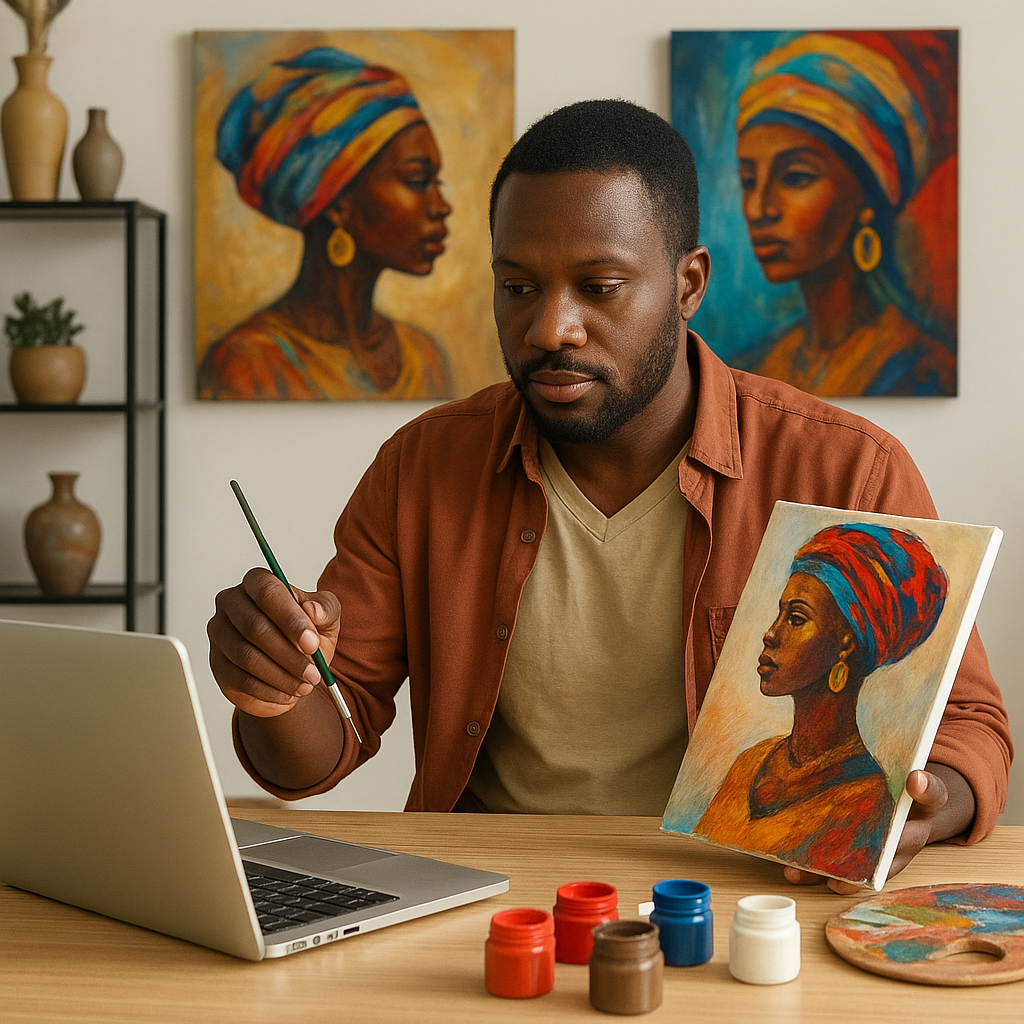
African artists are rewriting the rules of discovery, sales, and career growth by using the internet as both studio and stage. From painters in Abidjan to photographers in Nairobi, beatmakers in Lagos, and fashion designers in Johannesburg, creators are building direct lines to buyers and fans, bypassing old gatekeepers and earning in new ways. This guide unpacks practical online strategies that work on the continent, highlights platform choices and growth systems, and maps how to connect creativity to sustainable income while preserving the spirit of authenticity.
The digital ground beneath the movement
Any effective digital plan starts with a clear view of the terrain. Africa is a mobile-first continent: for most people, the phone is the first and only computer. According to GSMA’s Mobile Economy reports, about half of active connections in Sub‑Saharan Africa now run on smartphones, a figure that continues to rise each year. The International Telecommunication Union has estimated that roughly four in ten people on the continent use the internet, with urban centers and coastal nations leading the charge. These realities shape formats (lightweight video, vertical screens), payments (mobile money), and discovery (social platforms + messaging).
Two additional changes have tilted the field in favor of creators:
- Short video and livestreams mainstreamed discovery. TikTok’s global community exceeds one billion users, while YouTube Shorts reports more than one and a half billion monthly logged-in viewers worldwide. Artists who master 15–60 second narratives gain a repeatable path to visibility.
- Payments became more local. Sub‑Saharan Africa leads the world in mobile money adoption, with well over half a billion registered accounts across services such as M‑Pesa, MTN MoMo, Orange Money, and Airtel Money (GSMA, Mobile Money). That’s crucial for selling prints, tickets, or digital lessons without forcing buyers into foreign cards.
Finally, the creator economy has matured. Industry estimates put the global creator economy north of $100 billion. While much of the infrastructure was built outside Africa, regional platforms—from fashion marketplaces to digital product stores—have localized shipping, payouts, and taxes, helping artists convert fans into customers.
Brand first: turning craft into a clear promise
Audiences don’t just buy art; they buy a feeling, a story, and a future they want to belong to. Treat your brand as a living system composed of four parts:
- Position: Name the niche and the difference. “Afrofuturist portraits in neon acrylics,” “documentary images of everyday Ghanaian architecture,” “Amapiano remixes blending East African percussion.” Specificity invites relevance; vagueness dilutes visibility.
- Aesthetic: Build a recognizable visual language—color palette, typography, framing rules, backdrop textures, even how captions sound. Save a style guide you can reference for thumbnails, flyers, and merch.
- Proof: Curate a tight portfolio: 9–12 pieces that tell a coherent story. Use before/after carousels, process clips, client testimonials, and press mentions to turn curiosity into trust.
- Promise: State what people get when they follow or buy. It could be limited editions, behind-the-scenes studio access, early drops, or intimate performances.
Remember the brand loop: clarity fuels marketing, which fuels reach, which fuels feedback, which sharpens clarity. Each loop should make your message simpler, your packaging sharper, and your calls‑to‑action more direct.
Platform map: where African artists actually win
Instagram and TikTok for discovery
Short vertical video remains the fastest discovery engine for visual arts and music. On Instagram, Reels and Carousels offer complementary strengths: Reels for reach, Carousels for depth and saves. On TikTok, anchor your presence with serial formats: “30 days of patterns,” “Studio log,” “Sampling a local sound.” Ending with a soft CTA—“comment a color for tomorrow”—boosts engagement signals.
- Post formats that work: time-lapses, “from sketch to final” cuts, split-screen remixes with dancers or DJs, voiceovers about meaning or materials, and trend remixes localized with your culture.
- Hashtags: pair broad (#art, #afrobeats) with hyperlocal or niche (#nairobiphoto, #accraart, #amapianoedits). Local language tags (e.g., Kiswahili, Yoruba) often reduce noise and surface you to buyers nearby.
- Convert with link-in-bio trees that segment routes: “Buy prints,” “Commission me,” “Join newsletter,” “Book a show.”
YouTube and Shorts for depth and compounding
YouTube is an asset library that compounds. Shorts attract new viewers; long-form builds loyalty and search visibility. For painters: 8–12 minute “paint with me” episodes with chapters. For producers: beat breakdowns, sample sourcing, and home-studio tours. Add affiliate links to brushes, audio gear, or paper—small streams that add up.
X (Twitter) and LinkedIn for professional reach
X is strong for ideas and community; LinkedIn is underrated for B2B commissions and residencies. Post threads on process, research, or cultural references. Pin a portfolio tweet. On LinkedIn, post client outcomes—“brand murals increased store footfall”—and tag collaborators. Curators, agencies, and festival bookers search there.
WhatsApp Business and Telegram for conversion
In many African markets, the sale closes in chat. WhatsApp Business catalogs bundle product photos, prices, and quick replies. Combine with payment links (Paystack, PayPal where available, mobile money) and delivery options. Broadcast lists beat groups for announcements while keeping privacy.
Regional marketplaces and stores
- Fashion and crafts: Platforms like ANKA (formerly Afrikrea) connect African designers to global buyers with integrated logistics and payouts.
- Digital goods: Selar (West Africa), Gumroad, and Ko‑fi handle downloads, courses, presets, and tip jars with lighter shipping complexity.
- Music: Audiomack and Boomplay have strong African audiences; DistroKid, TuneCore, and local aggregators get tracks onto Spotify, Apple Music, and YouTube Music. Use a smart link with pre-saves and embedded pixels.
Content that moves people to act
Content strategy blends three pillars: discovery, trust, and sales.
- Discovery: fast, entertaining, emotional. Think demos, trends localized with your culture, stitches/duets, and “first look” moments.
- Trust: educational or intimate. Tutorials, studio diaries, conversations with collaborators, long captions about heritage or process. This is pure storytelling.
- Sales: clear offers with urgency and social proof—limited runs, time-bound commissions, signed editions, early-bird tickets. Include customer photos and testimonials.
Cadence matters. Commit to a weekly minimum viable schedule you can keep: two short videos, one carousel or thread, one email. Consistency stabilizes algorithms and audience expectations. Batch record on one day, then schedule with native tools or creators’ suites to conserve data and time.
Hooks that work in Africa’s mobile context
- “How I turn recycled Nairobi plastics into wearable art.”
- “Sampling a street vendor’s call into an Amapiano groove.”
- “Sketching commuters I met on the Lagos BRT—day 7.”
- “Budget studio tour: lighting gear under $100 equivalent.”
Prioritize captions and subtitles for sound-off viewing; keep on-screen text large enough for small devices. Compress video without losing detail to respect lower bandwidth and data costs.
From attention to income: offers, pricing, and payments
Design a value ladder that supports both fans with low budgets and patrons with higher spend. Examples:
- $5–$20: wallpapers, sample packs, behind-the-scenes subscriptions, zines, event replays.
- $50–$150: signed small prints, limited merch, house concerts tickets, digital commissions.
- $300–$1,500+: custom murals, corporate photography, brand collaborations, canvas originals.
Bundle offers (print + video commentary + certificate of authenticity) and test limited drops. Partner with micro‑logistics carriers in your city for reliable delivery. For cross‑border, consider DHL eCommerce or postal services with tracking, and state duties clearly at checkout.
Accept the way your buyers pay. Mobile money dominates in East Africa; bank transfers and cards may be stronger in parts of Southern and North Africa. Payment gateways like Paystack, Flutterwave, Stripe (in select markets), and M‑Pesa STK push can all stitch into storefronts. For recurring support, Patreon and Buy Me a Coffee work globally; local subscription tools and WhatsApp invoicing work well too.
Email and SMS: the quiet engines of revenue
Algorithms change; owned lists endure. Even simple newsletters drive reliable sales. Global studies (e.g., Litmus) regularly report email ROI near $36 for every $1 spent. Build a list with a valuable freebie: “studio toolkit,” “preset pack,” or a private mini‑concert. Send a consistent rhythm of value-first notes—process, lessons learned, culture spotlights—and punctuate with clear sales windows. SMS is potent for drops and event reminders in markets where email engagement is weaker; keep messages short and time‑zone aware.
Paid growth: small budgets, smart structure
Ad costs (CPM/CPC) in many African markets are typically lower than in North America or Western Europe, which lets artists test cheaply. Keep media buys focused:
- Objectives: awareness for Reels/Shorts to warm the pixel, engagement for community, conversions for launches.
- Audiences: layer interests (art, galleries, design, music genres) with location and language. Build lookalikes from newsletter sign-ups and purchasers.
- Creative: vertical-first, fast hook, clear benefit. Show the hands, the face, the craft. End with one CTA.
- Measurement: install pixels, tag links with UTM parameters, and verify attribution windows. Kill weak ads fast; scale winners slowly.
Collaboration and cross-pollination
Collabs multiply reach and credibility. Painters design a limited tee with a streetwear label; a singer performs live with a city’s dance collective; photographers co-host a pop-up with a café or bookstore. Share costs and cross-promote. Target festivals, art fairs, and creator markets in your region; document the experience for platforms. Micro‑influencer seeding (gifted prints or songs) often beats paying one big influencer for a single post.
Search and discoverability beyond social
SEO makes your work findable long after a post fades. Optimize a lightweight website or portfolio with these moves:
- Use descriptive titles: “Acrylic Afrofuturist Portraits – Nairobi Artist Portfolio” beats “Home.”
- Alt text on images: “hand‑painted Adire pattern scarf in indigo, Yoruba technique.”
- Blog or notes: behind-the-scenes posts that answer “how to” queries attract searchers who convert well.
- Pinterest boards for series and colorways; it’s a visual search engine, not just a social feed.
Data literacy for artists
You don’t need to be a statistician; you need a simple scorecard. Choose a few key signals:
- Discovery: reach, watch time, saves, shares.
- Trust: comments per post, newsletter open and click rates.
- Sales: conversion rate, average order value, repeat customers, time to purchase.
Check weekly, decide one experiment, and run it for two weeks. That discipline compounds better than chasing constant hacks. Use platform analytics, Google Analytics 4 with UTM tags, and your payment gateway’s dashboard. When a piece goes viral, update the caption or pinned comment with a storefront link and a limited-time offer—turn attention into monetization.
Legal, rights, and pricing power
Document ownership of your work and understand licensing. Photographers and illustrators can sell the right to use an image for a specific time, geography, and medium—price scales with usage. Musicians should register with local performing rights organizations (e.g., SAMRO, MCSK, COSON, BMDA) for performance and mechanical royalties. On platforms like YouTube, enable Content ID via your distributor to capture uses you never see. Watermark previews, but don’t destroy the viewing experience—trust still matters.
Segment playbooks by discipline
Painters and visual artists
- Mix Reels (30–45s process) with Carousels (sketch → mid → final → detail). End with “Comment a color/texture for the next piece.”
- Host a monthly Instagram Live “open studio” with a tip jar and a raffle for a sketch.
- Offer limited, numbered giclée prints with certificates. Post unboxing videos from buyers to build social proof.
- Create a “studio class” mini‑course: materials, mixing, and composition. Sell via Selar/Gumroad.
Photographers
- Publish themed series in Carousels with micro‑essays in captions; thread versions on X for critics and editors.
- License images as editorial stock through curated platforms; pitch brand shoots via LinkedIn case studies.
- Offer location-specific photo walks; partner with hotels and tour operators. Promote with Reels and WhatsApp flyers.
Musicians and producers
- Release loops and stems for others to remix; feature the best on your channels to nurture community.
- Alternate between Shorts and performance clips; collect pre‑saves via a smart link. Pin the link on every platform.
- Sell sample packs and production lessons. For live shows, test pay‑what‑you‑can tickets with mobile money.
Fashion designers and crafters
- “Make to order” reduces inventory risk; show sizing guides and try‑on videos on a range of bodies.
- Batch drops with WhatsApp waitlists. Offer paid priority production slots.
- Collaborate with photographers and stylists for editorial content; pitch local magazines and culture blogs.
Working around common constraints
- Bandwidth and data costs: compress images (WebP), upload during off‑peak hours, and keep videos short and crisp. Provide low‑res previews with a “view in HD” option.
- Power cuts: schedule uploads; keep a power bank and offline drafts ready. Repurpose one shoot into many formats.
- Shipping challenges: start with digital products and local deliveries; move to regional drops once systems are stable.
- Payment friction: always present at least two options (mobile money + card/bank). For high‑ticket sales, split payments or deposits.
Community design: from followers to believers
A fanbase built on shared meaning lasts longer than one built on virality. Name your world—give your audience a nickname, rituals, and perks. Host monthly community prompts (e.g., “draw this memory”), feature responses, and send surprise DMs or voice notes. Gate some content to your newsletter or membership to reward depth. Offline meetups—small gallery hangs, listening circles, sketch nights—feed the online flywheel with authentic moments worth sharing.
International reach without losing your roots
Many African artists sell to diaspora and global collectors. Balance local language and English; include context for cultural motifs so global viewers connect the dots. Time some posts to North American and European evening hours. Translate captions selectively. Keep pricing in multiple currencies if your store allows it, and explain your shipping timeline transparently. When approached by overseas collaborators, check references, insist on written terms, and price for usage—not just time spent.
Proof points and directional stats
To frame expectations with realism:
- Smartphone usage in Sub‑Saharan Africa sits around the halfway mark of all mobile connections and continues to grow yearly (GSMA Mobile Economy, 2023).
- Internet use on the continent hovers around four in ten people, with wide variance by country and city (ITU, 2023). Urban hubs like Lagos, Nairobi, Accra, Cairo, and Johannesburg tend to outperform averages.
- Mobile money dominates daily transactions in multiple regions, with Sub‑Saharan Africa holding the largest share of the world’s registered accounts (GSMA, 2023). This underpins creator sales from tips to ticketing.
- Email remains a top sales driver globally, with studies placing ROI near $36 per $1 spent (Litmus). Even small lists convert if nurtured.
These figures aren’t ceilings; they’re context. Artists who adapt to mobile‑first behavior, localized payments, and short‑video discovery consistently break out—sometimes unpredictably, often after steady, quiet months of making and sharing.
Ninety-day blueprint
- Week 1–2: Clarify niche, polish bio, set up link‑in‑bio, enable WhatsApp Business catalog, and create a lightweight storefront. Draft a two‑sentence promise. Choose three content pillars.
- Week 3–6: Ship two Shorts/Reels weekly, one depth post, one email. Run a $20 test ad to warm audiences. Build a “day in the life” series. Offer one low‑ticket digital product.
- Week 7–10: Announce a limited drop with a waitlist. Collaborate with one creator or brand. Host one live session with a tip jar. Gather testimonials and post buyer unboxings.
- Week 11–13: Scale what worked: extend the ad set, expand the email list magnet, raise prices slightly on sold‑out items, and pitch one editorial outlet or gallery with a clean press kit.
Mindset, sustainability, and the long arc
Online success is less about a single viral spike and more about durable systems: a clear promise, repeatable series, iterative offers, and humane production rhythms. Protect the well you draw from—your culture, your city, your collaborators—by giving credit, paying fairly, and documenting the journey for those coming behind you. Treat your practice as both craft and small business. Keep sharpening your analytics instincts, but hold onto the spark that made you begin. The blend of creativity with disciplined distribution is what turns waves of attention into careers.
Action checklist
- Define a one‑line niche and promise; update bios and banners.
- Pick three platforms: one for reach, one for depth, one for conversion.
- Set up payments that match local buyer behavior; test two options.
- Launch a simple newsletter with a meaningful freebie.
- Design one serial content format and commit to 8–12 episodes.
- Create a low‑ticket digital product and a limited physical drop.
- Integrate UTM tracking and a weekly scorecard.
- Schedule a small ad test and one collaboration this month.
- Archive process assets; build an evergreen YouTube piece each quarter.
- Protect your rights: document ownership, set licensing terms, and watermark lightly.
African artists thrive online when they merge craft with systems, culture with commerce, and courage with patience. Build for the phone in your audience’s hand, speak in your own voice, and let audience energy guide your next experiment. Keep showing up—with consistency, authenticity, and a bias for thoughtful action—and the web will keep widening the path between your studio and the world.