
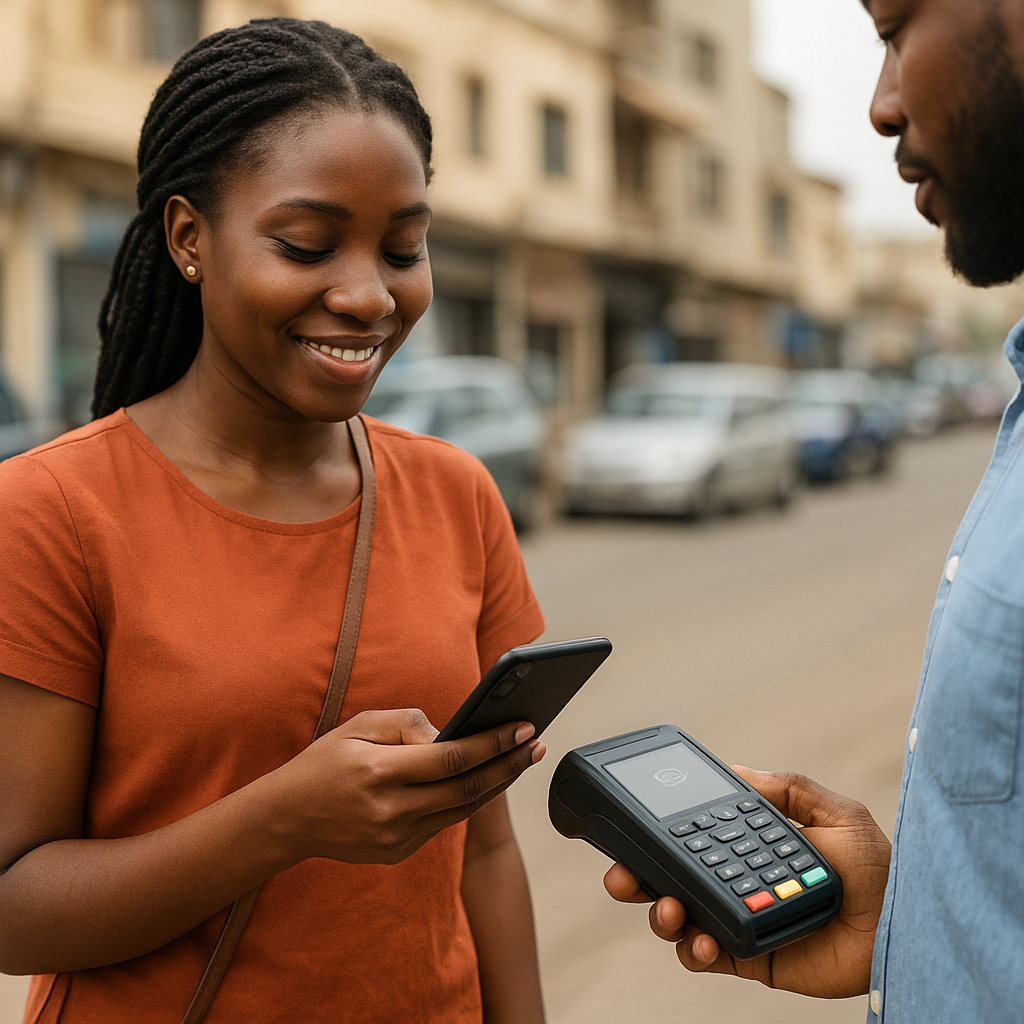
Digital payments have moved from the margins to the mainstream of African commerce, redefining how consumers discover products, evaluate brands, pay for everyday needs, and remain loyal over time. This shift is not only a technology story—it is a marketing story. As wallets, QR codes, instant transfers, and agency networks reach deep into neighborhoods and informal markets, they reshape incentives, data flows, and customer journeys. For marketers, the new reality is clear: payment choice is no longer a back-office decision but a front-line growth lever that influences acquisition, basket size, frequency, and lifetime value across the continent’s diverse markets.
The inflection point: payment rails as growth infrastructure
Africa’s rapid adoption of digital wallets and account-to-account transfers has created a new infrastructure for commerce. Telco-led solutions like M-Pesa in Kenya, MTN MoMo and Airtel Money across West and East Africa, Orange Money in Francophone markets, and bank-driven rails in Nigeria and South Africa now touch hundreds of millions of consumer journeys every month. Agent networks and USSD menus make the ecosystem accessible without smartphones, while super-light apps and QR codes bring easy acceptance to micro and small merchants.
Independent research by industry bodies such as GSMA shows that Sub-Saharan Africa accounts for the majority share of global mobile-money transactions by volume and value, with the total value processed through wallets globally crossing the trillion-dollar mark annually in the early 2020s. In parallel, instant bank-to-bank payment systems—NIBSS in Nigeria, PesaLink in Kenya, GhIPSS in Ghana, and PayShap in South Africa—are raising consumer expectations for real-time payments at low cost. This expanded utility is blurring lines between cash, wallets, and bank rails, and it is changing the shape of marketing funnels and attribution models in the process.
Two technical accelerants matter most for marketers. First, the spread of national QR standards (for example, NQR in Nigeria and interoperable QR in Kenya) is lowering acceptance friction for merchants while unlocking traceable purchase data. Second, policy-driven interoperability between wallets and banks is turning previously siloed customer pools into reachable audiences with measurable behaviors. These changes enable marketers to run more precise offers, reduce customer support lag, and build purchase sequences that feel effortless to users.
How payment habits are reshaping the marketing funnel
The classic funnel—awareness, consideration, purchase, retention—now hinges on payment options at every step. In Africa, where cash-on-delivery, informal credit, and agent-assisted payments have long dominated, frictionless digital acceptance can be the difference between an impression and a sale.
Discovery and acquisition: meeting customers where they chat, stream, and ride
Social and messaging environments are the continent’s de facto storefronts. From WhatsApp broadcasts and Instagram Shops to short-form video on TikTok, brands and micro-sellers increasingly close the loop with payment links, wallet push requests, or QR codes. The ability to initiate a payment without sending a buyer to a slow mobile web checkout has boosted campaign effectiveness, particularly in markets with inconsistent connectivity. For performance marketers, the move from “click to website” to “click to pay” compresses time-to-cash and improves attribution fidelity.
Consider chat commerce flows: a customer sees a product in a WhatsApp status, asks a question, receives a payment link integrated with local rails, and pays through their preferred wallet or bank app. The brand gains a verified payer ID, consented contact details, and order metadata—critical building blocks for follow-up journeys and personalization.
Checkout and purchase: local methods drive measurable conversion
In many African markets, cart abandonment is less about price than about payment friction. When merchants offer only international cards, they often face low authorization rates, interchange costs that make small orders unprofitable, and a mismatch with consumer habits. Adding local rails—wallets, instant bank transfers, USSD, and national QR—typically lifts checkout completion materially. Industry case studies suggest double-digit relative improvements when the top two local methods are enabled and clearly surfaced as defaults.
Buy-now-pay-later and pay-in-4 options are emerging in urban centers but with localized twists: pay-as-you-go models for solar home systems, device financing embedded into operator plans, and microcredit from wallets that score users on transactional history. These instruments expand affordability for mid-ticket purchases and increase average order value in categories like electronics, fashion, and education services. For subscription businesses—edtech, streaming, and utility repayment—wallet autopay and bank debit mandates reduce involuntary churn while giving finance teams predictable cash flow.
Retention and loyalty: post-purchase moments that compound value
Receipts, refunds, and repeat purchases are new battlegrounds for loyalty. Digital receipts become remarketing assets when they carry personalized offers or referral incentives. Fast refunds—especially to the same rail used for purchase—reduce chargebacks and support escalations, strengthening trust. Wallet-based stored balances and merchant mini-wallets power closed-loop loyalty, allowing targeted bonuses for specific SKUs or time windows without blanket discounts that erode margins.
Crucially, payment frequency is rising as consumers use digital rails for smaller, more regular purchases—airtime, utilities, transport, and micro-insurance—creating habitual touchpoints. Brands that embed themselves into these routines through subscription bundles, micro-rewards, or cross-product credits increase share of wallet and develop defensible moats around their best customers.
The data dividend: payments as a first-party signal engine
As third-party cookies fade and media costs climb, payments unlock a high-quality source of first-party data with clear consent trails. Each transaction yields time, location (physical or virtual), method, order composition, and payer identity signals that feed robust analytics. Combined with event tracking from apps and sites, marketers can build unified profiles, run cohort analyses, and calculate LTV with better precision.
Three data practices stand out:
- Event-based measurement: log payment initiation, approval, failure reason, refund, and chargeback as discrete events. This reveals drop-off points and informs instrument-specific UX fixes.
- Offer experimentation: test payment-led incentives—fee waivers for bank transfers, bonus airtime for wallet payments, or QR-only discounts—and attribute lift at the SKU and channel level.
- Propensity modeling: use past payment preferences and success rates to pre-select the optimal rail for each user, cutting friction and authorization failures while increasing contribution margin.
Ethical data stewardship is non-negotiable. Modern African privacy frameworks—Kenya’s Data Protection Act, Nigeria’s NDPR, South Africa’s POPIA, Ghana’s DPA—demand explicit consent and secure processing. The upside is a cleaner value exchange: customers who perceive fairness and control over their data are more responsive to tailored offers and less prone to churn.
Channels meeting rails: social commerce, super-apps, and mobility
Payments are most potent when they flow through the channels people already use daily. WhatsApp commerce, often orchestrated via business APIs and verified profiles, lets brands deliver catalogs, answer questions, and finalize payment in a single thread. Mini-app ecosystems inside telco apps or ride-hailing super-apps bundle discovery, delivery, and payment into a seamless flow, particularly in cities where mobile data is costly and users prefer fewer, multipurpose apps.
USSD remains a critical inclusion tool for non-smartphone users, enabling bill pay, P2P transfers, and merchant acceptance even on basic devices. For marketers, USSD may seem limited, but it supports creative campaigns: short codes for instant discounts, balance-triggered offers, or location-based prompts via agent networks. The blend of app, USSD, and QR experiences allows a truly omnichannel approach that respects local behaviors without sacrificing measurability.
Cross-border commerce and diaspora flows: the under-tapped growth frontier
Cross-border payments are being rewired by regional initiatives and fintech corridors. The Pan-African Payment and Settlement System (PAPSS), backed by Afreximbank, aims to settle cross-border transactions in local currencies, reducing reliance on hard currency and accelerating settlement times. As participation expands, merchants could price in local tender and receive settlement without expensive correspondent chains, enabling new regional marketing plays.
The diaspora dimension is even more immediate. Sub-Saharan Africa receives over $50 billion in annual remittances, according to multilateral estimates. Increasingly, those flows are shifting from pure P2P to P2M: paying school fees, healthcare, insurance, and e-commerce orders directly for relatives back home. Smart marketers are adding “pay from abroad” checkout buttons, partnering with remittance providers, and running diaspora-targeted campaigns in Europe, North America, and the Gulf to convert altruistic intent into direct purchases. This strategy compresses delivery cycles, reduces fraud tied to third-party pickups, and taps a high-intent audience often ignored by domestic-only advertising.
Trust, risk, and regulation: the growth foundation
Fraud and social engineering remain the biggest threats to sustained adoption. SIM swap attacks, phishing on chat apps, and fake checkout pages erode confidence if not addressed quickly. Merchants and platforms are countering with stronger device fingerprinting, contextual risk scoring, step-up authentication for high-risk transactions, and rapid dispute resolution. Clear, proactive communication—alerts, in-thread warnings, and customer education—builds the perception of safety that drives repeat use.
On the governance side, know-your-customer rules, transaction monitoring, and data minimization are not just legal formalities; they are competitive advantages. Companies that embed compliance into UX—lightweight eKYC, tiered account limits, transparent fees—gain regulatory trust and scale faster. A visible commitment to safety and consumer protection increases approval from payment partners and reassures skeptical first-time buyers.
Country snapshots: different rails, similar marketing lessons
Kenya demonstrates the power of ecosystem depth. With near-ubiquitous wallet familiarity and a strong agent network, micro and small businesses accept digital payments as default. Marketers can segment by wallet use, push Lipa Na M-Pesa offers at peak hours, and run location-based QR discounts that convert foot traffic to digital trails.
Nigeria showcases the rise of instant bank transfers and QR through NIBSS. Bank app ubiquity means merchants can prioritize account-to-account options with strong authorization rates and lower fees. Social commerce thrives as sellers drop NQR codes in WhatsApp and Instagram, while fintechs like Paystack, Flutterwave, and OPay abstract complexity for SMEs.
Ghana’s mobile money leadership and wallet-to-bank interoperability ease checkout design. While policy changes like e-levy affected behavior at the margin, consumers still prize convenience. Merchants that surface real-time fee transparency and run wallet-specific promos keep completion rates high.
South Africa blends cards, instant bank payments, and QR (Scan to Pay, PayShap). Here, a hybrid acceptance stack beats one-size-fits-all. Digital-native retailers increase approval odds by routing higher-risk cards to 3-D Secure flows while proposing instant EFT as a cheaper, faster default.
Francophone West Africa, anchored by Orange Money and wave-like low-fee entrants, underscores the role of pricing in adoption. When fees fall and UX simplifies, adoption accelerates across urban and peri-urban segments, widening the addressable audience for performance marketers.
What marketers should do next: a practical playbook
- Localize acceptance: enable the top two or three methods in each country (wallet, instant bank, QR, USSD). Make local methods the visual default at checkout.
- Shorten the path: use payment links in chat and social ads; minimize redirects; cache payer preferences with consent.
- Price for rails: pass through savings from lower-fee rails as micro-discounts; test rail-specific promos rather than blanket coupons.
- Instrument everything: track initiation, failure codes, retries, refunds, and chargebacks as analytics events tied to campaigns and creatives.
- Design for low bandwidth: lightweight pages, cached assets, and offline-friendly QR ensure reliable payments in poor connectivity zones.
- Reward repeatability: build wallet-based loyalty, subscription bundles, and micro-rewards tied to transaction streaks.
- Go diaspora-aware: add “pay from abroad” flows; partner with remittance gateways; target diaspora holidays and pay cycles.
- Close the loop in support: make refunds fast to the original rail; automate status notifications to reduce anxiety and ticket volume.
- Guard the edge: educate customers about phishing; use in-thread verification in chat; deploy step-up checks for unusual payments.
- Collaborate locally: co-market with telcos, banks, and wallet operators for credibility, audience reach, and subsidized incentives.
Metrics that matter in a payments-led growth strategy
- Checkout completion rate segmented by rail and device
- Authorization/approval rate by method and issuer
- Average order value and purchase frequency by payment preference
- Refund time-to-wallet and dispute resolution time
- Chargeback and fraud incident rates, normalized by volume
- Share of revenue by local rails vs. international cards
- Subscriber churn (involuntary vs. voluntary) for recurring models
- Cross-border share of orders and settlement costs
- Lifetime value to CAC ratio segmented by first payment method
- Agent-originated sales and conversion for assisted channels
Signals from the statistics: where growth is headed
Across the continent, several arcs stand out. Wallet ecosystems continue to expand, with GSMA reporting sustained growth in registered accounts and active users, and with Sub-Saharan Africa contributing the lion’s share of global mobile money activity. Instant payments are normalizing real-time expectations in major markets, and QR standards are converging—fewer reader apps, more merchant acceptance, better data quality.
E-commerce volumes, while still a small share of total retail, are rising steadily as delivery infrastructure improves and digital payments simplify last-mile friction. Categories with frequent, predictable spend—transport, utilities, groceries, education fees—are leading indicators of sustainable behavior change. Meanwhile, hardware-financed and pay-as-you-go models are turning non-buyers into first-time digital payers, accelerating financial inclusion and generating novel data for underwriting and marketing optimization.
The creative frontier: payment as product, product as marketing
Some of the most effective African growth stories merge product and payment into a single narrative. A ride-hailing app offering loyalty “miles” redeemable for grocery discounts, paid via instant transfers; a grocer embedding low-fee QR at checkout and sharing a portion of the savings with customers as dynamic discounts; a school system that allows diaspora guardians to pay fees directly from abroad while messaging updates to parents on the ground—each example turns a once invisible payment choice into a tangible benefit.
Creative teams can treat rails as ingredients: the rail chosen by the customer becomes a segment, the fee saved becomes an incentive, and the approval speed becomes part of perceived quality. Payment UX is not merely support; it is the brand experience. When the first attempt succeeds, confirmation is instant, and refunds are painless, users attribute competence and care to the brand, not just to the payment provider.
Risk management as a growth lever
Strong risk controls don’t only prevent losses; they increase revenue. A well-tuned risk engine that reduces false declines keeps legitimate customers moving. Device binding, velocity checks, and machine-learned risk scoring block bad actors while maintaining a smooth path for trusted users. Transparent messaging—why an extra step is needed, when a hold will release—preserves goodwill. When customers feel protected, they buy more, more often, and recommend more confidently.
Building for resilience: operational readiness around payments
Operational excellence around payments sustains campaigns when volumes spike. Redundant providers for critical rails, intelligent routing to the healthiest endpoint, and proactive incident communication reduce downtime pain. Finance teams aligned with marketing can clear settlement mismatches fast, maintain cash visibility, and release budgets for time-sensitive promotions without risk of tying up working capital. A robust sandbox and rollout strategy prevents a new rail from breaking a profitable flow right before a major campaign.
Future horizons: what to watch
Several developments could further accelerate the transformation. Real-time cross-border settlement systems like PAPSS may mature into reliable rails for regional commerce, shrinking settlement times and costs. Central bank digital currency pilots—from Nigeria’s eNaira to Ghana’s eCedi—will inform the next phase of wholesale and retail settlement design, even if consumer-facing adoption remains gradual. Wider ISO 20022 adoption promises richer data with each transfer, improving reconciliation and enabling smarter offer logic at the edge. Continued investments in digital identity will tighten KYC, reduce fraud, and streamline onboarding across sectors.
Artificial intelligence is poised to enhance both risk and marketing. Better anomaly detection protects users without adding friction, while creative optimization and next-best-offer engines use first-party payment signals to direct promotions where they are most likely to create value. As the infrastructure matures, the competitive edge will belong to brands that combine judicious technology choices with culturally resonant storytelling and transparent value exchange.
Conclusion: payments as a marketing superpower
Digital payment trends are not a side note to African consumer behavior; they are a central chapter. Every step—from first impression to repeat purchase—is influenced by whether a brand respects local preferences, reduces friction, and converts a payment moment into a moment of value. The path forward is pragmatic: integrate local rails, design for reliability, elevate safety, measure relentlessly, and treat data with care. Do this well, and payments stop being a cost center and become a growth engine—a quiet superpower that compounds returns across channels, cohorts, and time.