
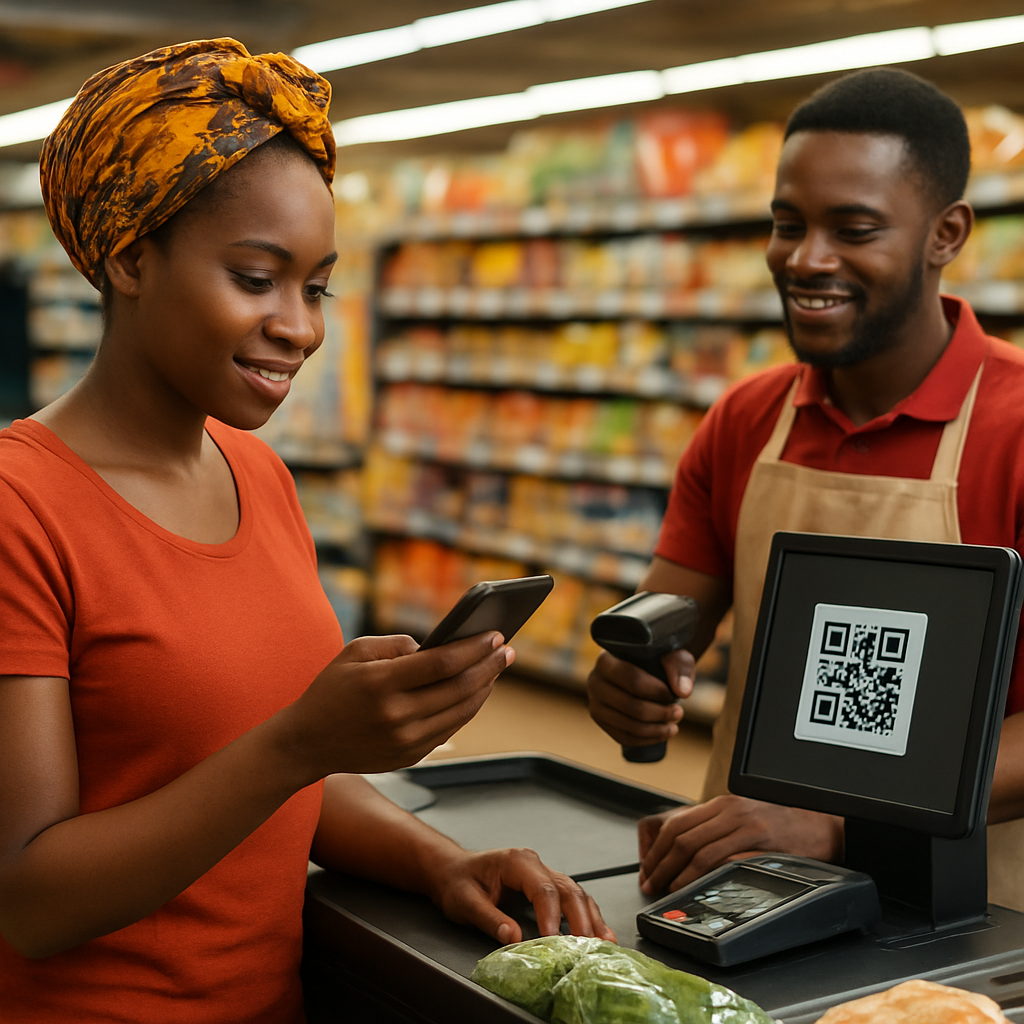
Digital loyalty in African supermarkets sits at the intersection of payments innovation, smartphone adoption, and the rapid formalization of grocery retail. From South Africa’s mature chains to fast-growing markets like Kenya, Nigeria, Egypt, and Morocco, retailers are using data-enabled programs to influence where, how, and how often people shop. Thanks to the ubiquity of messaging apps, the scale of mobile money, and the cultural centrality of neighborhood stores, loyalty initiatives can move beyond simple points into experiences that change behavior. This article explores the market forces, program designs, economics, and execution playbooks that make supermarket loyalty a growth lever across the continent—and explains how to capture measurable, defensible ROI through rigorous marketing science and practical operations. Key concepts such as loyalty, retention, personalization, mobile, omnichannel, first-party data, gamification, segmentation, redemption, and CLV are emphasized throughout.
Why African Grocery Is Uniquely Suited to Digital Loyalty
Several structural characteristics of African retail create fertile ground for digital loyalty programs that blend online and offline touchpoints:
- Mobile-first behavior at scale: Sub-Saharan Africa surpassed the 50% mark for smartphone adoption around 2022 and continues to grow, according to GSMA’s Mobile Economy series. Even where smartphones are not universal, feature phones remain addressable via USSD and SMS, expanding reach beyond app-centric strategies.
- Messaging dominates: In many markets, WhatsApp reaches the majority of internet users; in South Africa, for example, multiple studies (including GWI/Statista) report penetration well above 80–90% among internet users. This makes conversational loyalty—enrollment, coupons, and digital receipts via chat—friction-light for shoppers and staff.
- Mobile money ubiquity: GSMA’s State of the Industry reports consistently show Sub-Saharan Africa accounting for roughly 70% of global mobile money transaction value. M-Pesa alone counts well over 50 million monthly active users across its markets, giving supermarkets a direct path to payouts, cashbacks, micro-credit, and precise reward settlement.
- Formal retail is growing, but value-seeking is universal: Modern supermarkets and compact formats are expanding, yet price sensitivity remains high given inflationary cycles and income volatility. That makes targeted price investment through loyalty (rather than blanket discounts) a margin-friendly way to deliver value.
- Coalitions and ecosystems: Telcos, banks, and super-apps create coalition opportunities—sharing identity rails, catalogs, and incentives to lower acquisition cost and improve conversion. Supermarkets can plug into existing traffic and trust.
Importantly, appetite for programs exists: research on South Africa’s loyalty market (e.g., the Truth & BrandMapp Loyalty Landscape) indicates that more than 70% of consumers participate in at least one loyalty program, with supermarket schemes among the most frequently used. While South Africa is not the entire continent, it offers a glimpse of the demand that is emerging elsewhere as modern trade expands.
Architectures and Channels: Meeting Shoppers Where They Are
Lightweight enrollment and identity
Enrollment must be instant and low-friction at the till, in chat, or on the shelf. Best practices include:
- Cardless IDs: Use a phone number as the loyalty ID, eliminating plastic card issuance costs and enabling faster lookups.
- USSD/SMS fallback: For feature phones, enable enrollments and simple offer discovery over USSD menus; support SMS-based OTPs for consent and authentication.
- WhatsApp chatbots: Automate onboarding, store finders, balance checks, and coupon unlocking in conversational flows that staff can reference easily.
- QR/barcode identifiers: Display scannable codes in apps or chat to speed up checkout and attribution to the correct account.
Offer delivery and in-store activation
Supermarkets that win blend above-the-line promotions with targeted offers:
- Personal offers wallet: Load member-specific deals weekly (e.g., discounts on frequently bought categories); notify via push, SMS, or WhatsApp.
- Price-locks and member-only prices: Broadcast compelling “member price” tags on shelves; gate deeper discounts via digital enrollment to boost sign-ups.
- Digital stamps and missions: Encourage repeat visits (e.g., “Buy bread + milk + produce this week to unlock R20 off next week”), making the value storyline visible without complex points math.
- Receipts as media: Use digital receipts to recap savings, feature next-best offers, solicit feedback, and invite cross-sell into adjacent departments (e.g., bakery or ready meals).
Payments and rewards plumbing
The payments layer in Africa is an advantage, not a constraint:
- Mobile money and e-wallets: Allow instant cashback or voucher issuance to M-Pesa, MTN MoMo, Airtel Money, Orange Money, or store wallets—enabling precise settlement and auditability.
- Card-linked offers: Where banking rails are strong (e.g., South Africa, Egypt, Morocco), link offers to debit/credit tokens for automatic reward on eligible spend.
- Gift cards and digital vouchers: Provide flexible instruments that can be purchased, gifted, and redeemed across channels; particularly useful for family remittances and B2B incentives.
The Data Engine: From Signals to Action
Effective programs convert transactions into insight, and insight into measurable changes in behavior. Foundational elements include:
- Unified identity: Consolidate POS, e-commerce, and messaging interactions under a single customer profile. Deduplicate using phone numbers, device IDs, and consented cookies, respecting local privacy laws.
- Data minimization and consent: Collect only what is necessary; capture clear opt-ins for marketing and profiling. African data protection frameworks—South Africa’s POPIA, Kenya’s Data Protection Act, Nigeria’s NDPR, Morocco’s Law 09-08, and others—require robust consent logs and secure processing.
- RFM and propensity: Start with recency, frequency, and monetary value to identify lapsed, at-risk, and high-potential customers. Layer category-level propensities to fuel relevant offers.
- Next-best-action engine: Orchestrate triggers—welcome journeys, replenishment nudges (e.g., staple foods after typical consumption cycles), and seasonal campaigns—across app, email, SMS, and chat.
- Coupon science: Use personal price elasticity estimates to set discount depth. Avoid over-subsidizing loyal categories; invest more where headroom exists.
AI can help with pattern discovery and creative testing, but the fastest ROI still comes from disciplined test-and-learn and clear guardrails: budget caps, frequency controls, and strong incrementality measurement. Rigorous A/B and holdout designs matter because halo effects across categories (e.g., fresh produce discounts improving overall basket size) can disguise poor unit economics unless measured properly.
Economics and KPIs That Matter
Well-run programs pay for themselves by lifting spend and frequency more than they cost in rewards, technology, and operations. A few evidence-backed reference points:
- Bain & Company’s classic research shows that increasing customer retention by just 5% can boost profits by 25–95%, owing to higher repeat rates and lower acquisition costs.
- McKinsey’s analyses of loyalty leaders indicate revenue uplifts ranging from 5–10% for average programs to 15–25% for top-quartile performers, driven by better targeting and execution.
Core supermarket KPIs and practical target ranges to benchmark year one to year two performance include:
- Enrollment rate: Aim for 40–60% of transactions linked to a member ID within 12 months (higher in markets with mature formal retail).
- Activation: 65–80% of enrolled members making at least one qualifying purchase in the first 60 days.
- Redemption and breakage: Coupon redemption rates often range 15–40% for targeted offers; track breakage to ensure liability is predictable.
- Incrementality: Seek 3–7% uplift in like-for-like revenue among treated cohorts, with positive gross margin after reward costs.
- Offer efficiency: Measure cost per incremental basket and discount-to-margin ratios; cap weekly offer budgets per member.
- Cross-category spillover: Track the halo effect (e.g., discount in dairy increases total basket by x%). Use category contribution margins, not just revenue.
Financial sustainability hinges on three levers: precise targeting (who gets what, at what depth), compelling yet simple value communication (member price tags, clear savings), and operational rigor (fraud control, tender-neutrality to avoid overpaying on already discounted tenders).
Case Snapshots Across the Continent
Program designs vary by market maturity and payments rails, but patterns recur:
- South Africa: Large chains deploy multi-channel programs with member prices on shelves, weekly personalized vouchers via apps/WhatsApp, and deep analytics to optimize category funding. Pharmacy and grocery coalitions amplify engagement and share-of-wallet.
- Kenya: Supermarkets integrate M-Pesa for cashback and digital vouchers, with WhatsApp and USSD augmenting app experiences for broader reach. Missions and “stamps” drive trip frequency in a price-sensitive environment.
- Nigeria and Ghana: Hybrid models rely on simple, visible value (member prices, digital coupons) and collaborate with banks and wallets for card-linked and QR-linked rewards. Messaging channels support low-cost engagement.
- North Africa (Egypt, Morocco): App-centric programs pair with strong card and wallet rails, offering real-time offers and e-receipts, while in-app circulars and store finders help plan trips amid urban traffic constraints.
While public membership numbers vary and marketing claims can be noisy, the throughline is clear: where supermarkets couple broad awareness mechanics (member prices) with targeted offers funded by suppliers and the retailer, they achieve scale and measurable ROI. Partnerships with telcos or banks can accelerate onboarding by piggybacking on existing KYC and communication channels.
Design Patterns That Win
Value proposition
- Simple, guaranteed value: Member prices and staple-focused savings articulate a clear reason to join.
- Personal relevance: Weekly bundles tailored to habitual baskets, plus seasonal surprise-and-delight for emotional lift.
- Choice in rewards: Let customers opt between instant discounts, cashbacks, or vouchers to be used later; different households value liquidity differently.
Customer journeys
- Join in 60 seconds: At POS, online, or via chat—no plastic card, no long forms.
- First 30 days: A welcome series with “easy wins” (e.g., two targeted coupons) to establish habit and train customers to check their wallet.
- Replenishment nudges: Predict replenishment windows for staples and push timely reminders.
- Win-back flows: Gentle, value-based prompts for lapsed members, preferably funded by suppliers to share risk.
Supplier collaboration
- Closed-loop media: Use loyalty audiences for in-app banners and in-store screens; prove sales lift using clean-room style measurement to secure co-funding.
- Category management: Offer category teams clear dashboards on promo ROI, enabling smarter trade investment.
Measurement and Analytics You Can Trust
Incrementality is the north star. Without it, visually impressive dashboards can mask value leakage. A robust approach includes:
- Holdout design: Maintain randomized control groups at member or store level; protect them from exposure to test offers.
- Matched market tests: For network effects (e.g., shelf tags), use store-level matched-pair tests across regions.
- TTM vs. PTR: Track both “through-the-till” sales and “post-tender rewards” liabilities to understand true margins.
- Survivorship bias checks: Include lapsed and low-frequency members in analyses to avoid overstating ROI.
- Fraud monitoring: Flag abnormal coupon redemption patterns, device farming, and staff collusion; rotate barcodes and apply per-device caps.
Operational Realities: What It Takes on the Ground
In-store execution often determines success or failure:
- Staff enablement: Short, visual SOPs at tills to look up members by phone; clear escalation for enrollment issues.
- Shelf communication: Distinctive “member price” tags and QR codes; weekly refresh discipline.
- Stock and substitution: Align promotions with reliable availability; design substitution rules that preserve perceived value when items are out of stock.
- Data connectivity: Offline tokens at POS to attach transactions to members even when lines drop; later sync to the cloud.
Regulation, Privacy, and Trust
Trust is a competitive advantage. Complying with local laws and exceeding consumer expectations can differentiate your brand:
- Consent and transparency: Plain-language disclosures about data use; easy opt-outs across channels.
- Data minimization: Collect what you need for service delivery and value creation; avoid data hoarding.
- Security: Tokenization of identifiers, encryption at rest and in transit, and vendor security due diligence.
- Children and vulnerable groups: Special care in communication and data collection protocols.
What’s Next: The Road Ahead
Several trends will shape the next generation of loyalty programs in African supermarkets:
- Retail media networks: Turning first-party audiences into advertising inventory for CPGs—measured against verified sales outcomes.
- Receipt digitization at scale: E-receipts by default create a new messaging surface and a powerful feedback loop for offer relevance.
- Tender-agnostic rewards: Banks, wallets, and mobile money providers collaborating on shared tokens so shoppers earn seamlessly regardless of how they pay.
- Conversational shopping: WhatsApp-native list building, re-ordering, and support, blurring lines between marketing and service.
- Sustainability incentives: Rewards for bringing bags, buying “ugly” produce, or choosing local suppliers—aligning savings with purpose.
Sample KPI Targets and Benchmarks (Guidance, Not Gospel)
Because chain formats, rail maturity, and consumer economics vary widely, treat these as directional goals for supermarket-scale programs in the first 12–18 months:
- Linked sales: 50%+ of gross sales linked to a member ID.
- Monthly active members (p28D purchase): 35–55% of enrolled base.
- Offer open rates: 35–60% (push/WhatsApp); coupon add-to-wallet 20–40%.
- Coupon redemption: 15–30% targeted, 5–10% broad; ensure budget caps prevent overexposure.
- Incremental margin after rewards: +1.5 to +3.5 percentage points on treated cohorts, net of offer costs.
- Churn reduction (12 weeks): 10–20% lower dropout among treated vs. control in frequent-buyer segments.
Tie these to a finance-owned scoreboard to align commercial, marketing, and operations teams on outcomes that matter.
Execution Playbook: A Practical Path to Launch and Scale
1) Strategy and segmentation
- Define target segments (families, students, value shoppers) and rank trip missions (stock-up, top-up, emergency) by size and margin.
- Codify a clear value promise: what members get immediately (member prices) and over time (personalized savings, experiences).
2) Data and platform
- Start with a clean member store: phone-number IDs, POS integration, and a basic CDP or data lake to unify receipts.
- Choose channels pragmatically: app for heavy users; WhatsApp/USSD for reach; email where relevant; SMS for critical nudges.
3) Offer science and funding
- Design a handful of evergreen offers mapped to key categories; rotate weekly with supplier-funded slots.
- Set discount guardrails by category margin and price elasticity; measure and adjust.
4) Go-to-market and training
- Activate at the shelf and till; provide staff with one-page scripts and troubleshooting guides.
- Use social and local influencers to demonstrate how to join and save in 30 seconds.
5) Measurement and optimization
- Run ongoing A/B tests with holdouts; report weekly on activation, redemption, incremental margin, and anomalies.
- Tune frequency caps and content based on fatigue signals and performance.
Common Pitfalls and How to Avoid Them
- Overcomplicated mechanics: If shoppers need a calculator, you lose. Prefer simple member prices and clear, finite missions.
- One-speed promotions: Blanket discounts are expensive. Lean into targeted offers with tight budgets.
- Neglecting staff: If cashiers cannot find a member profile quickly, adoption stalls. Optimize lookups and POS prompts.
- Data sprawl: Too many tools without governance cause delayed insights and compliance risk. Start small, enforce naming and data standards, and scale deliberately.
- Supplier skepticism: If CPGs cannot see closed-loop ROI, funding dries up. Share transparent dashboards and run joint tests.
Illustrative Campaigns That Travel Well
- Staple saver bundles: Weekly rotating bundles targeting essentials (e.g., maize meal/rice + oil + detergent) with a clear savings headline.
- Category unlocks: “Spend X in fresh produce this week, get Y off bakery next week,” nudging healthier baskets and cross-category exploration.
- First-to-try: Early access to new SKUs for high-propensity members; pair with feedback to guide assortments.
- Community days: Partner with local suppliers for market-day pricing and digital coupons geofenced to specific stores.
Supplier and Ecosystem Partnerships
Partnerships accelerate scale and economics:
- Telcos: Zero-rate core loyalty traffic, co-market enrollment, and use short codes for frictionless USSD flows.
- Banks/wallets: Card-linked or token-linked offers to track spend while preserving privacy; instant cashback settlement.
- CPGs: Closed-loop targeting and measurement; co-funded offers by audience and seasonality.
- Logistics/quick commerce: Leverage loyalty to prioritize slots or lower delivery fees for top tiers, defending share against pure-play delivery apps.
From Loyalty to Growth Engine
When designed for clarity of value, executed through familiar channels, and measured with rigor, digital loyalty in African supermarkets becomes a compounding asset. It reduces wasted discounting, grows repeat trips, and funds itself through smarter trade investments. The operational lift is real—clean data, staff enablement, shelf discipline—but the rewards are defensible, especially in competitive urban corridors where switching costs are low.
The playbook is not about chasing novelty; it is about building reliable, testable mechanisms that nudge everyday decisions: where to top up, which staples to buy, whether to add fresh items this week, and whether to check your wallet before checkout. In markets where every rand, naira, shilling, or dirham matters, the programs that win are those that speak the shopper’s language, work on the shopper’s device, and prove—receipt by receipt—that membership is worth it.