
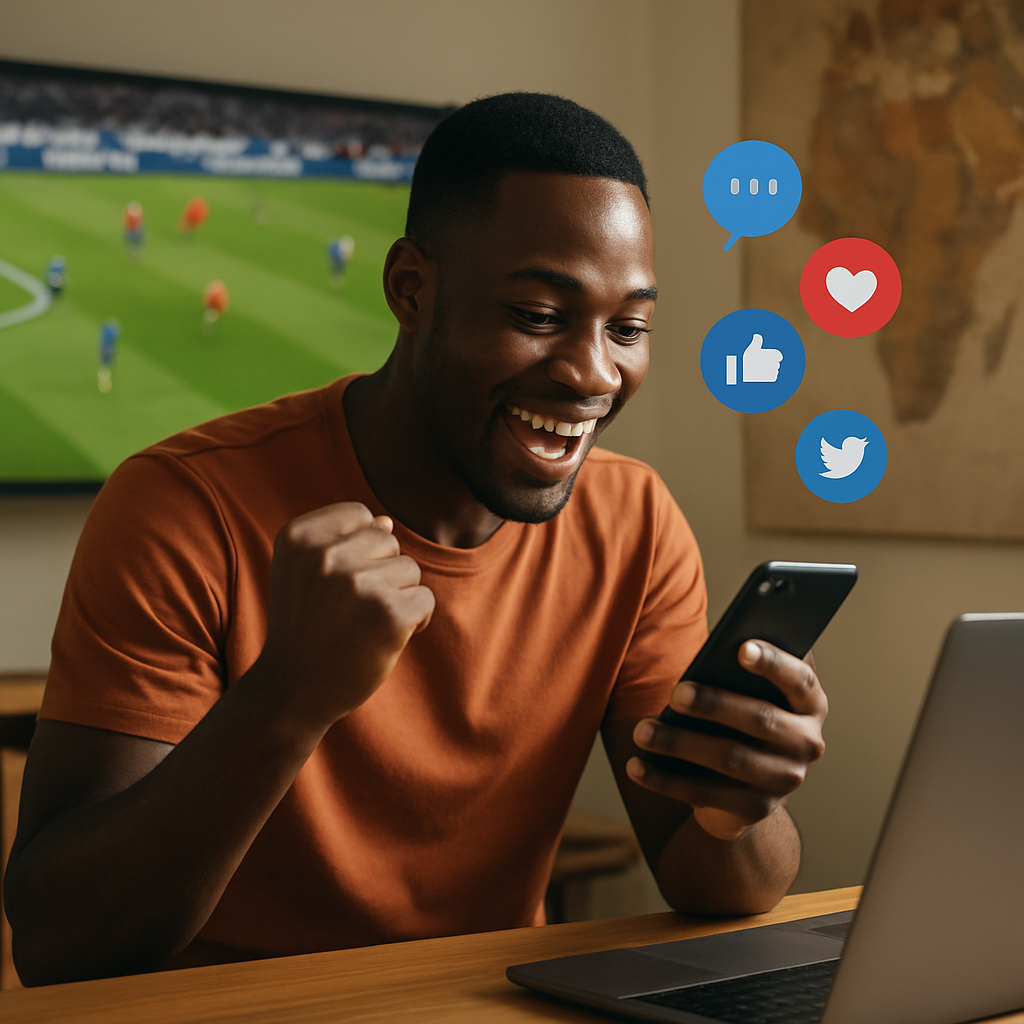
Live sports are the pulse of Africa’s digital conversation, turning matchdays into continent-wide moments that spill from stadiums to smartphones. For marketers, these peaks are not just bursts of emotion; they are scalable attention engines that reward preparedness, cultural fluency, and fast execution. This article maps the dynamics behind those spikes, shows how brands can turn excitement into meaningful engagement, and shares practical tactics to win the scroll during Africa’s biggest tournaments and local derbies alike.
The African sports moment: why events ignite the social web
Sport sits at the intersection of identity, aspiration, and regional pride across Africa. From the Africa Cup of Nations (AFCON) to the CAF Champions League, Rugby Sevens, the Basketball Africa League (BAL), cricket in Southern Africa, and road races in East Africa, events function as cultural tentpoles that compress attention into tight time windows. In those windows, fans seek instant information and belonging—creating fertile ground for social conversation and brand storytelling.
Three forces make this especially potent:
- Mobile-first media habits: A majority of African internet activity happens on smartphones. Industry estimates from the GSMA point to Sub-Saharan Africa reaching roughly half of the population on smartphones in the early 2020s, with steady growth ahead. That means vertical video, lightweight assets, and messaging apps dominate how fans follow games.
- Second-screen behavior: Even when fans watch via TV or community screenings, the second screen remains in hand—to chat, meme, bet, search, and shop. This creates natural “micro-moments” for timely ads and social replies.
- Network effects in language and diaspora: Hashtags, vernacular slang, and diaspora communities in Europe and the Middle East amplify African sports narratives globally, extending reach far beyond the stadium.
Context for marketers: the International Telecommunication Union (ITU) has estimated that around two in five people in Africa use the internet, with steady year-on-year growth. The GSMA has also reported that 4G adoption continues to expand from a relatively low base while 5G is nascent but rising in select markets. These trends are important because they shape creative choices—short, compressed video and efficient file sizes travel further on constrained networks, especially in rural areas and when stadium cells are congested.
Platforms, formats, and behaviors that matter
Messaging and the power of dark social
In many African countries, group chats are the front page of the internet. The dominant role of WhatsApp makes “dark social” the primary distribution path for highlights, memes, ticket links, and brand offers. While message forwarding and group dynamics resist public measurement, marketers can still design for discoverability: create shareable stickers and short clips, use click-to-chat entry points, and distribute official fan updates via business messaging APIs. Lightweight creative and concise calls-to-action (CTAs) are essential when fans scroll between play phases.
Live commentary and algorithmic acceleration
Fast-twitch feeds like X (formerly Twitter) and TikTok reward timely reactions. On matchdays, spikes in replies and stitches often mint new fan creators overnight. Brands that prepare modular, pre-approved assets—goals, injuries, halftime stats—can publish within seconds, capturing the first wave of the algorithm’s acceleration. Captions should be multilingual where relevant (for example, English, French, Arabic, Swahili, Amharic, Hausa, Yoruba, or Zulu) and incorporate local slang without caricature. Short-form video featuring faces, captions, and sound-on highlights tends to outperform static images during peaks.
Instagram, Facebook, and the fandom graph
Instagram Reels and Facebook offer reach into broader age and interest groups, including family and community circles who gather around major tournaments. Event-themed filters, AR try-ons (e.g., club colors on fans’ faces), and location-based stickers support social rituals at viewing centers. Facebook Groups and fan pages remain undervalued for retention: pinned threads for live chats and polls can keep conversation active through extra time and penalties.
YouTube, OTT, and long-form depth
When the whistle stops, fans go deeper. Extended highlights, player vlogs, and expert breakdowns thrive on YouTube and OTT platforms, especially when chapters and multilingual subtitles are added. Evergreen compilations—top goals of the tournament, underdog stories—pull in search traffic for months after the final. For brands, this is a place to host “director’s cut” content and post-event recap series with creators.
Data signals and measurement during live games
Live sports produce identifiable patterns—rapid surges at kickoff, goal spikes, halftime lulls, and prolonged afterglows when narratives (triumph, heartbreak, refereeing controversy) take shape. Marketers can ride those rhythms if their analytics is tuned for sub-hour granularity and cross-channel stitching.
Social listening and creative operations
- Track official and fan-led hashtags, trending sounds, and emergent memes; prebuild templates to adapt quickly.
- Set up dashboards fusing impressions, click-through rates (CTR), comment velocity, and qualitative themes like rivalry, pride, and officials’ decisions. Include a rapid response protocol that defines who approves copy and visuals in under five minutes.
- Use entity-level models to spot surging players, chants, and locations; align ad copy and captions accordingly.
Attribution in event windows
Measurement gets tricky when spikes overlap paid, earned, and owned channels. Multi-touch attribution can be noisy during surges, but there are workarounds:
- Adopt event-based baselines: compare game hours to matched non-game windows to estimate incremental lift.
- Run geo experiments: hold out certain regions or languages to test counterfactuals while maintaining ethical standards.
- Blend log-level data with short lift studies (brand recall, intent) for triangulation.
From awareness to action
Live moments can drive measurable conversions if the landing experiences are ultra fast and localized. Use edge caching, compressed media, and low-friction checkout with mobile wallets or cash-on-delivery options where trust requires it. For entertainment or subscription upsells, deep links should open apps directly, avoiding unnecessary web hops.
Privacy, policy, and consent
Respect consent and regional regulations. Avoid building lookalikes on sensitive attributes (ethnicity, religion, political proxies). If you collect first-party data through contests or watch-parties, deploy clear disclosures and value exchanges (exclusive highlights, ticket lotteries) and support opt-out controls.
Playbooks that consistently work
The pre-game ramp
- Announce fixtures with countdowns and player spotlights; seed predictions and polls to prime the conversation.
- Collaborate with local creators for slang-savvy invites; route fans into official chats via click-to-message CTAs.
- Publish availability windows and delivery cutoffs if selling merch—urgency must be authentic.
The live “war room”
- Operate a multidisciplinary pod: content, community managers, translators, performance buyers, legal, and customer support.
- Ship in waves aligned to game dynamics: kickoff hype, goal reactions, halftime utility (stats, promos), and post-game reflection.
- Maintain a newsroom tone: empathetic, respectful of rivals, and alert to cultural sensitivities.
The post-game flywheel
- Publish instant recaps and player quotes; amplify fan-made content with permission.
- Retarget viewers with episode two: behind-the-scenes training clips, redemption arcs, and local meetups.
- Summarize moments via carousels for platforms where audiences catch up the next morning.
Regional nuance: one continent, many playbooks
Pan-African thinking must coexist with local detail. Dialect, humor, and even color symbolism shift meaning by market. Consider the following patterns:
West Africa (Nigeria, Ghana, Côte d’Ivoire, Senegal)
Football dominates, with vibrant music culture powering remix trends. Payment preferences vary; mobile wallets and bank transfers are common. Language toggles between English and French plus Pidgin or Wolof. Nighttime viewership can be huge; power and data constraints mean lightweight assets win.
East Africa (Kenya, Ethiopia, Tanzania, Uganda)
Running culture intersects with football fandom; community screenings and radio remain influential. Swahili content formats convert well; mobile money rails are deeply entrenched, enabling micro-purchases tied to match moments.
North Africa (Egypt, Morocco, Algeria, Tunisia)
High football intensity and strong club identities; Arabic (with dialectal nuance) and French often coexist. YouTube and Facebook remain powerful for long-form and group coordination, and stadium chants translate into viral captions.
Southern Africa (South Africa, Zambia, Zimbabwe, Botswana)
Football, rugby, and cricket share attention. OTT adoption is growing; ad-funded streaming and short-form highlights perform well when paired with local commentators and sign language overlays for accessibility.
Creators, fandom, and the trust layer
Local voices mediate meaning during heated moments. Work with micro and mid-tier influencers who already host watch-alongs or produce tactical analysis. Provide them with official assets, access to players, or coach interviews—value beyond payment helps ensure authenticity. Co-create content that acknowledges rivalries without escalating hostility; celebrate underdogs and community stories like grassroots academies and women’s teams.
Formats that travel in African sports culture
- Face-cam reactions: quick to produce, highly shareable, perfect for stitches and duets.
- Hype edits: rhythmic cuts synced to Afrobeats, Amapiano, or regional genres—optimize for 15–30 seconds.
- Explainers in vertical video: strategy boards, set-piece breakdowns with telestration overlays.
- Memes with local idioms: keep text-on-screen legible on budget phones; avoid cultural shortcuts.
- Voice notes: integrate short audio reactions and commentary in messaging channels.
Commerce, betting chatter, and fintech rails
Matchday shopping leans toward instant gratification: jerseys, scarves, data bundles, and food delivery. Shoppable overlays on short-form video can work if the checkout is two taps and supports local rails (mobile money, bank transfer, USSD). Voucher codes pinned in comments or sent via messaging bots convert when fans are emotionally primed.
Sports betting conversations often surface alongside highlights. If your product is unrelated, avoid adjacency that could appear to promote problematic behavior. If you operate in gaming or financial services, implement age gates, spending limits, and responsible messaging standards. Compliance and brand safety are not optional.
Signals, stats, and what we know
Several industry bodies provide directional numbers relevant to planning. The ITU has reported that Africa’s internet adoption sits around the two-in-five mark and continues to grow. The GSMA has indicated that Sub-Saharan Africa’s smartphone adoption crossed the 40% threshold in the early 2020s and is on a steady upward trajectory, while 4G coverage and usage continue to expand and 5G adoption starts in select urban centers. Across many markets, messaging app usage is extremely high among internet users, often topping platform charts. While exact matchday spikes vary by country and event scale, social feeds in football-heavy nations regularly show multiples of baseline conversation volume during big fixtures, with halftime offering a brief conversion window for utility and promo content.
Operationally, these signals tell us to engineer for constrained networks, prioritize captions and on-screen text, and schedule media bursts when fans actually have time to tap—pre-kickoff, halftime, and post-whistle.
Turning momentary attention into durable relationships
The long game is to convert flash floods of attention into loyal audiences you can re-engage. Three pillars help:
- Owned channels you actually use: email, SMS, and messaging lists that deliver weekly value—not just promos.
- Fan data with consent: preference centers (favorite club/player, language) to personalize matchday pings.
- Community programming: local viewing parties, amateur tournaments, and creator residencies that ground the brand in place.
Creative and media system design
Build a library of modular assets—backgrounds, lower-thirds, player cutouts, sticker packs—so designers can assemble variants on the fly. Pair this with bite-size media packages: pre-booked inventory for predictable peaks, plus flexible budgets for emerging stories (underdog runs, upsets). Native ad formats near the comment stream often outperform during match chatter; reserve upper-funnel video for shoulder content like pre-game previews and post-game documentaries.
Language, accessibility, and inclusion
Design with subtitles as the default and ensure color contrast meets accessibility standards. Offer sign language variations where feasible for longer pieces. Translate captions into the languages that matter by region; even a single localized line (“we see you, Accra” or “bravo Fes”) can double comment positivity. Feature women’s sports and disabled supporters as more than token presences; reflect real fandom diversity on-screen and in copy.
Geo, time, and the stadium effect
Urban data congestion is predictable around stadiums and viewing hubs. Creators on-site should carry offline-first capture plans (downloaded music beds, pre-rendered templates) and post once they regain bandwidth. From a media standpoint, activate precise geotargeting with small-radius campaigns near watch zones before and after the game for offers like ride-hailing discounts or late-night food delivery.
Brand safety, misinformation, and deepfakes
Sport can be emotionally charged. Equip moderators to de-escalate tribal rhetoric and remove hate speech. Verify breaking news (injury, tragedy, controversy) through official league and club sources before publishing. As synthetic media improves, watermark official highlights and maintain a reporting channel for impersonations. If you sponsor a team, align on crisis protocols in advance.
Infrastructure realities: design for resilience
Power cuts, data caps, and device diversity challenge glossy plans. To mitigate:
- Export video in multiple bitrates; detect connection quality and serve appropriate files.
- Keep critical actions cached in-app; queue submissions when offline.
- Offer text-only or image-light versions of key updates for low-bandwidth users.
What’s next: 2026 horizon and beyond
Expect wider 4G, early 5G in urban cores, cheaper Android devices, and continued growth of short-form creators who straddle sport, music, and comedy. AI translation and auto-captioning will compress production cycles and broaden language reach. Women’s football and basketball continue to rise, opening new sponsorship segments and fresh narratives. Rights holders will expand direct-to-fan OTT experiments with ad-funded tiers, making brand integrations inside streams more accessible.
KPIs and a practical checklist
Matchday KPIs to track
- Attention: average watch time, video completion rate, view-through rate.
- Conversation: comments per thousand impressions, share rate, save rate, fan sentiment ratio.
- Action: click-to-message rate, add-to-cart rate, checkout completion, assisted conversions.
- Efficiency: cost per incremental reach, cost per engaged view, and blended payback period on inventory sold.
Operations checklist
- Pre-approve modular assets for all likely outcomes (win/draw/lose, hero/villain arcs).
- Stand up a multilingual reply bank for FAQs, returns, and support during peak loads.
- Instrument UTMs and deep links; test on low-end Android devices and slow networks.
- Staff a real-time escalation path with legal and PR for sensitive incidents.
Case patterns that repeat (and why they work)
- Halftime utility beats halftime hype: fans use breaks to act—redeem codes, order food, or join private groups—so utility CTAs outperform chest-thumping slogans.
- Local creators unlock comments: co-signs from trusted analysts or comedians double reply velocity and keep posts in the feed longer.
- Respectful rivalry scales farther: witty, non-insulting banter earns cross-fan sharing; toxic jabs limit distribution and risk brand backlash.
- Shoulder content sustains the curve: training and community stories maintain relevance between fixtures, powering always-on retargeting pools.
From spike to strategy: making the moment compound
When sports heat up, attention is abundant but fleeting. The brands that win build systems for speed and empathy, measure what matters, and honor local nuance. Invest in dashboards that align crews in near real-time, in consented data that underpins personalization, and in checkout flows that never stall. Shift budgets fluidly, reserve inventory for underdog stories, and trust creators who understand locker-room vibes as well as neighborhood slang.
Treat each tournament as a story arc rather than a one-off burst. A consistent presence in previews, watch-alongs, and recaps will show up in loyalty, referral, and word-of-mouth. Your job is to convert passion into sustained signals—comment threads that keep breathing, click-to-chat lists that stay active, and merch pipelines that restock with cultural sensitivity. If you do, the next whistle won’t just bring noise; it will bring compounded outcomes and demonstrable ROI.
Practical tactics to deploy this weekend
- Ship a lightweight “goal reaction” template in three languages; assign creators to fill in scores and captions.
- Pin a click-to-chat link for support and flash offers; staff it with bilingual moderators.
- Publish a local map of viewing hubs and partner discounts; enable tap-to-ride integrations.
- Run a two-hour post-match carousel ad featuring fan photos (with permission) and discount windows that close before midnight.
Final thought
Sport in Africa is not just a calendar of fixtures; it is a social engine that binds neighborhoods, cities, and diaspora timelines. Attention concentrates in ways few other cultural moments can match. Build for those patterns—optimize assets for mobile constraints, anchor tactics in consented data, and keep your tone human. In the process, you will earn trust, convert excitement into action, and nurture a brand community that lasts long after the stadium lights dim.