
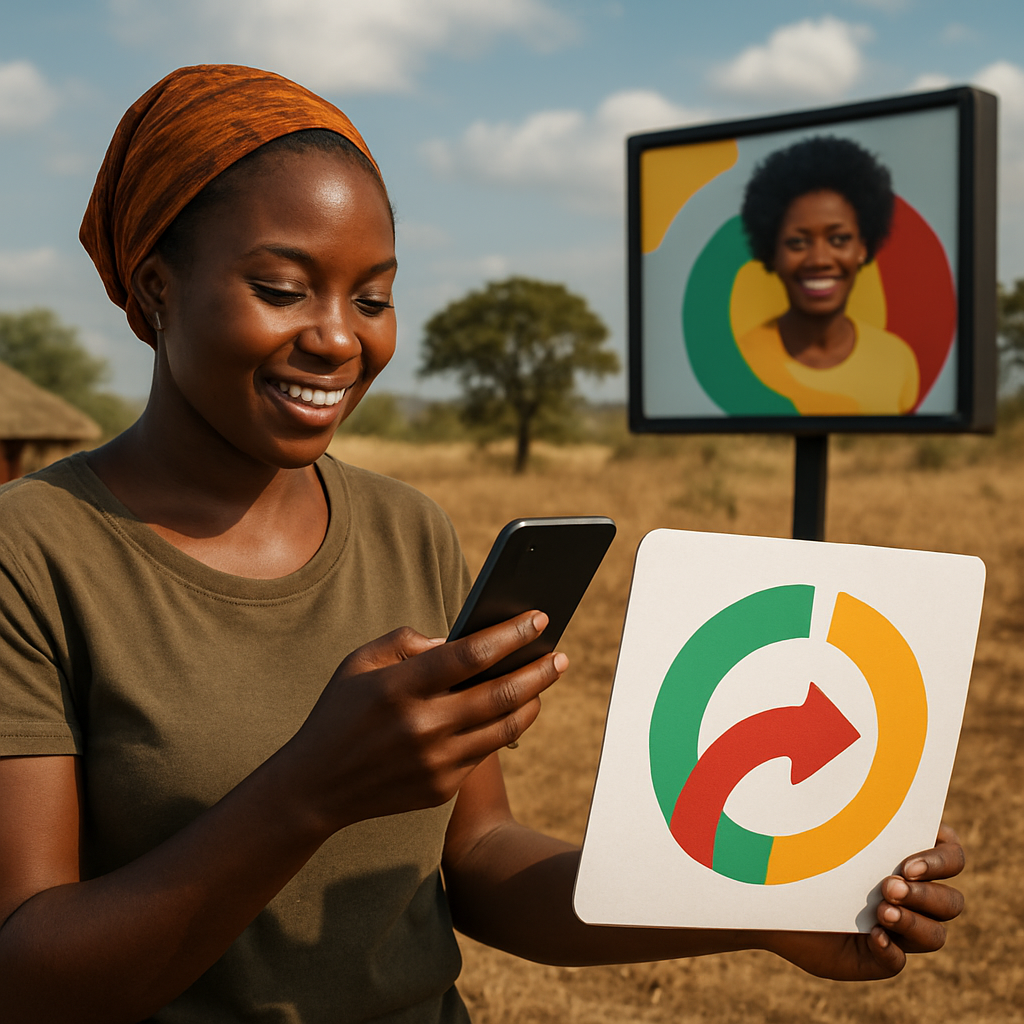
Billboards, murals, transit wraps and street furniture have long shaped brand storytelling across African cities. What’s changed is the way these physical touchpoints now act as gateways to mobile and social experiences, turning passersby into participants. Outdoor-to-digital campaigns—OOH that prompts immediate, trackable actions on a phone—are flourishing from Lagos to Nairobi, Johannesburg to Casablanca, as marketers blend cultural insight with data, local commerce rails and mobile-native creative. This article explores why the model fits Africa so well, how top teams execute it, what the numbers say, and where the next wave of innovation will come from.
The mobile-first fabric of African audiences
Across the continent, the phone is the primary screen. GSMA estimates that Sub‑Saharan Africa now counts hundreds of millions of unique mobile subscribers, with smartphone adoption approaching or surpassing half of the population in major urban markets. Mobile internet usage keeps expanding as affordable Android devices, data bundles and public Wi‑Fi proliferate. While connectivity and speeds vary widely by city and region, 4G coverage reaches a majority of residents in many capitals, and 5G test beds are appearing in commercial zones and stadium districts.
Urbanization compounds the opportunity. The largest metros concentrate dense footfall around bus rapid transit (BRT) stops, taxi ranks, minibus interchanges, malls, markets and campuses—precisely the settings where strong, well-sited OOH can spark immediate mobile actions. Another accelerator is the dominance of super-utility messaging apps. In many countries, the majority of internet users rely on a single chat app for everything from family groups to roadside commerce, which lowers friction when a poster invites a scan or a tap that opens a conversation thread or buy-flow.
Payment rails and logistics are also maturing. Mobile money, card tokenization, pay-on-delivery, and pickup lockers let campaigns translate interest into instant sales or lead capture. Localized delivery networks—from boda-boda to ride-hailing couriers—make same-day fulfillment viable in dense neighborhoods. All of this creates a fertile ground for outdoor prompts linked to micro-experiences built specifically for small screens.
Why outdoor-to-digital works in African cities
OOH outperforms in attention-scarce environments because it is integrated into the commute, not competing with infinite-scroll feeds. In African cities, this effect is magnified: dwell time in traffic or at queues is significant, sightlines are open, and location carries cultural meaning—neighborhood identity, sports allegiance, languages spoken, times of prayer and market days. Outdoor-to-digital adds three levers to this inherent strength:
- Low-friction action paths: QR codes, vanity shortlinks, tap-to-call, chat deep links and simple USSD strings reduce the cognitive load between seeing a message and acting on it.
- Contextual timing: Dynamic creative on digital screens can sync with weather, traffic, match kickoffs or paydays, while static placements can be scheduled with local events and peaks in foot traffic.
- Feedback loops: Once a passerby scans or taps, the brand can recontact them with SMS, messaging apps, email or ad-platform audiences, turning a glance into a journey.
Another reason this approach travels well: it honors oral, visual and communal storytelling traditions. Street-level stunts, murals and copywriting in local vernacular invite talkability, while the digital hop captures and amplifies that buzz into measurable outcomes.
Core tactics that connect street media to the phone
Successful campaigns orchestrate a mix of tactical bridges from the physical to the digital. Below are the most deployed and effective, with nuances that matter in African markets.
1) QR codes that actually get scanned
- Design for motion: Place codes at natural stopping points—ticket queues, food courts, elevators, store entrances. On roadways, use large formats at low-speed choke points only.
- Make value explicit: “Scan for 20% off,” “Scan to find the nearest clinic,” “Scan to get the match schedule in your calendar.” Clear utility beats vague calls to action.
- Shorten the path: Resolve to lightweight, zero-friction landing pages tuned for patchy bandwidth. Use device detection to offer relevant app-store links or instant experiences.
- Track ethically: Append UTM parameters identifying site, format, creative, and time window. Store only what is necessary, disclose simply, and comply with local data laws.
2) Short links and vanity domains
- Readable in a blink: employ readable, local-language slugs that can be remembered or typed later if a scan is unsafe in motion.
- Resilient to connectivity: ensure the destination loads in under two seconds on 3G and degrades gracefully when CDN nodes are distant.
3) Chat-to-commerce experiences
- Click-to-chat flows: Deep link from the poster to a prefilled message in a dominant messaging app. Automate triage with simple, menu-based flows before escalating to a person if needed.
- Service design matters: Offer language options upfront, show expected wait times, and include “send my location” modules to route deliveries or appointments.
- Payments and verification: Integrate familiar payment rails and send digital receipts; allow cash-on-delivery where trust is still building.
4) USSD and missed-call mechanics
- Feature phones are still in play: Provide a cost-free USSD string for zero-data onboarding. Ensure session steps are minimal; confirm via SMS with a short link for smartphone users.
- Missed-call callbacks: Offer a “flash and we’ll call you back” number in low-data contexts to acquire leads without cost to the user.
5) Location-triggered media and creative
- Dynamic out-of-home (DOOH): Feed screens with templates that swap copy, price, or language by neighborhood, time of day, pollen count, load-shedding schedules or match scores.
- Localized social spin-ups: Sync OOH bursts with micro-influencers who post live from the site, stitching street-level proof into social proof.
6) Loyalty hooks and receipts
- Scan-to-join: Let people earn points or cash back by scanning transit ads, then retarget them with personalized offers near participating merchants.
- Receipt retargeting: Invite shoppers to WhatsApp their receipt or upload a photo for verification to unlock tiered rewards.
What the numbers say: adoption and performance
Reliable pan-continental numbers for outdoor-to-digital are scarce because measurement methods vary. Still, several directional observations are consistent across agency, operator and brand reports:
- Smartphone access enables action: In top metros, a majority of adults in the workforce carry an Android device capable of scanning QR codes natively.
- Messaging reigns: In countries like South Africa, Kenya, Ghana and Nigeria, a large share of internet users engage weekly on dominant chat apps; many brands find chat-to-commerce completion rates beating mobile-web forms, especially in lower-bandwidth zones.
- OOH recall is high: Global studies and multiple local brand lifts report strong unaided recall for well-sited large formats, and higher ad trust relative to purely digital formats—useful for starting new customer journeys.
- Footfall lift from OOH is measurable: Where partners can match anonymized mobility data to exposure zones, advertisers routinely observe incremental store or branch visits following flighted OOH, with larger effects when paired with paid social within 48 hours.
- Scan and click behavior is context-sensitive: Incentivized promotions (discounts, transport vouchers, airtime) materially increase QR scan and shortlink click rates at transit nodes, markets and campuses.
From a macro lens, OOH investment has stayed resilient even when overall ad spending fluctuates; digital OOH inventory is expanding in major business districts, airports and malls across North, West and Southern Africa. As programmatic pipes connect more of those screens, the performance gap between “poster” and “platform” continues to narrow.
Measurement and the new OOH playbook
Modern outdoor-to-digital campaigns design for measurement from the outset. The goal is to attribute at least part of the outcome to a specific location, time window and message variation—while protecting privacy and following national laws. A working measurement stack typically includes:
- Clean creative taxonomy: Each unit gets a unique short URL or QR parameter collecting site, city, format, flight and version. Agree this schema before printing or trafficking.
- Scan/click analytics: Device, language, referrer, timestamp, and coarse location when available. Aggregate at cohort, not individual, level.
- Site analytics: Landing-page bounce, scroll depth, time on task, and funnel completion. Emphasize conversion proxies when the final sale happens in-store or in-chat.
- Footfall and mobility: Where permitted, partners can create geofences around panels, bus shelters or precincts to build exposed cohorts; compare visit rates to target POIs against matched controls.
- Brand lift surveys: Short, mobile-friendly surveys in the exposure catchment area quantify shifts in awareness, consideration and message takeout.
- MMM and incrementality: For large brands with multiple channels, marketing mix models and holdout tests estimate the marginal effect of OOH plus digital reinforcement.
Use humble baselining: first run “learning flights” with creative variations and a handful of locations that differ in audience mix, then scale only what creates meaningfully higher task completion or store visits. Resist judging OOH solely by last-click; it’s a priming and prompting medium that shines when paired with immediately actionable digital steps in the same moment.
Attribution, retargeting and privacy
Even with the best planning, perfect attribution remains elusive. The smarter question is: do exposed cohorts behave differently in practical, business-relevant ways? Two privacy-safe patterns stand out:
- Time-and-place lift: Compare sales, signups or app opens inside a narrow time window around exposure areas vs. matched non-exposure areas. Use multiple control methods (pre/post, synthetic controls) to reduce bias.
- Consent-first identity: Offer a clear value exchange—discounts, vouchers, early access—in return for an email, phone number, or chat opt-in. With consent, add the contact to a CRM or CDP and extend the journey.
Once an opt-in exists, thoughtful retargeting can nudge fence-sitters: serve mobile ads around the same neighborhood within 24–48 hours; send a single, respectful reminder in chat with a unique, timebound offer; and suppress those who completed the action. Always allow for easy opt-out and adhere to national privacy frameworks (e.g., POPIA in South Africa, NDPR in Nigeria, Kenya’s Data Protection Act). The best brands collect only the data they truly need and protect it aggressively.
Media supply, buying models and programmatic DOOH
African OOH supply is a blend of classic static formats and a growing—though still uneven—layer of digital screens. Airports, malls, fuel stations, premium roadside gantries and CBD street furniture lead the digital charge. Regional OOH operators with extensive footprints coexist with municipal concessions and local independents, yielding rich options for hyperlocal buys.
Buying models are diversifying as screens connect to exchanges. Programmatic pipes enable impression-based buying, dayparting and dynamic creative, while still supporting the relationship-driven local planning that gets the very best sites. A hybrid approach often wins: anchor the plan with iconic static placements that shape fame, then layer programmatic bursts for recency and context (e.g., live scoring for a derby match, ride-hailing surge alerts, air-quality spikes triggering purifier ads). The growing role of programmatic also enables tighter integration with paid social and search budgets, letting teams optimize sequences from first glance to last touch.
Creative that earns attention and action
Outdoor-to-digital creativity in Africa thrives when it reflects the street—its humor, languages, rhythms and reference points. Practical guidance:
- Design for two beats: Beat one must communicate the idea from 25 meters: product, promise, proof. Beat two offers the action: scan, chat, call, or short URL.
- Speak locally: Code-switch between languages where appropriate; use culturally resonant visuals and idioms. Consider separate creative for neighborhoods with distinct identities.
- Show the value instantly: Coupons, free data, transit discounts, sample pickups, clinic appointment slots—visible in the art, not hidden behind a scan.
- Use real-time hooks sparingly: Dynamic content must remain comprehensible; prioritize human-friendly updates (next match, stock availability) over flashy but irrelevant data.
- Accessibility and safety: Font sizes that can be read safely; never encourage scans from drivers. Place scannable CTAs where pedestrians can stop.
Mini-scenarios from across the continent
Below are anonymized composites illustrating what works, drawn from recurring patterns across major markets:
- Urban grocery chain in Kenya: Bus-shelter ads near estates offered “Scan for 200 KSh off your first order.” The QR led to a PWA that detected estates within 5 km, with next-day delivery windows. The promo code was one-time, tied to a phone number, and orders could be paid via mobile money or cash. A follow-up chat opt-in offered weekly bundles. Footfall and delivery orders both increased in exposure zones, with the biggest lift on weekends.
- Telco in Nigeria: Roadside gantries during number-portability season featured large, legible shortlinks and a missed-call number. Missed calls triggered an IVR explaining plans in Pidgin and English, with an option to receive a link by SMS. Branch visits and SIM swaps peaked along corridors with the densest OOH coverage.
- Bank in Morocco: Airport DOOH targeted arriving diaspora during summer. Templates switched languages by flight origin and offered “Open a savings account in 5 minutes.” QR linked to a chatbot that validated IDs with selfie match. A concierge callback promised branch appointments within 24 hours. High completion rates were associated with mid-morning flights and family arrivals.
- Sportswear brand in South Africa: Murals around township pitches teased a street tournament, with scans unlocking team registrations and a content feed. Dynamic DOOH near malls displayed live brackets and MVP highlights. Social micro-creators embedded on teams amplified reach. Merch sell-through doubled in stores within 3 km of fields hosting matches.
- Health NGO in Ghana: Minibus wraps and market posters directed pregnant women to a free appointment scheduler via USSD. Follow-up SMS shared clinic maps with a short link for those on smartphones. Attendance improved measurably at partner clinics during campaign months, particularly where community radio reinforced the message.
Location data, geofencing and ethics
Outdoor-to-digital storytelling benefits from knowing where and when people move, but respect and restraint are non-negotiable. Use coarse location signals to plan, not to intrude. For exposure studies, rely on anonymized, aggregated mobility datasets that never identify a person. Limit lookback windows, rotate creative to avoid overexposure, and publish a simple, public-facing explanation of what is being measured and why. Tools like privacy-safe geofencing can reveal useful crowd patterns without tracking individuals across their lives.
From scan to sale: building the conversion spine
A strong operational spine turns curiosity into revenue. The spine starts with intent capture and ends with fulfillment and advocacy:
- Instant gratification: Reward scans or chats with something now—a code, airtime, travel voucher, or practical content like a neighborhood price map.
- Smart routing: If the user’s location and time window suggest a nearby branch or pickup point is open, display that path first. If not, offer chat-based delivery or appointment scheduling.
- Trust behaviors: Prominently display customer-care numbers, certification badges and return policies. Offer “try now, pay at pickup” for categories where trial is vital.
- Feedback asks: After purchase or appointment, ask one question: “Did we do what we promised?” Turn promoters into local advocates with small rewards for referrals.
In reporting, track the entire funnel from impression to conversion. Even if not all steps are observable, align teams on a limited set of KPIs: scans per thousand opportunities, chat initiations, form completion, store visits, sales, and cost-per-acquired customer by site cluster.
Partner ecosystem and operational realities
Outdoor-to-digital campaigns live at the intersection of media owners, creative partners, data providers, martech stacks and operations teams. A lightweight, realistic operating model helps:
- One owner for the bridge: Nominate a single lead to own the handoff from OOH to mobile (landing pages, chatbots, link management, attribution tags).
- Service-level agreements: Agree on content update SLAs for DOOH, crash procedures for wrong prices, and data retention policies before launch.
- Offline contingencies: Prepare SMS or IVR fallbacks for when scan links or chat endpoints face outages; keep value delivery alive even in load-shedding windows.
Compliance: doing the right thing, legally
Data protection regimes are maturing across Africa. Plan for compliance by default:
- Minimize collection: Capture the least amount of personal data required. If all you need is a voucher redemption, don’t ask for a full profile.
- Explain plainly: Use simple language in the local lingua franca. “We use your number to send your voucher and to remind you once.”
- Secure-by-design: Encrypt data in transit and at rest; restrict access; audit third-party vendors.
- Respect national rules: Align with POPIA (South Africa), NDPR (Nigeria), Kenya’s DPA and equivalents elsewhere. Document consent flows and retention limits.
Budgets and economics: what to expect
Because OOH creates both fame and performance effects, budget it as a hybrid. A sample allocation for a launch might look like this:
- 60% to iconic static and high-impact DOOH in priority corridors and precincts.
- 20% to mobile and social reinforcement within exposure radii, sequenced within 24–72 hours.
- 10% to creative production and dynamic templates.
- 10% to data, analytics and research (footfall, brand lift, incrementality tests).
Expect creative and operations to claim a larger slice than in a purely digital buy; the bridge is the product. Over time, compounding effects (opt-in audiences, learned site lists, refined templates) drive down effective cost per action.
Playbooks for three common goals
Acquisition for ecommerce or delivery
- Offer a visible first-order incentive.
- Scan-to-PWA checkout optimized for low bandwidth; mobile money and card-on-file.
- Retarget non-converters with a single, timebound reminder.
Footfall to physical locations
- Place scannable CTAs within a 10-minute walk of stores or clinics.
- Show live wait times or open slots; enable save-to-map or calendar.
- Measure visit lift with geofenced cohorts where permitted.
Lead generation for services
- Missed-call or USSD to capture leads without data cost.
- Instant call-back windows; clear consent for follow-ups.
- Score and route leads by proximity and language preference.
Future signals: where outdoor-to-digital is heading
Three currents are set to redefine the craft over the next few years:
- Retail media meets street media: As African supermarkets, pharmacies and fuel networks build their own retail media offerings, expect joint packages combining in-store screens, receipts, and front-of-store OOH with digital remarketing.
- Creator collabs at the curb: Micro-creators will increasingly animate billboards with live streams, fan meetups and geo-unlocked content, linking place, people and platform.
- Smarter templates: Decision engines will pick languages, offers and references by street or even building, drawing from privacy-safe local signals and store inventory.
On the tech side, lightweight AR on mid-range phones and near-field hardware embedded in street furniture will deliver richer micro-experiences. But the winning edge will remain human: wit, empathy and usefulness in the precise moment someone is waiting, watching or wandering by.
Practical checklist for your next campaign
- Define one primary action (scan, chat, call) and one backup (shortlink, USSD).
- Prototype the mobile experience first; test on low-end Androids over 3G.
- Pre-assign unique links and codes to each site and creative variant.
- Localize language and offers by neighborhood and time-of-day.
- Plan consent and CRM flows before printing.
- Schedule an early read: scan rates, chat starts, store visits after week one.
- Iterate ruthlessly; double down on sites and messages that move needles.
Glossary of ten leverage words
To conclude, here are ten high-impact concepts that keep appearing in winning outdoor-to-digital work, each worth mastering in your planning and postmortems: engagement, attribution, geofencing, programmatic, retargeting, conversion, WhatsApp, USSD, first-party data, measurement.
Across Africa’s bustling streets, the most effective outdoor-to-digital campaigns are not the flashiest; they are the most considerate of context. They respect the commute, speak the local tongue, value time and data costs, and offer practical, immediate rewards. When brands honor those realities—and wire the bridge from glance to action with care—OOH becomes not just a canvas for awareness, but a performance engine tuned to the rhythms of the city.