
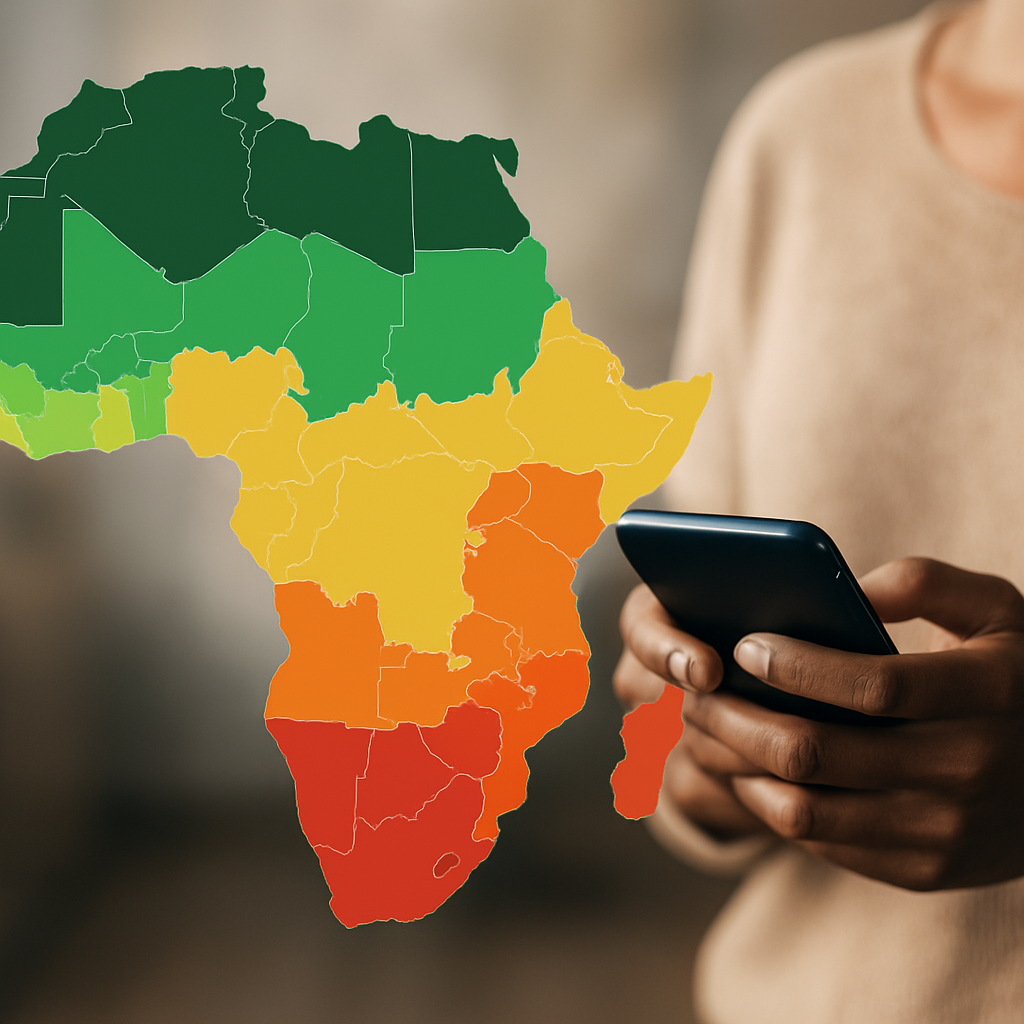
Consumer behavior across Africa does not form a single curve; it’s a mosaic defined by languages, payment rails, infrastructure, regulation, and local norms. For internet marketers, understanding how consumer trust is earned, signaled, and lost across regions is the difference between conversion and churn. This article maps the contours of trust in North, West, East, Central, and Southern Africa, and translates those patterns into practical playbooks for acquisition, activation, and retention. Along the way, it highlights where data suggests momentum is strongest, why specific channels outperform others, and how brands can align their propositions to the everyday realities that shape online buying decisions—from authenticity cues to last‑mile logistics, from mobile-money rails to data privacy and merchant verification. The outcome is a region-by-region guide to building durable permission to sell, supported by observed trends and prudent benchmarks rather than one-size-fits-all assumptions or imported tactics.
The Trust Stack for Digital Commerce in Africa
Before comparing regions, it helps to decompose “trust” into components that marketers can design for and measure. A practical Trust Stack includes six layers:
- Brand trust: Perception of the company’s legitimacy, track record, local presence, and alignment with cultural expectations. Localization, language, and recognizable partnerships (e.g., telcos, banks, NGOs) often serve as initial trust anchors.
- Channel trust: Confidence in where the offer is encountered—marketplaces, owned websites, social media storefronts, WhatsApp catalogs, or SMS/USSD flows. In many markets, closed or semi‑closed channels (WhatsApp groups, community marketplaces) outperform open web funnels for first purchases.
- Payment trust: Willingness to prepay versus cash-on-delivery (COD), comfort with card rails, bank transfers, and mobile wallets, and familiarity with dispute resolution. Payments are not just mechanics; they are signals of seller reliability and consumer power.
- Fulfillment trust: Belief that delivery will be on-time, undamaged, and complete, and that returns or exchanges will be honored. This is where the promises of marketing meet the realities of roads, addresses, and third‑party couriers.
- Data trust: Clarity about data collection and usage, consent practices, and adherence to local laws (e.g., Kenya’s Data Protection Act, South Africa’s POPIA, Nigeria’s NDPA). Explicit transparency increases form‑completion rates and reduces lead leakage.
- Social proof trust: Credibility lent by reviews, influencer recommendations, peer sharing, and offline word‑of‑mouth. In markets with low formal redress, community validation tends to be the decisive layer.
A marketer’s job is to remove friction from each layer and to stage them correctly. In some countries, Payment and Fulfillment trust must be won before Brand trust matures; in others, Brand and Data trust clear the path for higher prepayment share and larger average order values. With that lens, the regional picture comes into focus.
Regional Patterns of Consumer Trust
North Africa (Morocco, Algeria, Tunisia, Egypt)
North Africa blends relatively high internet penetration (versus the continental average) with strong urban clusters. Bank account penetration is higher than in much of Sub‑Saharan Africa, yet card usage for online transactions remains uneven, and COD persists as a trust mechanism—especially for first‑time buyers in Egypt and Morocco. Social media discovery is robust; Facebook, Instagram, WhatsApp, and increasingly TikTok and YouTube power product discovery, with Arabic and French content dominating and English niche‑targeted in cosmopolitan segments.
Trust drivers and friction points:
- Payment: COD with open‑box inspection and easy return policies reduce perceived risk. In Egypt, bank transfer and wallet top‑ups are common alternatives when cards underperform. Wallets linked to telcos and banks have grown, but habit still favors “pay when I see it.”
- Fulfillment: Dense urban networks enable same‑day/next‑day in major cities; peri‑urban and rural delivery reliability (addressing, contactability) can still lag. Partnering with well‑known couriers is itself a trust cue.
- Channel: Marketplace trust is strong; Amazon.eg, Jumia, and local verticals set baseline expectations for SLAs. D2C sites must meet or exceed this standard, or piggyback with “buy with marketplace” options to ease anxiety.
- Data and regulation: Morocco’s Law 09‑08 and Tunisia’s data rules normalize cookie notices and opt‑in flows; explicit consent and recognizable seals increase conversion on forms.
Marketing implications:
- Offer COD at least for first purchases, but nudge to digital prepayment with small incentives and visible buyer protection. “Open‑box guarantee” reduces post‑delivery disputes and boosts repeat rates.
- Lean into Arabic dialect localization and clear return/repair policies. Ramadan campaigns with philanthropic tie‑ins build halo effects and repeat engagement.
- Use creator‑led demos that show unboxing and real use; crisp subtitles in French/Arabic widen reach across borders.
West Africa (Nigeria, Ghana, Côte d’Ivoire, Senegal)
West Africa is a social‑commerce powerhouse. WhatsApp, Instagram Shops, Facebook Marketplace, and informal group-buying are primary channels for many verticals. Ghana’s mobile wallet ecosystem is advanced and interoperable, while Nigeria demonstrates strong bank transfer behavior alongside cards and pay‑on‑delivery. Francophone West Africa leans more on telco wallets (Orange Money, MTN) and cash pickup points.
Trust drivers and friction points:
- Payment: In Ghana, mobile wallets dominate everyday transactions; in Nigeria, instant bank transfers (via local gateways) and debit cards are common, yet COD remains a first‑order trust bridge in some categories. Escrow‑like flows—“pay, but funds released after delivery confirmation”—perform well in early cycles.
- Channel: People transact with people. Seller identity, length of time on a page, and mutual groups matter. Verified WhatsApp Business profiles with catalog and badge features carry weight.
- Fulfillment: Addressing complexities and traffic patterns demand proactive delivery communications and narrow time windows. Open‑box inspection and doorstep testing (electronics) reduce disputes.
- Fraud concerns: Consumers are alert to spoofed pages and fake promos. Proactive seller verification (KYC badges, payments via trusted rails) materially move conversion.
Marketing implications:
- Offer multiple payment options and default to the locally dominant rail: mobile wallets in Ghana and Francophone markets; transfers/cards and COD bridging in Nigeria.
- Use micro‑influencers for category credibility; encourage and reshare authentic buyer videos from everyday customers rather than glossy ad creative.
- Instrument refusal‑of‑delivery as a KPI; reduce it with day‑of‑delivery WhatsApp confirmations and precise ETAs.
East Africa (Kenya, Tanzania, Uganda, Ethiopia, Rwanda)
East Africa is synonymous with mobile wallets and agent networks. Kenya’s M‑Pesa and interoperable systems in Tanzania and Uganda have normalized digital prepayment for many categories. Consumers show high comfort with paybill and till numbers, and they value visible recourse paths. Rwanda’s growing e‑government culture influences digital expectations and formality.
Trust drivers and friction points:
- Payment: Mobile wallets are trusted and habitual. Publishing the correct paybill/till number, and placing it consistently across owned channels, reduces phishing fears. USSD support matters for inclusivity.
- Fulfillment: Urban reliability is comparatively high, but precise address standards vary. Pickup points (agents, lockers) accelerate trust where last‑mile navigation is tricky.
- Channel: Marketplace familiarity (Kilimall in Kenya, vertical marketplaces) coexists with strong D2C adoption when mobile wallet checkout is seamless.
- Data: Consumers expect OTPs and two‑factor prompts; consistency of these flows is itself a trust signal.
Marketing implications:
- Lean into “Pay with M‑Pesa/Wallet” as a headline promise; show short, visual checkouts. Add “delivery refund assurance” to unlock first‑order prepayment.
- Use SMS and WhatsApp for transactional updates (order, dispatch, arrival) and allow agent pickup for convenience.
- Publicize customer service short codes and hours; fast SLA on wallet‑refunds (under 24 hours) drives repeat.
Southern Africa (South Africa, Namibia, Botswana, Zambia, Zimbabwe)
Southern Africa’s digital commerce is the most mature on the continent, led by South Africa. Card penetration is higher, logistics networks are denser, and consumer protection frameworks (e.g., POPIA for data, CPA for consumer rights) are well known. COD is less central than in North or West Africa; buy‑now‑pay‑later, instant EFT, and wallet rails are familiar to many consumers.
Trust drivers and friction points:
- Payment: Cards, instant EFT, BNPL, and wallets are common. Visible PCI DSS compliance, SSL, and third‑party trust seals meaningfully increase checkout completion among less tech‑savvy users.
- Fulfillment: Same‑day/next‑day is increasingly standard in metros. Out‑of‑home pickup (lockers, retail counters) carries strong trust signals.
- Channel: D2C is strong; marketplaces and price comparison sites influence discovery. Returns expectations are high and clearly codified.
- Data: POPIA‑compliant consent and data handling are table stakes; missteps are reputationally costly.
Marketing implications:
- Advertise service guarantees (delivery windows, return periods) prominently; they are competitive levers, not legal footnotes.
- Use product detail depth, specs, and local warranties to reduce buyer hesitation in high‑ticket categories.
- Segment BNPL messaging to first‑time cart abandoners; keep it out of the hero message for cash‑positive segments wary of debt framing.
Central Africa and the Sahel (Cameroon, DRC, Senegal’s inland regions, Chad)
Connectivity is growing but remains uneven by geography. Telco wallets and agent networks mitigate low merchant card acceptance. Social commerce and radio‑to‑WhatsApp funnels are potent for FMCG, cosmetics, and small electronics.
Trust drivers and friction points:
- Payment: Wallets and cash remain prevalent; agent‑assisted payments enable trust where digital literacy varies. Pay‑on‑pickup models (pay at agent when parcel arrives) work well.
- Fulfillment: Addressing challenges require pickup points or hyperlocal couriers who call ahead. Delivery confirmation calls both reassure and reduce failed drops.
- Channel: Community endorsements and local language content (Lingala, Fulfulde, local Arabic dialects, French) shape credibility far more than polished creatives.
Marketing implications:
- Offer agent pickup as a default in early funnels; promote “no prepayment” until parcel present, then gently migrate to wallets for convenience.
- Use voice notes and short video explainers (radio to WhatsApp) for education‑heavy categories.
- Rely on micro‑ambassadors: respected shopkeepers, stylists, and teachers who can vouch for product quality offline and online.
What the Data Says: Benchmarks to Calibrate Trust
Because internet marketing thrives on numbers, here are prudent, directional figures that help size the trust gap and the opportunity. They should inform hypotheses and A/B tests—never be treated as universal truths.
- Internet access: Roughly four in ten people in Africa use the internet, with North and Southern Africa generally above the continental average and parts of Central and Sahelian Africa below it. Urban‑rural divides are pronounced and directly correlate with channel trust and delivery reliability.
- Smartphone adoption: In Sub‑Saharan Africa, smartphone adoption hovers around half of mobile connections and is trending upward toward the 60% range mid‑decade (GSMA trendlines). Feature phones and USSD remain essential for inclusive funnels.
- Social media: Active social media users account for around one‑fifth to one‑quarter of the population continent‑wide, with significant urban concentration. TikTok and Instagram are rising discovery channels, while WhatsApp is a dominant conversion channel in many markets.
- Mobile wallets: About one‑third of adults in Sub‑Saharan Africa have a mobile‑money account (Global Findex, 2021), with significantly higher figures in Kenya and Ghana. This underpins higher comfort with prepayment in East Africa and parts of West Africa.
- E‑commerce share of retail: Still in low single digits in most markets, with South Africa notably ahead. Low baseline means high growth elasticity where trust obstacles are reduced.
- COD reliance: In North Africa and parts of West Africa, COD remains a primary first‑purchase method. Conversion lift often follows the introduction of COD plus open‑box inspection and simplified return flows.
- Fraud sensitivity: Users are disproportionately wary of fake pages and phishing in social channels; verified handles, blue‑tick style indicators, and platform‑level badging reduce acquisition costs and improve click‑to‑checkout ratios.
These datapoints align with the lived experience of merchants: trust is won when consumers feel in control—of payment release, delivery timing, recourse options, and data usage.
Turning Regional Trust Patterns into Playbooks
Below are practical tactics, grouped by the Trust Stack, and tuned to common African journeys. They assume you will A/B test locally, not globally.
Brand and Channel
- Co‑brand early: Partner with a known telco, bank, or logistics company and place their logo within the first viewport on landers. This short‑circuits unfamiliarity bias.
- Language parity: Mirror your audience. Offer Arabic/French/English/Portuguese/Swahili toggles and use local dialect in creator content. Consistency across ad, lander, and checkout reduces fear of bait‑and‑switch.
- WhatsApp‑first conversion: In West and Central Africa, add a “Chat to order” button with a staffed number and WhatsApp Business profile. Keep templated quick replies ready for pricing, sizes, shipping, and returns.
Payment
- COD with a plan: Offer COD for first orders, then present small incentives for wallets/cards on second purchase. Pair COD with open‑box to reduce returns abuse and bolster confidence.
- Local rails, local labels: Show the exact wallets (M‑Pesa, MoMo, Orange Money), instant transfer gateways, and known card processors. Hide unfamiliar global badges on first screens.
- Escrow‑style messaging: “Funds released after you confirm delivery” increases prepayment comfort in West Africa. Back the promise operationally.
Fulfillment
- Promise what you can hit: Advertise realistic city‑by‑city SLAs. Over‑promise/under‑deliver erodes lifetime value faster than a conservative ETA.
- Pickup points and lockers: Where addressing is hard, give users control of where and when to collect. Promote this as a convenience and security feature.
- Proactive comms: SMS/WhatsApp day‑of‑delivery windows and driver contact details reduce failed drops and COD refusal.
Data and Consent
- State the purpose: Above forms, say “We use your number for order updates only”—and honor it. This small line lifts completion in markets with spam fatigue.
- Regional compliance: Reference the relevant law (POPIA in South Africa, Kenya DPA, Nigeria NDPA, Morocco 09‑08) and link to a short, readable policy. The mere presence of visible compliance cues reduces abandonment.
- Offer choice: Email or WhatsApp? SMS or voice call? Agency over channel builds trust.
Social Proof
- Localized UGC: Seed reviews and short demos from buyers in the same city or language group as your target. Social proof “from here” outperforms generic testimonials.
- Open box on camera: Encourage customers to record unboxings and tag you; reshare to paid and organic. This addresses latent counterfeit fears and fuels discovery.
- Service stories: Highlight resolved issues, not just glowing praise. Response time and outcome transparency drive belief in post‑purchase care.
Measuring Trust: From Proxy Metrics to Causal Signals
Trust is not a vanity concept; it must show up in the numbers. Track these metrics by region and acquisition source:
- First‑to‑second purchase conversion: A clean trust signal; often doubles once delivery and payment expectations are learned.
- Refusal‑of‑delivery rate (COD): Aim to reduce with pre‑dispatch confirmations and narrow delivery windows. Segment by acquisition channel to identify low‑quality traffic.
- Prepayment share: Increases as Brand, Payment, and Fulfillment trust climb. Incentivize without eroding margins.
- Chargeback/dispute rate: Watch the tails by payment method; they guide copy and KYC tuning.
- Time‑to‑refund: A leading indicator of repeat purchase in East Africa’s wallet‑heavy markets.
- NPS/CSAT by channel: WhatsApp shoppers may score differently from marketplace buyers; personalize aftercare accordingly.
Experimental designs can validate causality:
- Badge tests: Introduce a verified‑merchant or wallet‑preferred badge on half the traffic; measure checkout uplift.
- Open‑box pilots: Offer open‑box inspection to a random subset of COD orders; watch refusal and repeat rates.
- Delivery promise honesty: Compare “fastest possible” claims to city‑specific concrete ETAs; measure refund requests and review quality.
Category Nuances: Trust Is Not the Same for All Products
Consumers calibrate risk by category, and so should your trust design:
- Electronics: Counterfeit anxiety is high. Show serial numbers, manufacturer warranties, and post‑sale support. Offer doorstep testing or pickup‑point testing where feasible.
- Fashion and beauty: Sizing/fit and authenticity dominate. Rich UGC, easy exchanges, and color‑accurate photography are worth more than any discount.
- FMCG and household: Speed and reliability matter; subscriptions or bundle refills work when delivery SLAs are dependable.
- Travel and services: Transparent fees and cancellation terms underpin conversion. Local customer service lines build confidence.
Cross‑Border Trust: Language, Currency, and Duty
Pan‑African selling layers new trust questions: “Will customs delay my order? Will FX charges sting? Can I return it?” Address them upfront:
- Currency clarity: Display total prices in local currency and show any FX assumptions. Offer cash‑on‑pickup or local wallet payments when possible.
- Duty calculator: Provide landed‑cost estimates before checkout; unexpected fees at delivery torpedo repeat purchase.
- Language bridging: French‑Arabic content helps North/West corridors; English‑Portuguese content opens South/Angola/Mozambique paths; Swahili unlocks East Africa.
- Payments interoperability: Where available, leverage corridor solutions that settle locally. If not, mirror trust via escrow‑style flows and strong customer care SLAs.
Why Consumers Trust Different Things in Different Places
Several structural forces help explain regional divergence:
- Payment history: Where mobile wallets solved real problems early (East Africa), people trust them for new use cases. Where wallets/cards stumbled or scams proliferated, COD and transfers anchored behavior.
- Logistics maturity: Dense courier networks and accurate addressing (Southern Africa metros) shift risk perceptions, enabling prepayment and higher AOVs.
- Institutional experiences: Public familiarity with dispute resolution—through banks, telcos, regulators—shapes willingness to accept platform promises.
- Social capital: In places where formal redress is slower, people rely on community and personal references. Social commerce thrives there.
- Language and identity: Content that feels “from here” (idioms, humor, calendars) is processed as safer than “imported” ads, particularly for high‑risk products.
Operationalizing Trust: Team, Tools, and Governance
Trust requires cross‑functional work. A few operating principles help:
- Local authority: Empower in‑country teams to set payment defaults, SLA messages, and return policies. Centralized templates often underperform.
- Agent networks: Where wallets or COD are dominant, agent pickup and return points offload risk from the consumer. Recruit and train agents as extensions of your brand.
- Risk and CX join forces: Detect fraud without harming good users. Lightweight KYC (national ID, selfie checks) combined with fast approvals keep funnels fluid while deterring abuse.
- Tooling: Use region‑aware fraud tools, WhatsApp CRM, and courier integrations capable of proactive messaging. Map refusal‑of‑delivery back to acquisition creative to kill low‑quality sources.
Country Snapshots: Signals That Matter
Brief, non‑exhaustive cues that correlate with trust in major markets:
- Kenya: Prominent M‑Pesa paybill number; fast wallet refunds; visible customer support numbers; locker/agent pickup options.
- Nigeria: Bank transfer option with trusted local gateways; COD with open‑box for first orders; WhatsApp order confirmation; robust influencer seeding and social proof.
- Ghana: Mobile wallet first; clear fees; interoperable wallet rails; simple exchange policies.
- Morocco and Egypt: COD offered; open‑box inspection; Arabic dialect content; partnerships with known couriers and local creators.
- South Africa: Card/EFT/BNPL options; POPIA compliance cues; precise delivery windows; strong returns pages and local warranty details.
- Senegal and Côte d’Ivoire: Orange Money and MoMo acceptance; French and local language content; agent pickup and confirmation calls.
- Cameroon and DRC: Wallets and cash; community ambassadors; radio‑to‑WhatsApp funnels; agent‑assisted pickup/pay.
Ethical Trust: Earning It Without Dark Patterns
Trust collapses quickly when brands exploit ambiguity. Avoid forced opt‑ins, hidden fees, subscription traps, or exaggerated SLAs. In environments where consumer law is evolving, reputational markets are unforgiving—screenshots travel fast. Ethical design—clear fees, cancel anytime, visible return windows—does more than mitigate risk; it drives word‑of‑mouth growth and reduces paid media dependence.
What’s Next: Trends That Will Reshape Trust
Several shifts will change how consumers evaluate digital offers:
- Interoperable wallets and instant payments: As more corridors connect and settlement gets faster, prepayment anxiety drops and cross‑border commerce expands.
- Logistics consolidation and lockers: Parcel lockers, pickup counters, and better address databases will raise fulfillment reliability and shrink COD refusal.
- Identity rails and e‑KYC: Easier, privacy‑respecting identity checks reduce fraud without burdening good buyers, unlocking higher credit limits and BNPL penetration.
- Regulatory clarity: Data protection and consumer rights enforcement will standardize expectations, making trust cues more portable across borders.
- Creator commerce maturation: As creators professionalize and platforms build safer shopping layers, social proof will become more auditable and less spoofable.
A Simple Blueprint to Start Tomorrow
If you needed to implement a trust uplift in 30 days across three regions, here’s a compact plan:
- North Africa: Add COD + open‑box, Arabic dialect landers, and courier co‑branding. Test a “7‑day free returns” banner and measure first‑order lift.
- West Africa: Default to wallet (Ghana) or transfer/COD bridge (Nigeria); roll out WhatsApp‑to‑order with verified business profile and templated flows; spotlight micro‑influencer UGC.
- East Africa: Lead with wallet checkout, show paybill prominently, commit to sub‑24‑hour refunds, and introduce agent/locker pickup.
- Southern Africa: Clarify delivery windows on PDPs; surface POPIA‑compliant consent; trial BNPL for high‑AOV carts; add lockers/pickup points.
- Central/Sahel: Use agent pickup/pay‑on‑arrival; produce radio‑to‑WhatsApp explainers; recruit trusted local ambassadors.
Instrument everything: refusal‑of‑delivery, time‑to‑refund, first‑to‑second purchase, and channel‑level NPS. Within a quarter, you’ll know which trust levers compound and where to double down.
Closing Perspective
“African consumers” do not fit a single trust profile. They do, however, reward brands that respect their context, show clear transparency, protect their data, and keep their promises. The most effective marketers don’t try to bulldoze local norms with imported funnels; they listen, localize, deliver, and then ask for more ambitious commitments—prepayment, subscriptions, referrals—after proving value. Do that consistently and your signals cohere: channel authenticity, payment assurance, dependable delivery, visible care, and a steady stream of real‑world social proof. In short, design for how people already buy, reduce the number of leaps of faith your funnel requires, and let cumulative proof carry you from first click to lasting loyalty.