
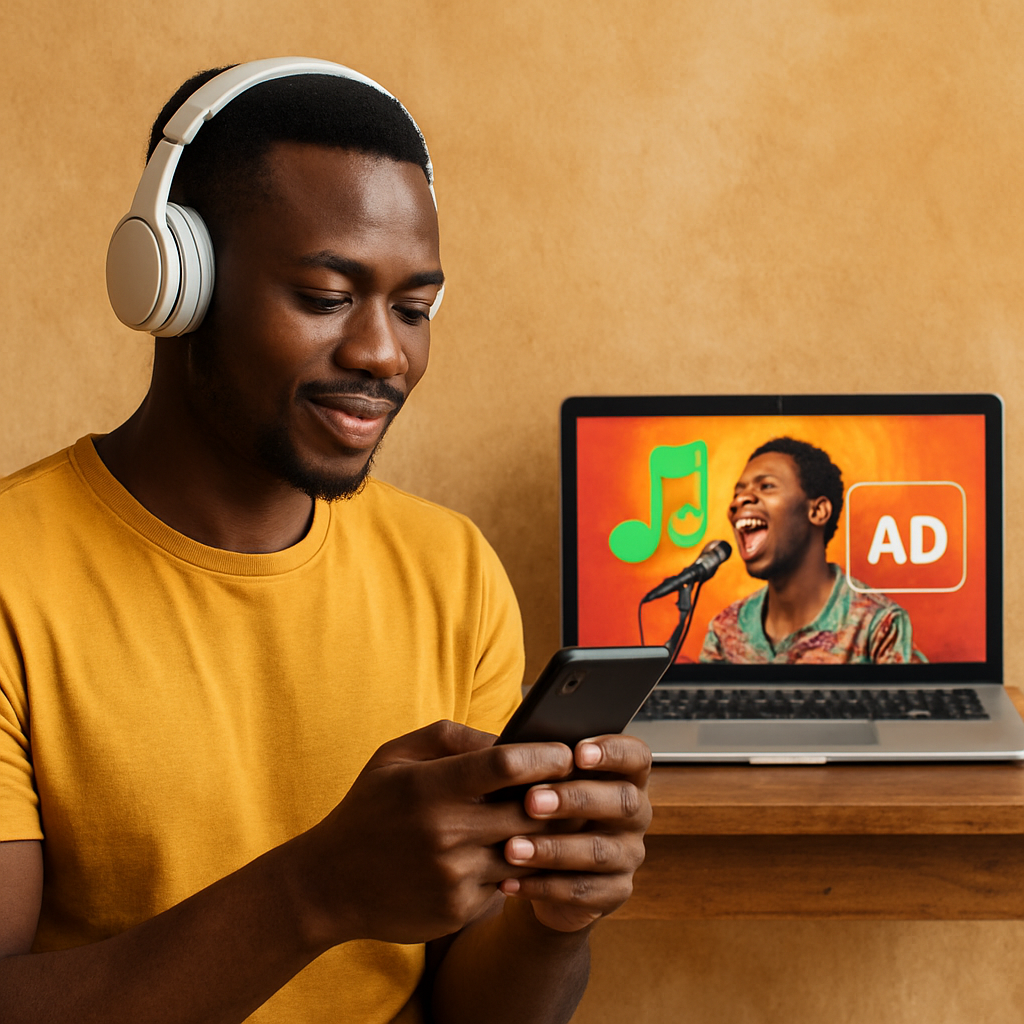
The sound of a city often reveals what its search queries won’t. From Lagos traffic jams scored by street vendors’ speakers to Pretoria’s nightclubs pulsing with new piano-driven house, local music is the cultural operating system of African attention. For online advertisers, that soundtrack is not background noise—it is a live, data-rich signal that restructures media planning, creative strategy, and commerce flows. When a beat moves from a studio hard drive to neighborhood parties, playlists, and short‑video feeds, it drags budgets with it, reshapes targeting cohorts, and can flip a brand from unfamiliar to indispensable in a week.
The sonic map that guides digital attention
Across the continent, genre ecosystems function like micro‑markets with their own vernaculars, gatekeepers, and platform norms. Nigeria and Ghana’s Afrobeats delivers global hooks and polyrhythms designed for virality; South Africa’s Amapiano rides log‑drums and hypnotic breakdowns optimised for dance and long‑form DJ sets; East Africa’s Bongo Flava and Singeli weave Swahili lyrics and blistering tempos; Kenya’s Gengetone, Côte d’Ivoire’s Coupé‑Décalé, DR Congo’s Ndombolo, Morocco’s and Algeria’s booming rap scenes, and Senegal’s mbalax each anchor regional identity and export pipelines. These styles do more than set tastes—they establish the cadence of ad creative, the ideal ad lengths, the right influencers, and the community rules that brands must respect to be welcomed.
Platforms mirror this diversity. In anglophone West Africa and much of Southern Africa, YouTube is a primary music discovery engine, while pan‑African DSPs such as Boomplay have publicly crossed the 100‑million monthly users threshold in the early 2020s, proving that local catalogues with strong telco partnerships can scale. Global audio DSPs, including Spotify and Apple Music, have expanded aggressively; Spotify’s multi‑country launch across more than 40 African markets in 2021 accelerated catalogue availability and branded audio formats. Short‑video networks shape creative norms continent‑wide; TikTok challenges and dance trends increasingly decide which chorus becomes the ad jingle everyone hums at kiosks and taxi ranks.
The infrastructure is catching up to the culture. GSMA estimates roughly half a billion unique mobile subscribers in Sub‑Saharan Africa by 2022, with smartphone adoption pushing toward one in two people by the mid‑2020s. That base matters because music discovery and sharing are overwhelmingly mobile, and ad placements piggyback on that attention. Meanwhile, the International Federation of the Phonographic Industry (IFPI) has reported that Sub‑Saharan Africa was among the fastest‑growing recorded‑music regions in 2022, with revenues rising by more than 30% year‑on‑year, largely driven by streaming. On Spotify, Afrobeats‑tagged playlists surpassed 13 billion streams in 2022, underscoring how local genres travel and then return home with amplified prestige—exactly the loop that high‑growth brands want to ride.
For planners, the “sonic map” is a demand map. Genres concentrate not only listeners but also creators, micro‑venues, and vernacular memes. Where you find dense clusters of creators, you find rapid iteration: new dance steps, new slang, new visual grammar. Ads that sync to that rhythm hit higher attention scores and pass the authenticity test that keeps skip‑rates low even in data‑constrained environments.
From beat to buy: how music trends reorganize online strategy
Creative built for rhythm, not just reach
Successful brands start by letting music drive narrative architecture. Amapiano’s long, tension‑and‑release breaks reward 20–30 second vertical edits with beat‑matched cuts; Afrobeats’ call‑and‑response choruses invite creator duets; Bongo Flava’s melodic arcs suit branded lyric captions in Swahili for hyperlocal resonance. Smart teams assemble “sonic style guides” alongside visual ones: approved tempos (BPM ranges), pre‑cleared stems for remixes, even per‑market lyrics that reflect slang without parodying it. Dynamic templates then render 6‑, 10‑, and 15‑second variants that respect the music’s structure rather than slicing it arbitrarily.
Motion‑mixing tools make this affordable. AI beat detection aligns transitions to drum hits, while auto‑captioning pushes sing‑along hooks into silent‑autoplay environments. The result is not generic stock music pasted under a product shot, but ad creative engineered around the way a particular community already moves and sounds.
Media buying that follows the dance floor
Buying is no longer channel‑first; it is culture‑first. If a song is in the top 20 of city‑level short‑video trends, brands can shift budget into vertical video and creator whitelisting within hours. If a regional DJ coalition is driving Amapiano premieres on Friday nights, then audio pre‑rolls and premium sponsorships should concentrate in the corresponding time windows on DSPs and live‑stream feeds. When a diaspora pocket in London or Toronto takes an African track mainstream, cross‑border retargeting back to Lagos, Accra, Nairobi, or Johannesburg can piggyback on the exported clout—particularly effective for fashion, beauty, and mobility apps that sell aspiration as much as utility.
At the same time, attention is fragmented. Radio remains resilient and often simulcast online; community stations streaming on YouTube or Facebook carry comment threads that double as qualitative research. Programmatic audio inventory on Spotify, Boomplay, and regional podcast networks allows household‑level reach with genre filters. Social commerce units—from in‑feed product tags to shop tabs on video profiles—close the loop between discovery and checkout. The winning plan behaves like a DJ set, cueing into the next track before the current one fades.
Targeting in a world where playlists are proxies
Playlists, follows, and creator affinities are implicit identity graphs. Brands can build cohorts around high‑velocity tracks, not just around age and income. Instead of generic “urban youth” buckets, media teams can define psychographic clusters like “Amapiano weekenders,” “Naija pop nostalgics,” or “Francophone club kids” and then expand with lookalikes. Because music taste cross‑cuts language and neighborhood lines, this approach frequently outperforms simple demographic filters. The backbone is robust segmentation that ingests platform signals (playlist adds, skips, completion rates), zero‑party data (polls on brand profiles), and first‑party events (site visits from music‑tagged campaigns).
The tactics are subtle. A telco might target data‑heavy offers to listeners who habitually watch long DJ sets; a QSR could retarget late‑night snack creatives to users who stream club mixes after midnight; a fintech could place trust‑building testimonials next to mellow Sunday gospel or Afro‑soul playlists. Music taste provides a high‑frequency pulse for intent without exposing sensitive attributes—and it keeps fresh as trends turn over every few weeks.
Measurement that hears what people do, not just what they say
Surveys lag behind feeds, so measurement needs signals synchronized with music velocity. Lift studies keyed to artist campaigns, incrementality tests by genre cohort, and MMM models that include “share of playlist” variables produce clearer ROI pictures. Audio fingerprinting can attribute offline exposure: when a brand jingle is remixed into a DJ set and pops up in background audio near a retail location, that counts as earned media and should be correlated against sales spikes. Cross‑platform identity with privacy in mind is essential; do not rely on brittle cookies when playlists and dwell times are far more predictive.
Accuracy improves when the creative honors context. Amapiano spots that respect the slow build show higher attention and lower skip‑rates; Afrobeats edits with chorus‑first hooks earn faster recall; Swahili captions lift comprehension in East Africa. Those effects are measurable. Brands should tag every asset with genre, tempo, language, and creator type metadata so they can isolate what truly drives outcomes.
Creators, rights, and the fragile social contract
Music marketing in Africa runs on creator trust. Choreographers and dancers often break songs before radio does; micro‑creators in townships and estates are more influential locally than celebrity influencers. Paying them fairly, crediting them visibly, and co‑designing concepts makes a campaign travel further and last longer. A dance challenge that starts with the original choreographer, posted on their channel with paid media behind it, will typically outperform a brand‑owned imitation posted to a corporate account.
Rights clearance is non‑negotiable. Even short clips require synchronisation licences for ads, and brands must account for multiple stakeholders: labels, publishers, and collective management organisations in both the artist’s home country and any territory where the ad will run. When in doubt, commission original tracks or work with artists to create bespoke stems for remixes. Neighbouring rights, moral rights, and brand safety reviews (political lyrics, explicit content) should be standard pre‑flight checks. The reward for diligence is creative freedom—when the paperwork is clean, you can iterate fast and localise without anxiety.
What authenticity looks like on screen
The visuals must speak the dialect. Wardrobe choices nod to streetwear trends born in taxi ranks and campuses; settings show real spots—shisa nyamas, mama put joints, rooftop football—rather than generic “Africa” montages. Cameos from street DJs, MCs, or neighborhood dance crews anchor credibility. Subtitles respect code‑switching, not iron out accents. Product shots integrate as props—a powered speaker at a backyard party, a ride‑hail pickup after a gig—rather than pop‑ups wedged between dance moves. Audiences notice the difference, and the algorithm rewards high watch time.
Commerce rides the bassline: from attention to action
Music‑anchored ads do more than entertain—they accelerate decisions. Social commerce layers on short‑video platforms now support product tagging inside dance challenges and studio diaries. Livestream sessions with artists can bundle limited‑edition drops, time‑boxed discounts, and buy‑buttons pinned to the chorus moment. In markets where mobile money dominates, payment links in creator bios and QR codes in Stories reduce friction; in markets where cash‑on‑delivery still matters, clear promises about delivery times and returns build confidence.
Telco partnerships are a quiet superpower. Data‑saver creatives (low‑bitrate audio, adaptive resolution) reduce cost for users; sponsored data for specific links (zero‑rating) nudges viewers to watch full ads; bundles that include free‑data hours tied to album premieres generate appointment viewing. Brands that coordinate with telcos and DSPs can sit at the centre of a release week, framing their offer as the way to enjoy the moment fully.
Music also drives footfall. Geo‑fenced promotions around concerts, club residencies, and street festivals—targeted with event‑interest signals from ticketing platforms and social RSVPs—convert attention into presence. Point‑of‑sale kits that echo online creative (lyrics on receipts, QR codes to a branded playlist) close attribution loops and let the offline experience regenerate online content as fans post from the venue.
Country and cluster snapshots for planners
West Africa: Lagos, Accra, Abidjan
Afrobeats and Naija pop steer calendar moments—Detty December is a media peak with diaspora returnees and festival clusters. French‑speaking West Africa blends Coupé‑Décalé and zouglou with francophone rap’s swagger; cross‑border buys spanning Abidjan, Dakar, and Paris can leverage diaspora spillover. YouTube Premieres, TikTok dance challenges, and branded challenges led by choreographers drive discovery; audio DSPs reinforce longevity with editorial playlist placements. Expect high creative turnover—new slang, new choreography weekly—so build modular assets.
Southern Africa: Johannesburg, Pretoria, Cape Town
Amapiano’s social architecture revolves around DJ residencies, shisa nyama day parties, and house‑scene YouTube channels. Ads should embrace longer musical builds; consider sponsored mixes, brand‑scored edits, and co‑created tracks with producers. Programmatic audio plus short‑video retargeting works well; community radio simulcasts with chatty comment sections double as rapid‑feedback labs. Integrate township micro‑creators; they are often the first movers of dances that later reach national TV.
East Africa: Nairobi, Dar es Salaam, Kampala
Bongo Flava, Singeli, and Gengetone shape a bilingual (often Swahili‑English) content mix. Subtitles and clever wordplay land well; brands that localise audio copy earn outsize goodwill. Facebook and YouTube remain powerful; Shorts and Reels extend reach among youth. For commerce, mobile money is central—embed payment and customer‑service links in creator captions and Stories, and surface delivery promises prominently.
North Africa: Casablanca, Rabat, Algiers, Cairo
Rap, raï, and trap dominate youth culture, often with politically aware lyrics. Visual craft is high; cinematic verticals and moody color grades outperform. WhatsApp communities and Telegram channels act as underground distribution; seeding there ahead of a public drop can generate mystique. Rights diligence is crucial—labels and indie collectives have grown sophisticated, and clearances may require multiple intermediaries.
The data layer: music as a predictive signal
Because music taste updates rapidly, it serves as a nowcast for demand. The first 48–72 hours of a track’s breakout carry high‑resolution signals: spikes in Shazam queries near malls, city‑specific TikTok completion rates, or playlist adds among micro‑influencers. Feeding these into bidding rules lets budgets auto‑shift; a simple rule might allocate 5% more spend to a cohort when its average track momentum exceeds a threshold. Over a quarter, this creates compounding advantages as your media mix leans into the scenes that are actually expanding, not the ones that were big last year.
Another advantage: language coverage. Genre‑led targeting traverses dozens of languages because the ad aligns to sound and movement. Creative that matches the beat earns attention even when copy is minimal. This matters in markets where literacy and language fluency vary widely across neighborhoods. A rhythm understood instantly needs fewer words to persuade.
Privacy, safety, and inclusivity
Music‑based targeting is privacy‑sensitive when done right. You do not need to infer sensitive traits; you watch what people choose to dance to. However, brand safety must be active: some lyrics are explicit or politically charged. Set up pre‑bid filters for content categories, maintain allow‑lists of artists and channels, and use human review for high‑spend partnerships. Be ready to walk away from a hot trend that clashes with your values; the next one is minutes away.
Rights, revenue sharing, and long‑term community value
When a brand helps finance a video, co‑creates a track, or sponsors a tour live‑stream, negotiate revenue shares tied to performance rather than one‑off fees. Creators appreciate upside participation; brands convert cost centres into assets. Consider micro‑grants for emerging choreographers in exchange for first‑look options on challenge ideas. Structure open briefs with clear timelines and transparent selection so smaller voices can win as often as established names.
When logistics allow, build physical touchpoints: community studios, rehearsal spaces, or content labs seeded with basic gear. These hubs generate content pipelines, loyalty, and measurable social impact, all while soaking your brand into the scene without heavy‑handed ads. The return arrives as lower creator fees over time, faster creative cycles, and higher earned reach.
A practical playbook for marketers
Discovery and research
- Map the local genre stack: top 50 tracks, breakout creators, key venues, and weekly content rituals. Update it weekly.
- Instrument cultural listening: track city‑level short‑video trends, playlist additions, Shazam hotspots, and live‑event calendars.
- Interview choreographers and DJs; their forecast beats dashboards by days.
Creative production
- Build a sonic style guide with BPM ranges, sample palettes, and approved stems.
- Design modular vertical videos that can swap lyrics, locations, and overlays within hours.
- Localise captions and VO; one line in Swahili or Pidgin can lift recall more than extra ad spend.
Media and targeting
- Allocate a flexible budget pool that follows track momentum, not a fixed channel split.
- Use playlist‑based cohorts; expand with lookalikes and cap frequency by subculture to avoid fatigue.
- Blend paid with creator whitelisting; let ads run through creator handles for credibility.
Measurement and optimisation
- Tag assets with genre, tempo, language, and creator type; optimise against these metadata, not only against placement.
- Run incrementality tests by genre cohort; add a “share of playlist” regressor to MMM models.
- Track assisted outcomes such as store visits around concerts; evaluate halo effects beyond last‑click.
Governance and rights
- Clear sync rights for every clip; document label, publisher, and CMO approvals per territory.
- Use creator contracts with transparent usage windows and repost permissions.
- Maintain allow‑lists; refresh them as scenes and reputations shift.
Case‑style vignettes (composite, illustrative)
A consumer electronics brand launching wireless earbuds in South Africa tied its creative to Amapiano’s slow builds: 20‑second verticals with sound‑isolation close‑ups punctuated by log‑drum hits. Media went heavy on YouTube music channels and TikTok creators known for “piano” dance variations. Against a control campaign with generic EDM, the Amapiano‑aligned assets delivered higher mid‑view retention and reduced skip rates. In retail analytics, weekend footfall near partner stores ticked up after sponsored mixes dropped on Friday afternoons—timed to payday cycles and day parties.
In Kenya, a food‑delivery platform piggybacked on Gengetone’s humor and call‑and‑response style. The brand commissioned a hook using local slang about late‑night cravings and credited the originator choreographer. Paid media ran via creator handles and added social‑proof overlays from comments. Order peaks aligned with the song’s micro‑trend window, and the brand saw more first‑orders from neighborhoods typically under‑represented in past targeting—evidence that music‑led cohorts pierced through where demographic filters had missed.
A fintech focused on remittances connected diaspora moments to West African release cycles. When an Afrobeats track broke in London, the team bought search and short‑video inventory in both the UK and Lagos, then retargeted viewers with fees‑waived promos pegged to the track’s chorus. The brand’s cross‑border app installs jumped, and support chats showed customers referencing the song by name—a rare qualitative tie between culture and conversion intent.
What changes next: forecasts on the beat
Three shifts will matter most in the coming 12–24 months. First, generative tools will democratise music‑matched creative: brands and creators will auto‑cut beat‑synced edits in seconds, compressing the distance between a studio leak and a shoppable ad. Rights frameworks will need to adapt quickly to stem remixes and AI‑modified vocals. Second, cars are re‑emerging as media—Android Auto and CarPlay penetration rises, and Amapiano or Afrobeats road‑trip playlists turn into premium ad inventory during weekend migration patterns. Third, live‑to‑digital loops will tighten: affordable 5G pockets and sponsored data will make pop‑up streams from township parties shoppable in real time.
One caution: attention half‑life is shortening. Scenes flip in weeks; micro‑genres flare and fade fast. The solution is not to chase every trend but to pick two or three scenes that align with your brand’s values and audience, then invest there longitudinally—respecting their rituals, supporting their creators, and earning the right to stay when the algorithm moves on.
Why music remains the most precise blunt instrument
Music is paradoxical: a blunt instrument that can move millions at once and a precise tool that can isolate psychographic niches without invasive data. In Africa’s mobile‑first markets, where social graphs grow around dances, DJs, and neighborhood heroes, the song is the addressable unit. Planners who treat it that way—shaping creative to the beat, steering buys by scene velocity, measuring outcomes in cultural as well as commercial terms—consistently outperform. They also leave audiences better than they found them: paid budgets underwrite videos, residuals flow to artists, and more creators find pathways from street fame to sustainable careers.
Key takeaway: When a hook catches on the ground, it will soon rule the feed. Build your plan to move at that speed—clear the rights, empower the choreographers, wire the data, and let the culture carry your message. With robust localization, smart programmatic controls, airtight attribution, and relentless focus on conversion, local music trends become not just a soundtrack for your campaign but the engine of your growth.