
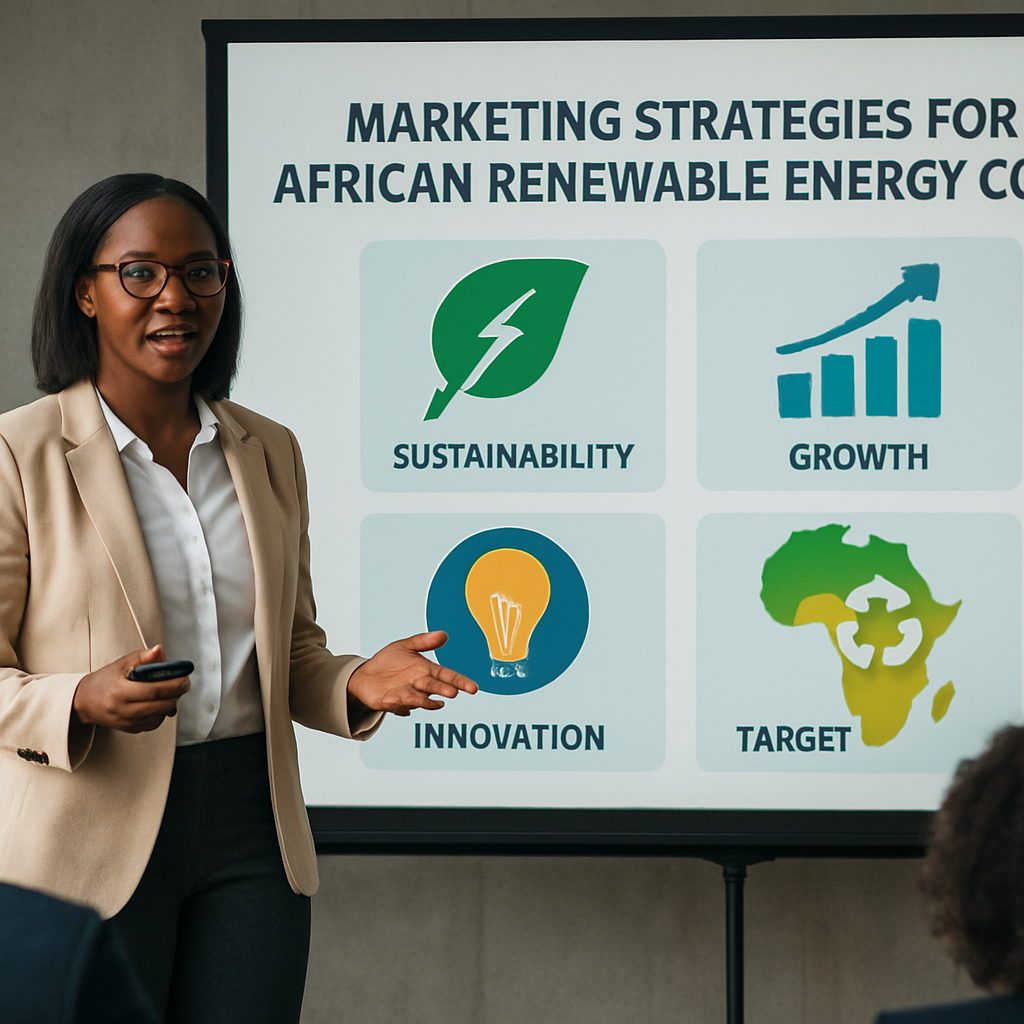
African renewable energy companies operate at the intersection of urgent demand and remarkable opportunity: hundreds of millions still lack electricity access while urban and industrial centers race to decarbonize. In this setting, marketing is not merely about acquiring customers; it is about building market confidence, unlocking capital, shifting behavior, and educating stakeholders. The most effective approaches blend rigorous commercial discipline with mission-driven storytelling and local sensitivity—using digital channels to bridge last-mile realities and global expectations.
The market context that shapes digital strategy
Across Sub-Saharan Africa, the International Energy Agency estimates more than 600 million people still live without electricity access, while fast-growing cities and industries face reliability and cost pressures on existing grids. At the same time, internet and smartphone adoption continue to climb. The ITU reports that roughly 40% of people in Africa use the internet, and GSMA projects smartphone adoption in Sub-Saharan Africa will rise from about half of users today to around 60% by 2030. Sub-Saharan Africa also leads the world in mobile money usage, with a majority share of global mobile money value processed, according to GSMA. This combination—energy deficit, rising connectivity, and innovative payment rails—creates a uniquely powerful environment for digital-first marketing and distribution.
For consumer-facing players (solar home systems, clean cooking, e-mobility, rooftop PV, mini-grids), digital channels lower acquisition costs, streamline support, and enable pay-as-you-go models. For B2B and public-sector oriented firms (IPP developers, EPCs, storage integrators, grid services), digital improves reputation with lenders and offtakers, drives tender visibility, and supports long-cycle account-based growth. The key is to unify brand, product education, and conversion around the realities of African connectivity, languages, payments, and regulation—while maintaining auditable claims and conservative promises to preserve trust.
Positioning: clarity, value, and proof over slogans
A differentiated brand in African renewables is anchored by three pillars: demonstrable performance, accessible economics, and credible impact. Replace vague sustainability language with operating data: uptime percentages, kWh delivered, payback periods, warranty terms, and service response times. In consumer markets, emphasize reliability (lights that stay on through the rainy season), affordability (total cost of ownership vs. kerosene or diesel), and service (local agents, spares, and turnaround). In B2B, emphasize bankability (track record, references), grid or process improvements (peak shaving, reduced LCOE, shorter outages), and compliance (HSE, ESG, and data security). Distill these into a value proposition that sits consistently across your website, social channels, sales collateral, and investor decks.
Pragmatic brand architecture matters. Name products clearly, publish specs and data sheets, and map use cases by segment: smallholder irrigation, cold chain for fisheries, health clinic backup, C&I rooftop for FMCG, grid-scale storage for frequency regulation. Each use case should be supported by a case narrative, customer voice, and a measurable outcome. This translates into content that is discoverable via search and shareable in messaging apps—maximizing the surface area of your brand while reinforcing quality and accountability.
Search discoverability: from keywords to conversion
Organic search remains the most resilient digital channel across African markets, with Google controlling well over 90% market share in many countries. That makes SEO a foundational investment. Start with intent mapping: segment queries by need (learn, compare, buy, support). Include country and city modifiers (Lagos solar installer, PV financing Accra, hybrid inverter Nairobi), sector modifiers (cold storage solar Kenya, telecom tower hybrid power Uganda), and language variants (Anglophone, Francophone, Arabic, Portuguese, and Swahili). Build topic clusters around priority opportunities: rooftop C&I, mini-grids for tourism lodges, solar irrigation in Sahelian zones, or battery retrofits for diesel-heavy factories.
Technical considerations matter greatly on constrained networks. Optimize Core Web Vitals with lean images, efficient caching, and adaptive video. Use schema markup (Organization, Product, Review, FAQ) to increase visibility in rich results. Create localized landing pages per country and, where feasible, per metro area—embedding address, phone, business hours, and WhatsApp click-to-chat. Register and maintain Google Business Profiles for every service location and list in reputable local directories and energy associations. Make support and spares pages indexable—many customers search only when a system fails; winning that query with practical troubleshooting earns disproportionate loyalty and referral value.
Content that educates and converts
High-performing renewable brands treat content as a product. Prioritize three formats: explainers, calculators, and proof. Explainers demystify solar sizing, hybridization with diesel, storage chemistry safety, or how mobile money pay-as-you-go works. Calculators estimate load sizing (pump horsepower, compressor duty cycles), payback (diesel displacement, tariff arbitrage), and monthly repayment under different financing structures. Proof comes through case studies, customer interviews, and photo/video site walkthroughs—especially compelling for B2B risk committees and for communities skeptical of prior low-quality products.
Short form video drives reach; long form drives trust. Publish 30–90 second clips for social and messaging, but host deeper demonstrations (five to ten minutes) on your site and YouTube for procurement teams and technical buyers. Use captions and language variants. Provide download options for low-bandwidth users and transcript summaries for skimmers. Embed crisp calls-to-action aligned with funnel stage: subscribe to maintenance tips, simulate your C&I rooftop savings, request a site survey, or check PAYGo eligibility. On messaging-first markets, deliver drip education micro-lessons through WhatsApp Business flows that reinforce behavior (battery care, tariff changes, service visit scheduling).
Email remains underrated. Multiple industry studies consistently find email marketing returns among the best ROIs in digital channels—often cited around $36–$40 revenue per $1 spent globally—provided lists are permission-based and segmented. For off-grid and PAYGo operators, transactional emails and SMS that confirm payments, signal low balances, or advise seasonal usage patterns reduce churn and service calls.
Remember: one standout guide or calculator can outperform dozens of generic posts. Invest in cornerstone assets and keep them updated with new regulations, tariffs, and component prices, turning content into a compounding moat.
Social channels and community-led growth
Platform dynamics vary by country, but a common pattern prevails: WhatsApp dominates messaging, Facebook and YouTube provide reach and video discovery, TikTok accelerates viral storytelling, Twitter/X shapes policy and media conversations, and LinkedIn is essential for B2B and investor visibility. Build a modular content system that repackages core assets per channel and language. For example, a C&I rooftop case study can yield a LinkedIn slide deck for CFOs, a WhatsApp carousel for sales agents, a two-minute YouTube site tour, and a short TikTok clip highlighting noise and emissions reductions versus diesel gensets.
Communities are your most authentic endorsement, so formalize them. Create user groups for installer partners and for end-users—especially farmers, shop owners, and clinic managers. Offer recognition (badges, early access to tools, featured stories) and practical value (troubleshooting tips, spare part discounts). Incentivize user-generated content through simple prompts: before/after photos, monthly savings screenshots, or small contests tied to energy efficiency habits. Structured referral programs regularly outperform ads on cost-per-acquisition in markets with strong word-of-mouth norms, converting “satisfied customers” into a durable community asset.
Performance marketing and the last-mile conversion
Paid search efficiently captures in-market demand—especially for branded and high-intent generic terms (solar installer near me, battery replacement, mini-grid developer RFP). Social ads expand reach and seed education, with lead forms and click-to-WhatsApp lowering friction. Design low-bandwidth landing pages optimized for quick loading and clear micro-conversions: callback requests, eligibility quizzes, or dealer location finders. For PAYGo and SHS, experiment with instant approvals using lightweight KYC and mobile money histories; for C&I, gate richer content (spec sheets, ROI models) behind progressive forms that qualify without scaring away prospects.
Measure what matters. Track cost per qualified lead and per closed sale, payback period on acquisition, and churn/repurchase dynamics. Nurture flows should reflect decision cycles: days for home solutions, weeks to months for C&I retrofits, and months to years for utility-scale. Score leads using firmographics (sector, facility size) and behavior (content consumed, meetings booked), routing them to inside sales or channel partners. In many markets, click-to-chat via WhatsApp outperforms web forms—so embed in site headers, Google Business Profiles, and ad extensions, and staff with trained advisors who can dispatch field agents when needed.
B2B, financing, and public tenders
Institutional buyers and financiers scrutinize risk and bankability. Develop a data room for diligence: audited financials, environmental and social management plans, O&M playbooks, cyber policies, and detailed case data (PVsyst outputs, SCADA logs, as-built drawings). Publish sanitized versions as credibility assets on your website. On LinkedIn, run account-based programs targeting utilities, mines, large C&I, and multilaterals—delivering tailored narratives: LCOE comparisons, resilience through hybrid systems, and capex-to-opex transitions via leases or energy-as-a-service. Buyers care about outcomes: curtailment reduction, diesel displacement, process uptime; show these in dashboards and case evidence.
Marketing must work with project finance. Offer structured materials for credit committees: standardized assumptions, sensitivity analyses, and downside protection (warranties, spares, service response SLAs). Point to recognized certifications and quality benchmarks, such as VeraSol for off-grid products, anti-counterfeit programs, and reference implementations with leading offtakers. For tender-driven growth, maintain a calendar of national procurement portals and multilateral platforms, and use alerts and microsites tailored to each opportunity. Proof of execution, not grand vision, unlocks financing in Africa’s renewables—so make proof your primary message.
Localization, languages, and payments
Language and UX determine whether a curious viewer becomes a customer. Translate high-value pages and ads into primary local languages where markets warrant it: English and French at continental scale; Arabic in North Africa; Portuguese in Lusophone regions; plus Swahili, Hausa, Amharic, Yoruba, and Zulu for reach and inclusion. Language is only one layer of localization; adapt imagery (rooftop types, farming equipment), units (kW vs. kVA, liters, hectares), and pricing (local currency, VAT) to reduce cognitive load and signal respect.
Payments and sign-up flows must mirror on-the-ground behavior. Offer mobile money, cards where penetration is meaningful, and bank transfers for B2B. For PAYGo, support USSD, SMS, and WhatsApp self-service. Keep forms short and provide offline alternatives. Share expected timelines for site visits and installations, and let users schedule by messaging instead of only by web forms. Inclusive design—dark mode for power-saving, downloadable PDFs for low bandwidth, and usage calculators that work offline—expands the TAM and compresses sales cycles.
On-device support content, QR codes on products, and agent toolkits in WhatsApp improve first-time-right installations and reduce truck rolls. This is where thoughtful mobile experiences pay back many times their build cost.
Data, privacy, and measurement discipline
Good measurement balances modern tooling with African connectivity realities and data protection laws. Implement server-side analytics where possible, backstop with log-based reporting for outages, and reconcile digital leads against CRM deal stages. Tie offline events—site surveys, installation sign-offs, first payment—to campaigns to calculate true CAC and LTV. For PAYGo and mini-grid operators, blend marketing data with device telemetry to find early churn predictors and trigger retention interventions (education nudges, tariff adjustments, proactive maintenance).
Respect privacy and compliance: South Africa’s POPIA, Nigeria’s NDPR, Kenya’s Data Protection Act, and other national frameworks require explicit consent and safeguards. Maintain clear preference centers, easy opt-outs, and data minimization. This is not just legal hygiene—it’s a signal of maturity that reassures lenders and enterprise customers. Over time, investing in durable analytics capabilities—clean tagging, consent management, and accurate attribution—turns marketing from a cost center into a strategic forecasting tool.
Thought leadership and influence
Energy transitions are shaped as much by policy and finance as by kilowatts installed. Publish white papers that solve real problems: diesel-to-solar hybridization models for mines, resilience playbooks for clinics, or grid services case histories for system operators. Offer benchmark datasets (de-identified) to build credibility with researchers and multilaterals. Seek visible milestones—third-party awards, pilots with respected institutions, and speaking roles at forums like Africa Energy Forum and Sustainable Energy for All. Well-timed insights during tariff debates or net-metering consultations can put your brand in front of decision-makers at precisely the moment they are choosing partners.
Sales enablement for distributed channels
Even with robust digital funnels, African renewables often close through distributors and field agents. Equip them with mobile-first playbooks: bilingual pitch decks, objection-handling cards, price configurators, and warranty claim flows. Sync CRM data so HQ sees where leads stall—by geography, product, or partner—then deploy targeted micro-campaigns or training. Create a spare-parts finder and ticketing via WhatsApp to cut downtime. The tighter the feedback loop between marketing, sales, and service, the stronger your reputation and NPS. Over time, that reputation compounds into defensibility against entrants focused only on price.
Brand safety, resilience, and crisis readiness
Energy firms operate amid political cycles, grid instability, and supply chain shocks. Prepare a playbook for misinformation (e.g., counterfeit panels, false warranty claims), with fast verification and takedown processes. Maintain a surge plan for service communications during extreme weather or national blackouts: pre-written advisories, multilingual FAQs, and alternative contact channels. Diversify ad inventories to avoid adjacency to harmful content and maintain whitelists for programmatic. A reputation for operational resilience—clear updates, honest ETAs, owned incident reviews—builds loyalty in ways no creative campaign can.
90-day plan to lift pipeline quality
- Audit: Map current funnels, content, CAC/LTV by segment, and partner performance. Identify abandoned traffic and high-friction steps.
- Fix the basics: Improve page speed, implement schema, localize top 10 landing pages, enable WhatsApp click-to-chat, and clean up Google Business Profiles.
- Proof points: Publish three flagship case studies with metrics and customer quotes; add a savings calculator for your top product.
- Performance tests: Launch branded and high-intent search campaigns; test lead ads and click-to-WhatsApp; set up conversion tracking tied to CRM stages.
- Sales alignment: Roll out a standard qualification script, a pricing configurator, and a weekly pipeline huddle across marketing and sales.
12-month roadmap for scale
- Content engine: Establish a quarterly editorial calendar, local language variants, and a video discipline (site tours, explainers, and testimonials).
- SEO moat: Build country and city clusters, earn backlinks from industry bodies and universities, and maintain evergreen guides.
- B2B ABM: Define your top-50 target accounts per country; deploy LinkedIn and email sequences tailored to CFOs, operations heads, and sustainability leaders.
- Partner excellence: Certify installers, launch a partner portal, offer co-op marketing funds tied to lead and NPS targets.
- Data maturity: Implement server-side tracking, consent management, and offline conversion uploads; adopt a shared BI dashboard across marketing, sales, and operations.
- Reputation: Pursue at least two independent validations (quality certification, award, or multilateral pilot) and publish a succinct annual impact and reliability report.
Common pitfalls to avoid
- Over-indexing on urban elites: Tailor offers and UX for lower bandwidth, local languages, and alternative payments to unlock the larger addressable market.
- Feature dumping: Translate technical excellence into economic and reliability outcomes; buyers don’t purchase voltage—they purchase uptime and savings.
- Ignoring after-sales: Underinvested service erodes lifetime value and referrals; turn support content and SLAs into a visible selling point.
- Inconsistent pricing narratives: Align ads, site, and agent quotes; mismatches imply hidden fees and drive cart abandonment or mistrust.
- Promising more than logistics can deliver: Set accurate timelines and share constraints; candor beats aspirational timelines that slip.
Examples of tactics tailored to segments
Solar irrigation for smallholders: Run Facebook and radio-backed lead gen pointing to a WhatsApp quiz that sizes pumps and shares seasonal tips. Offer a PAYGo plan integrated with mobile money. Share farmer stories with yield and income deltas, plus maintenance micro-lessons in local language.
C&I rooftop for FMCG facilities: Publish a CFO-facing white paper on tariff arbitrage and hedging diesel volatility, with sector-specific case data. Target facilities directors and CFOs on LinkedIn with calculators and virtual site tours. Offer a capex and energy-as-a-service comparison in a single view.
Mini-grids for tourism lodges: Use high-quality video tours contrasting diesel noise and fumes with solar-storage systems. Partner with hospitality associations for webinars. Provide a booking calendar for site assessments and bundle financing options with seasonal demand modeling.
Battery retrofits for telecom towers: Build a microsite explaining chemistry choices, cycle life, and hybridization with gensets. Offer a pilot with rigorous KPIs and publish results. Run ABM ads to towercos and MNOs, mapping content to engineering, finance, and sustainability stakeholders.
Why this approach works in African markets
The best-performing renewable brands in Africa meet customers where they are—on messaging apps, with mobile-friendly experiences, in familiar languages, and via payment methods they already trust. They speak directly to reliability and cost outcomes, publish transparent proofs, and align with the milestones of lenders and off-takers. They do not rely on a single channel; they build an integrated growth system that compounds: discoverability through search, persuasion through stories and calculators, conversion through frictionless chats and forms, retention through proactive service, and advocacy through community programs.
Importantly, the strategy recognizes constraints as design inputs rather than obstacles: bandwidth variability inspires light websites and downloadable toolkits; fragmented geographies lead to modular content and local partners; policy volatility motivates evergreen explainers and swift PR responses. When done well, this creates an operational rhythm that is hard to copy—part brand, part process, and part infrastructure.
Final thought
African renewable energy companies do not just sell equipment or kilowatt-hours; they sell certainty under uncertainty. Winning teams combine disciplined funnels with culturally aware narratives, rigorous measurement, and credible promises. Invest in the basics—search visibility, clear proof, local language journeys, and data integrity—then scale with partnerships and thought leadership. The result is a brand that earns the right to grow: anchored in trust, powered by mobile first journeys, discoverable through SEO, explained by great content, tailored by localization, proven to unlock financing, illuminated by sound analytics, reinforced by community, and respected for operational resilience.