
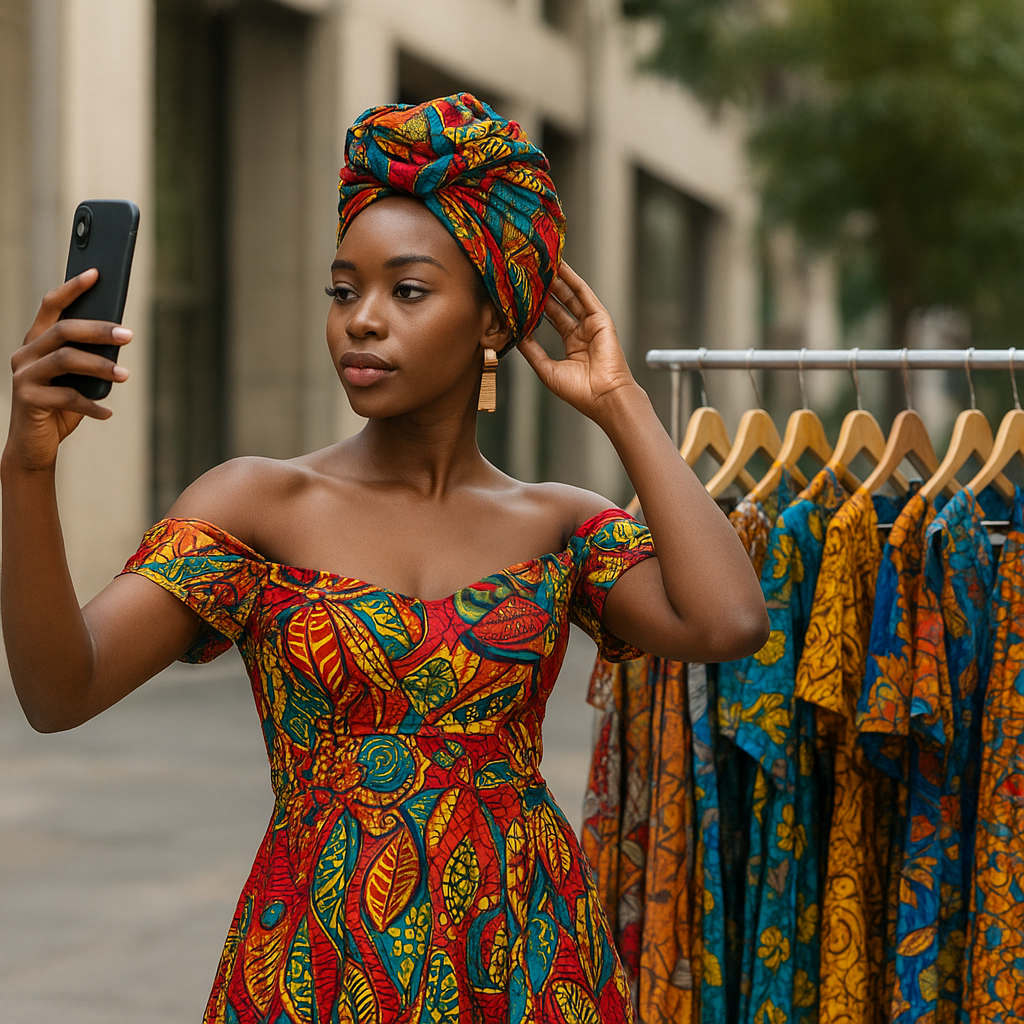
From Lagos streetwear to Nairobi thrift culture and Johannesburg luxury, fashion conversations across Africa are now sparked, scaled, and monetized by creators whose phones double as studios, storefronts, and media channels. Influencers do more than “show outfits”; they compress discovery, validation, and purchase into a single feed, converting aesthetic taste into economic activity and transforming local scenes into continental and global trends.
The rise of creator-led fashion ecosystems
Influencer-driven fashion in Africa has grown alongside the rapid normalization of mobile-first media. GSMA’s recent analyses indicate that smartphone adoption in Sub-Saharan Africa has passed the halfway mark and is on course to approach two-thirds by the end of the decade. Pair that with steadily expanding 4G coverage and lower data costs, and you get a sustained lift in short-form video creation, live streaming, and social shopping behaviors.
DataReportal’s 2024 snapshots estimate that the continent counts hundreds of millions of social media users, with WhatsApp, Facebook, Instagram, YouTube, and TikTok dominating attention. While exact rankings vary by country, short-form video has surged in Nigeria, Kenya, South Africa, Ghana, Côte d’Ivoire, and Egypt, with TikTok content increasingly dictating what shows up on Instagram Reels and YouTube Shorts—and then in wardrobes.
Crucially, influence is not concentrated among a handful of celebrities. Africa’s fashion scenes are multi-nodal: Lagos, Accra, Abidjan, Dakar, Nairobi, Addis Ababa, Cairo, Cape Town, and Johannesburg each contribute their own aesthetics, and diaspora bridges through London, Paris, New York, and Toronto create a constant feedback loop. Streetwear labels, modest fashion designers, upcycling collectives, and traditional textile artisans all plug into this network, using creators to expand reach far beyond their local markets.
Global influencer marketing has matured into a multibillion-dollar channel—industry trackers place it well above $20 billion worldwide—which helps explain why African fashion brands and retailers increasingly reserve a dedicated share of paid media for creator partnerships. The frontier isn’t just reach; it’s the way creators compress culture, commerce, and community into scalable narratives.
Why influence works in African fashion
Three drivers explain why creator content consistently moves product across the continent:
- Local credibility and proximity. African audiences gravitate to creators who mirror their realities—climate, body types, skin tones, price sensitivities, and cultural dress codes. That specificity gives them durable authenticity.
- Community-first discovery. Many purchases originate in closed or semi-closed spaces—WhatsApp groups, Telegram channels, Instagram Close Friends, and Facebook Groups—where creators act like trusted stylists. That sense of community shortens the path from inspiration to checkout.
- Formats built for action. Try-on hauls, GRWMs, styling challenges, and live shopping invite audiences to co-create. Comment-to-buy workflows and product drops feel native to chat and short video, and they translate attention into conversion.
Trust binds these elements together. In many African markets, brand skepticism persists due to uneven customer service, counterfeit risk, or logistics issues. A creator’s consistency—answering DMs, sharing receipts, showing behind-the-scenes production—becomes a proxy for product quality. That relational trust is often worth more than a glossy campaign, especially when paired with responsive customer support in DMs and chat.
Platform-by-platform playbook
Instagram and TikTok: The style engine
Instagram remains the visual portfolio for fashion, while TikTok sets the tempo of what trends. Both platforms reward volume and velocity: frequent posts, multi-clip edits, native sounds, and “first-frame hooks” that deliver value within two seconds.
- Content that wins: 7–20 second outfit transitions; “one item, three ways” styling; price breakdowns in captions; thrift flips; micro-tutorials (e.g., tying headwraps or layering Ankara); creator-led lookbooks; duet/challenge formats.
- Commerce: Where native shopping is limited, creators lean on link-in-bio stores, WhatsApp click-to-chat, and pinned comments with order formats. Brands increasingly supply trackable links or unique codes tied to each creator.
- Signals to watch: Save rate, profile taps, comment intent (“Where to buy?”), and click-throughs—more predictive of sales than likes alone.
YouTube: Depth and search
YouTube powers more durable discovery and higher-intent viewers. Long-form try-ons, designer features, and documentary-style behind-the-scenes content rank in search and continue to convert for months.
- Content that wins: 8–15 minute hauls, wardrobe capsule builds, “how it’s made” pieces with artisans, factory tours, and brand story interviews anchored in storytelling.
- Commerce: Links in descriptions, pinned comments, and chapters tied to product pages. Creators frequently repurpose long-form into Shorts to catch trend waves and funnel viewers to the full video.
Facebook and WhatsApp: The commerce backbone
Facebook Groups and Marketplace fuel local resale, thrift, and community-led drops, while WhatsApp remains the continent’s customer-service and order-taking backbone. Many fashion SMEs treat WhatsApp as their primary CRM, routing Instagram traffic to chat for catalog, sizing, and payments via screenshots or payment links.
- Content that wins: Group-exclusive drops, waitlists, comment-to-buy posts, community polls to vote on prints or sizes, and testimonials with selfies.
- Commerce: Click-to-WhatsApp ads, broadcast lists, and Communities for segmentation (VIP buyers, plus-size, modestwear, menswear).
Influencer tiers, rates, and the brief
Creators are usually categorized by reach, but fashion brands increasingly negotiate by expected outcomes and content craft:
- Nano (under ~10k followers): Hyperlocal authority; high comment quality; great for neighborhood boutiques and bespoke tailors. Often barter + small cash.
- Micro (~10k–100k): Strongest conversion per dollar in many markets; niche expertise (e.g., plus-size formalwear, bridal Aso Ebi coordinators). Often the most efficient for experimentation. The term micro-influencers signals precision, not smallness.
- Mid-tier (~100k–500k): Scalable reach with still-manageable costs; good for category launches and seasonal pushes.
- Macro/celebrity (500k+): Culture-shaping visibility, ideal for tentpoles—fashion weeks, national holidays, collab drops—when paired with many smaller creators for frequency.
Rate drivers include deliverables (video vs. static; number of platforms), exclusivity windows, usage rights (organic only vs. paid whitelisting), production complexity (locations, models, glam), and seasonality (Eid, wedding seasons, December “Detty December,” back-to-school). Brands that supply clear story angles, sizing charts, and centralized product tracking reduce friction and raise performance.
Data, measurement, and avoiding vanity metrics
Influencer marketing shines when brands plan measurement upfront. Use layered instrumentation to see the whole funnel, not just top-of-feed signals. Thoughtful use of data separates guessing from compounding learning across campaigns.
- Top-of-funnel: Ad recall and awareness via brand-lift polls; video completion rate; view-through rate; saves.
- Mid-funnel: Profile taps, DMs, comments with purchase intent; email/WhatsApp opt-ins; list growth; try-on AR lens uses.
- Bottom-of-funnel: Click-throughs, add-to-cart, purchase, average order value, coupon-code usage (per creator), post-purchase NPS, return rates.
Because last-click undercounts social influence (especially with chat-based conversions), brands combine UTMs and per-creator codes with survey-based attribution (“How did you hear about us?”) and holdout tests. Simple experiments—e.g., rotating creators by city week-over-week—help tease apart frequency vs. novelty effects. Creators’ shareable dashboards or weekly screenshots of insights build transparency and reduce haggling over perceived performance.
Culture is the strategy
The best-performing campaigns emerge from deep respect for culture rather than surface-level aesthetics. African fashion is a living archive: Kente, Kitenge/Ankara, Bogolan, Shweshwe, and Aso Oke are more than prints—they carry social meanings, histories, and rituals. Creators who contextualize fabrics, artisanship, and provenance make content more memorable and defensible against fast-fashion clones.
Distinct style currents play out on social timelines:
- Streetwear meets tailoring: Oversized cuts with sharp finishing, mixing local labels with diaspora brands.
- Thrift and upcycling: Nairobi “gikomba” hauls, Lagos “bend-down-select,” and DIY transformations into formalwear; a natural gateway to sustainability.
- Modest fashion: North and East African creators integrate hijab styling tutorials with seasonal collections, expanding choice and representation.
- Occasionwear: Weddings and celebrations anchor entire micro-economies—Aso Ebi coordination, gele and headwrap styling, beadwork, and bespoke tailoring.
- Afrofuturism and Afro-minimalism: Clean lines, earthy palettes, and tech-forward materials create a modern design language distinct from “print maximalism.”
Regulation, ethics, and disclosure
Advertising regulators across major African markets have strengthened guidelines on influencer disclosure and truth-in-advertising. While specifics vary, the common thread is clear signaling when content is paid or gifted—hashtags like #ad, #sponsored, or explicit captions in the local language are encouraged to avoid misleading audiences. South Africa’s advertising bodies have published social media disclosure guidance; Nigeria’s regulators have emphasized registration and accountability for digital advertising; Kenya and Ghana maintain codes aligned with global best practices. Where in doubt, over-communicate.
Data protection laws also matter. POPIA (South Africa), NDPR (Nigeria), and Kenya’s Data Protection Act underscore consent and secure handling of personal information gathered via DMs, forms, or WhatsApp lists. For cross-border campaigns, ensure appropriate disclosures, opt-in audit trails, and permissions for reusing creator content in ads.
Finally, cultural IP and community benefit should be considered. Brands using traditional patterns or community-specific dress codes should credit artisans, source ethically, and, where feasible, share economic upside. That’s not just good ethics—it’s good marketing.
Commerce rails and logistics: Turning likes into delivered outfits
Influence becomes revenue when payments and delivery are painless. Because social shopping often ends in chat, pragmatic checkout options are essential. East Africa leans on mobile money; West Africa mixes bank transfers, USSD, and fintech links; Southern Africa adds card rails and BNPL. Cross-border gateways (and marketplace plugins) simplify multi-currency pricing and settlement.
Logistics partners—from national postal services to private couriers and bike dispatch—fill the crucial last-mile gap. Creators often act as quality control, setting expectations for delivery windows, return policies, and size exchanges. Posting try-ons of multiple sizes and fit notes (“I’m 175 cm; wearing a medium”) reduces returns and lifts satisfaction.
Case snapshots and repeatable tactics
- City-concentrated lookbooks: A label seeds one anchor creator per city cluster (e.g., Lagos Island, Ikeja, Ibadan; or Nairobi, Mombasa, Kisumu) and surrounds each with five nano creators. The result is “everywhere you look” frequency without overpaying a single macro profile.
- Thrift-to-lux bridge: Creators pair a hero high-end item with three thrifted pieces, widening relevance and demonstrating cost-per-wear—great for premium brands trying to win value-conscious shoppers.
- WhatsApp drops: The brand announces a 24-hour capsule in Stories with a swipe-up to WhatsApp, uses a menu bot for size and color, then broadcasts fulfillment updates. Screenshots of positive feedback become social proof for the next drop.
- Live tailoring: A designer hosts a weekly TikTok Live from the studio, taking measurements in real time and explaining fabric choices. This demystifies bespoke pricing and drives higher AOV via add-ons (lining, embroidery).
How to brief and collaborate with creators
- Define non-negotiables, not scripts: Set mission, claims, and must-show product details. Let creators choose angles that match their audience rituals.
- Package deliverables for the algorithm: One anchor video + two remixes (silent captions, square crop) + two Stories + one pinned comment answer. Provide a library of cutdowns.
- Bundle usage rights and whitelisting: Negotiate up front for 60–90 days of paid amplification from the creator’s handle. Creator-led Spark/Partnership ads routinely outperform brand-handle ads.
- Instrument everything: Per-creator codes; unique deep links; UTMs; post-purchase surveys. Share a live sheet so creators see what’s working and iterate.
- Close the loop: Creators should receive inventory updates, restock ETAs, and customer service FAQs. Nothing kills momentum like a viral sell-out with no waitlist capture.
Pricing signals and negotiation sanity checks
Because public rate cards are rare, align on outcomes. If a creator delivers 50,000 qualified views with a historical 1–3% click-through to your store and 2–5% purchase conversion, you can back into expected revenue and decide a fair CPM or CPA. While exact figures vary, many brands aim for breakeven or better on the first campaign and stronger profitability on the second via retargeting, email, and WhatsApp remarketing built from the creator’s traffic.
Sanity checks include: engagement authenticity (ratio of comments to likes; language consistency), audience geography (home market alignment), and content velocity (can they produce on schedule?). Tools and manual spot checks can flag inorganic growth or bot patterns.
What’s next: AI, AR try-ons, and creator-owned brands
Emerging tech will amplify Africa’s fashion creators rather than replace them. AR try-ons via platform lenses and web-based tools reduce fit uncertainty and returns. AI helps with editing, captioning in multiple languages, community moderation, and even size-recommendation chatbots inside WhatsApp. As creators grow, many launch their own labels or co-design capsules with established brands, bringing audience-backed demand forecasting into the design room.
Virtual production and lightweight 3D reduce the cost of high-concept campaigns, while blockchain-lite provenance labels help designers authenticate limited runs—a useful counter to copycats. Expect more local marketplaces to integrate creator storefronts and affiliate rails, making revenue splits transparent and scalable.
Country notes and regional nuances
- Nigeria: High social activity; WhatsApp-to-purchase is common; celebrity pop culture strongly influences style. Aso Ebi ecosystems are powerful for occasionwear virality.
- Kenya: Thrift culture and mobile money streamline discovery-to-payment; outdoor content aesthetics resonate strongly.
- South Africa: Strong YouTube and Instagram creator economies; formal retail integrates with creator partnerships for seasonal drops.
- Ghana and Côte d’Ivoire: High music-fashion interplay; creators often fuse couture silhouettes with streetwear palettes.
- North Africa (Egypt, Morocco, Tunisia): Modest fashion and beauty-in-fashion content; Arabic/French bilingual content expands reach across MENA-Europe corridors.
Sustainability, inclusion, and long-term brand equity
Audiences reward brands and creators who match values with verifiable action. Show workrooms, credit seamstresses and tailors, document sourcing, and share care instructions that extend garment life. Feature a spectrum of sizes, shades, and ages; invest in creators who normalize diverse bodies. Fashion is one of the most visible signals of identity—when campaigns widen who gets seen and celebrated, the market grows.
Putting it all together: A 90-day blueprint
- Days 1–14: Audience and channel audit; define positioning; shortlist 30 creators across tiers and cities; gather sizing charts, benefits, claims, and proof.
- Days 15–30: Contract 8–12 creators; pilot two angles (value-first vs. craftsmanship-first); set UTMs, codes, and post-purchase survey; prep WhatsApp flows.
- Days 31–60: Publish in sprints; boost top posts via whitelisting; run small holdouts; capture emails/WhatsApp opt-ins; test live shopping.
- Days 61–90: Double-down on winners; co-create a micro-capsule or limited drop; expand to YouTube depth video; publish a community lookbook; refine pricing with real performance.
Final take
Influencers shape African fashion trends because they sit at the intersection of identity, aspiration, and access. They translate style into action: sourcing local brands, testing fits, negotiating credibility, and guiding checkout through chat. For marketers, the opportunity is to design with communities, not just target them—pairing creator craft with operational excellence so that inspiration reliably becomes delivery.
Do this well and you compound brand memory, creator goodwill, and customer lifetime value. The result isn’t a single viral post but a durable growth engine: measurable ROI built on human connection, cultural fidelity, and platform-native execution in one of the most dynamic fashion markets on earth. And as the rails—payments, logistics, and discovery—continue to mature, the most resilient advantage will remain simple and timeless: earned credibility that moves people to wear, share, and come back for more.