
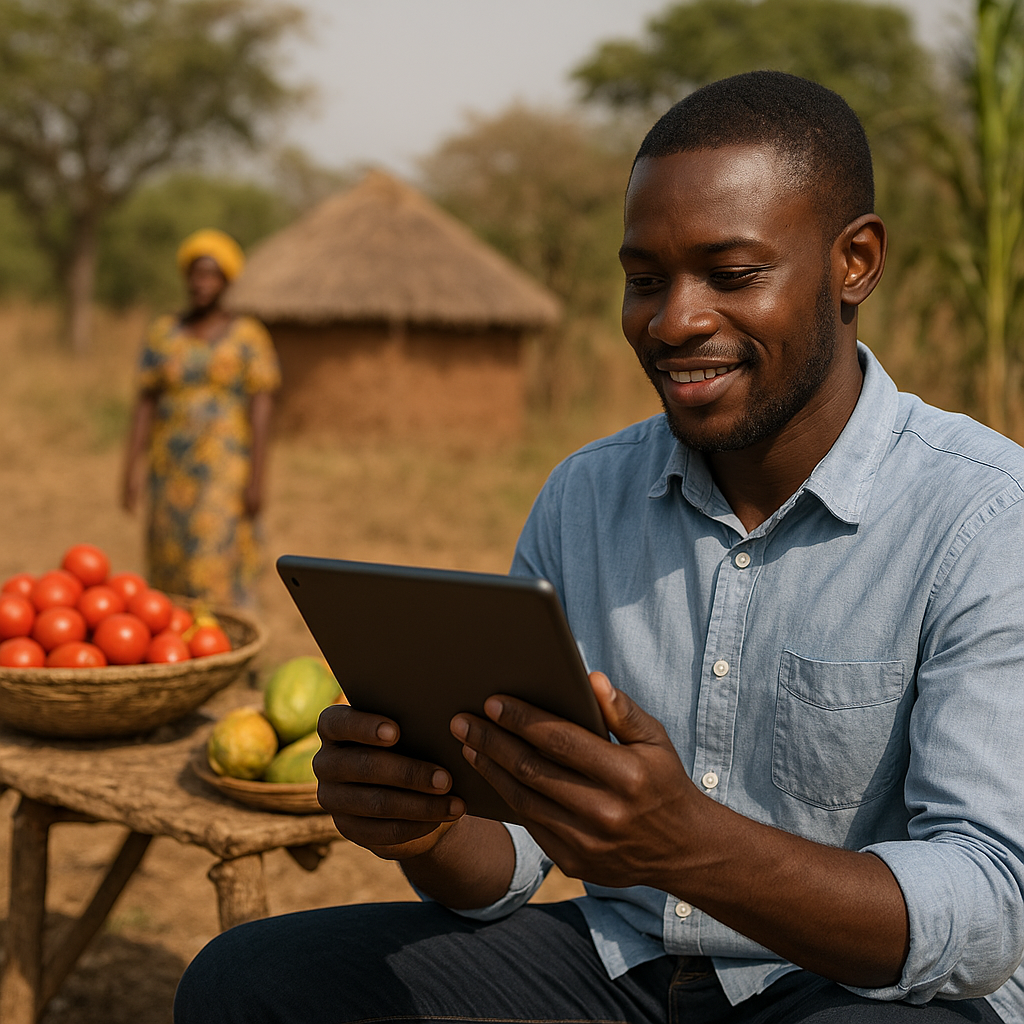
Rural African markets are large, dynamic, and increasingly reachable with digital tools if you are prepared to adapt to realities on the ground: intermittent connectivity, shared devices, multilingual audiences, and informal distribution networks. The opportunity is substantial—tens of millions of households with spending power, strong community networks, and fast-growing mobile access—but winning requires a marketing toolset that blends low-bandwidth channels, vernacular content, and last‑mile partnerships. This article explains how to map the landscape, design the right channel mix, and build resilient measurement for sustained growth.
Know the Terrain: Devices, Connectivity, Culture, and Commerce
Mobile is the dominant gateway to digital across the continent, but device and network diversity is the norm. Sub-Saharan Africa now counts well over 500 million unique mobile subscribers (GSMA), yet smartphone adoption is uneven. In many rural districts, smartphone penetration lags urban levels by 15–25 percentage points, and a large share of active users still carry feature-phones. Expect an audience split across 2G, 3G, and 4G, with pockets of limited or no coverage, and a meaningful cohort using community charging points because household electricity is scarce. International Energy Agency estimates suggest that fewer than one‑third of rural households have reliable electricity access in many countries, affecting how, when, and how long people engage with your content.
Connectivity patterns shape behavior. Data is expensive relative to income, and cost sensitivity leads to compressing, caching, and careful session timing. For a significant part of the rural base, USSD and SMS are the first touchpoints; WhatsApp and Facebook Lite capture those with data access and affordable bundles. Broadcasting still matters: radio remains among the highest‑reach media in rural areas, and “radio-to-digital” bridges (e.g., call-in numbers, short codes) are powerful for acquisition.
Social structures are critical. Trust in community leaders, traders, teachers, and health workers drives brand adoption as much as, or more than, national campaigns. Multi-SIM behavior is common, as people switch between networks for coverage or promotions. Languages are highly local; it is normal to navigate a world with three or more languages across household, market, and administration. Design your marketing system for multilingual, low-literacy, and voice-first use.
Payments and fulfillment are another foundational layer. GSMA reports that mobile money processed more than $1.2 trillion in transactions in 2022, with Sub-Saharan Africa contributing the majority by value. Wallets and agent networks are therefore not just payment rails; they are brand touchpoints, acquisition channels, and trust anchors. Where mobile money is weaker, voucher codes, cash-on-delivery, and agent-assisted payments prevail. The key is to meet customers where they already transact.
Channels That Work: Low-Bandwidth, Voice, and Community-Driven
The most effective rural playbooks combine low-bandwidth channels, voice, and lightweight social. Your mix will vary by country and operator, but the following pillars recur across successful programs.
USSD and SMS for Reach and Utility
Use USSD to deliver interactive menus without data. It works on 2G, on shared or low-end devices, and in local languages. Common flows include farmer tips, price checks, agent locator, voucher redemption, or staged onboarding. Keep menus shallow (ideally three levels), use numbers instead of long text, and provide clear exits and call‑backs. Pair USSD with SMS for confirmations, reminders, and drip campaigns. Typical metrics to monitor: initiation rate, session completion rate, and opt-in conversion.
IVR and Voice Notes for Low Literacy
Interactive Voice Response (IVR) reinforces comprehension when literacy limits text effectiveness. Record short, clear messages in local languages with familiar voices; offer a “press 1 for your language” entry and allow call-backs to save airtime. On data-enabled segments, voice notes are highly shareable in community chats and require less bandwidth than video.
WhatsApp and Lightweight Social
WhatsApp Business (API or app) can serve as a storefront, support desk, and broadcast hub, especially where community groups are already active. In many markets, more than 80% of internet users are active on WhatsApp. Use templated messages for opt-in campaigns, catalog features for product discovery, and quick replies for support. Facebook Lite and Marketplace still deliver cost-effective reach; short vertical video performs strongly even in bandwidth-constrained environments when exported at low bitrates.
Radio-to-Digital Bridges
Radio anchors mass awareness and can be made measurable. Run interactive shows with product demos, then drive listeners to short codes, WhatsApp opt-ins, or USSD. Track response spikes against airtime logs to estimate uplift. Radio hosts are influential; co-create scripts in local idioms and consider community stations with high trust and lower CPMs.
Agent Networks and Local Promoters
Mobile money and retail agents act as last‑mile marketers. Equip them with QR codes, short codes, and referral incentives. Agents can enroll users, demonstrate apps, fulfill orders, and handle cash-in/out. In a number of countries there are more mobile money agents than bank branches and ATMs combined; this density lets you scale reach even where transport infrastructure is thin.
Design for Constraints: Lightweight, Language, and Inclusivity
The most frequent cause of failure is not message-market mismatch, but the weight of the experience. Adapting to constraints unlocks adoption and word-of-mouth.
- Build offline-first. Use Progressive Web Apps with caching, background sync, and graceful degradation to SMS/USSD. Keep pages under 150KB if possible; compress images aggressively; preload only what is necessary.
- Structure for low literacy. Favor icons, numbers, and stepwise flows. Use IVR and voice notes. Replace long paragraphs with bullets. Test comprehension with real users, not just translation checks.
- Go vernacular from day one. Translate beyond words: idioms, examples, units of measure, and seasonal references matter. Consider co-creating scripts with local leaders or community radio writers.
- Be data-sparing. Offer zero-rated FAQ pages if operators allow, or reimburse small data bundles on completion of key actions. Note that in some countries, zero‑rating requires specific agreements and compliance reviews.
- Optimize for cheap devices. Design for 4–5 inch screens, low RAM, and OS versions back to Android Go where relevant. Maintain an SMS/USSD fallback even if your primary product is app-first.
- Gender inclusion. Women in Sub-Saharan Africa remain significantly less likely to use mobile internet than men (GSMA’s gender gap studies often cite ~30% relative difference). Schedule outreach around chores, use women’s groups for demos, and offer private channels for sensitive topics.
- Accessibility. Add text-to-speech and contrast-aware design; ensure IVR speed and clarity are tuned for elder listeners.
Acquisition Playbooks that Convert
Acquisition blends community presence with measurable calls-to-action. Think market days, transport hubs, churches and mosques, health clinics, schools, and agro-dealers as nodes that connect offline traffic to digital journeys.
- Market-day activations with digital hooks. Distribute flyers with short codes, set up demos, and trigger a “missed call” mechanic to capture leads without costing the user airtime.
- Seed community groups. Partner with savings groups, cooperatives, and youth clubs. Provide moderators with starter kits (FAQ, images, voice notes, redemption codes).
- Referral incentives via mobile money. Small cashbacks or airtime on sign-up and first transaction drive viral loops; in high-trust communities, these outperform ad spend.
- Hyperlocal social ads. Use radius targeting around market towns and bus stops. Creative should show familiar environments and people wearing regionally typical attire.
- Local micro-influencers. Micro‑creators with 2–20k followers in a specific district convert better per dollar than national celebrities. Bundle their posts with community radio reads and on‑ground demos for surround-sound.
Where data is extremely scarce, USSD-led acquisition wins. For example, a farming input brand can run a short radio segment that prompts “Dial *XYZ# to check today’s maize price and redeem a 5% voucher.” Completion of the USSD flow collects consent, phone number, and location; follow-up SMS provides directions to the nearest agent and a time-limited code.
Onboarding and Habit Formation
First experiences determine churn and advocacy. Keep onboarding friction minimal and align to existing behaviors.
- Staged onboarding. Split sign-up into two or three steps across channels: initial consent and phone capture by USSD/SMS, then richer profile on WhatsApp or in-app when data is available.
- Agent-assisted demos. Equip field staff or storekeepers with a simple script and checklists. In low-literacy areas, a live demo trumps any brochure.
- On-demand help. Offer local language IVR helplines and WhatsApp chat support during peak hours (early mornings, evenings). Publish office hours.
- Immediate value. Provide a first-use reward: a weather alert pack, a fertilizer discount, or a free delivery voucher. The goal is habit before monetization.
Payments, Fulfillment, and Proof of Delivery
Transaction and delivery mechanics are marketing levers in rural contexts. Streamline payments and proof to reduce perceived risk.
- Mobile money integration. Support wallet-to-wallet, push-to-STK, and pay-by-link. Highlight fees upfront. Where wallets are fragmented, prioritize the top two and plan for interoperability over time.
- Cash and vouchers. Provide printable or SMS vouchers with short expiry to nudge conversion. Use QR for agents to scan and reconcile.
- Last-mile partners. Work with transport unions, agro-dealers, and community kiosks for distribution. Logistics SMS alerts with driver name, plate number, and a one-time PIN build trust.
- Reverse logistics. A simple, low-cost return path (deposit at agent, pickup on market day) reduces purchase anxiety and increases lifetime value.
A relevant statistic: GSMA’s State of the Industry reports show more than 10 million registered mobile money agents globally, with Sub-Saharan Africa home to the majority. Leaning into these networks for KYC, cash management, and promotion can reduce CAC and increase first-time transaction rates by double digits compared to purely digital flows.
Creative That Resonates
Effective rural creative is context-rich and function-first.
- Show people like your customers: local dress, accents, crops, and trading settings. Avoid generic stock images.
- Use visual metaphors and numbers. For low literacy, “3 steps” visuals outperform paragraphs.
- Cap video at 10–15 seconds for social. Provide a text-only backup for poor networks.
- Voice and music: use familiar instruments and avoid heavy bass that distorts on small phone speakers or radios.
- Calls-to-action that don’t cost data: short code, missed call, or “Reply 1 to save voucher.”
Measurement in Patchy Data Environments
Marketing science must adapt to partial, delayed, or offline signals. Combine channel metrics with proxy indicators and field intelligence.
- Channel KPIs. For SMS: delivery rate, opt-in rate, reply rate. For USSD: session completion and time-to-complete. For WhatsApp: opt-in growth, response SLAs, catalog-to-cart.
- Offline conversion capture. Train agents to tag redemptions by code; reconcile radio burst timings with USSD spikes. Use unique short codes per station or region.
- Geo experiments. Stagger rollouts by district to estimate incremental lift vs. control regions. Use synthetic controls if perfect controls are impossible.
- Qualitative loops. Weekly field notes and call center feedback often surface friction faster than dashboards.
- North-star and guardrails. Track CAC-to-LTV ratio, repeat purchase rate, and retention cohorts by acquisition channel. Guard against high opt-in/low completion traps that inflate vanity metrics.
Expect gaps: not all messages will return delivery receipts; some agents will forget to tag; power outages will distort time series. The fix is redundancy—multiple signals pointing to the same outcome—and a cadence of local validation.
Compliance, Consent, and Community Standards
Respect for consent and privacy is a competitive advantage. Many African markets have active data protection laws (e.g., Nigeria’s NDPR, Kenya’s Data Protection Act, South Africa’s POPIA), and MNOs enforce strict bulk messaging and short code policies. Use double opt-in for messaging channels, allow easy opt‑out, and avoid sensitive topics unless you have explicit consent and safeguards.
SIM registration laws mean that KYC data can be sensitive; store the minimum necessary, encrypt at rest and in transit, and segment access for field teams. Combat fraud by communicating official short codes and hotlines, and by training agents on scam patterns. Ethical marketing also means designing for inclusion: ensure that benefits, pricing, and content do not unintentionally exclude women, people with disabilities, or minority language speakers.
Country Nuances and Practical Benchmarks
While principles travel, details differ across regions:
- East Africa. Strong mobile money rails (e.g., M-Pesa and peers), high USSD familiarity, and active community radio. WhatsApp is ubiquitous; Facebook Marketplace is a lively classified channel.
- West Africa (Anglophone). Heterogeneous wallet ecosystems; agent networks are strong but more fragmented. Youth-heavy audiences drive social adoption; TikTok is rising in secondary towns.
- West Africa (Francophone). Operator-led portals and IVR services remain important; French plus local languages in creative is common.
- Southern Africa. Higher smartphone share in urban/township zones; POPIA compliance is strict in South Africa; WhatsApp Business is often preferred for customer support.
- Sahel and Central Africa. Coverage gaps and security constraints require flexible logistics and heavier reliance on radio and agents.
Representative benchmarks to calibrate your funnel (your results will vary):
- USSD session completion: 45–70% when menus are ≤3 levels and under 90 seconds.
- SMS opt-in rate from radio: 2–6% of listeners reached; higher when offering a concrete utility (weather alert, price check).
- WhatsApp opt-in from field demos: 20–40% of attendees, with 60–75% reading first broadcast.
- First-to-second purchase repeat within 60 days: 25–50% when agent support and returns are clear.
A 90-Day Execution Plan
Use a sprint model to validate fast and scale what works.
Days 0–15: Discovery and Foundations
- Segment by device (feature vs. smartphone), language, and village cluster.
- Secure a short code and USSD string; prepare WhatsApp Business account and opt‑in copy.
- Recruit and train 10–20 local agents or promoters; create demo scripts and FAQs.
- Produce creative in two languages and three formats: SMS, voice, and low‑bitrate video.
Days 16–45: Pilot and Learn
- Run two acquisition lanes: radio-to-USSD and field demo-to-WhatsApp. Assign unique codes per lane.
- Test incentives: airtime vs. small wallet cashback; track cost per verified sign-up.
- Launch IVR helpline; log common issues to refine scripts.
Days 46–90: Optimize and Extend
- Scale the winning lane to three more districts; keep one district as a control.
- Introduce agent referral bonuses for repeat purchases.
- Expand language coverage and launch a weekly voice note series for tips and offers.
- Set up a lightweight LTV model by channel; adjust budget toward the highest LTV/CAC ratios.
Costs and Resource Planning
Costs vary by operator and country, but typical ranges can guide budgeting:
- USSD sessions: often $0.01–$0.05 per session depending on partnership terms and who bears the cost.
- Bulk SMS: roughly $0.01–$0.03 per message at volume; delivery quality varies by aggregator.
- WhatsApp Business API: priced per conversation window; in many markets a few cents per 24‑hour session.
- Community radio: lower CPMs than national stations; negotiate value adds (host reads, call‑ins).
- Agent incentives: small fixed fees for sign-ups and tiered bonuses for first transactions drive better quality than flat bounties.
Invest early in translation, field research, and agent training; they pay for themselves in conversion and reduced support load. Allocate budget for device testing labs (low-RAM phones, 2G throttling) so your team feels the real constraints.
Common Pitfalls and How to Avoid Them
- One-size-fits-all creative. Fix: Localize visuals, scripts, and offers per district, not just country.
- Data-heavy assets. Fix: Set strict weight budgets; always provide a non-data fallback.
- Shallow incentives. Fix: Tie rewards to real utility (e.g., verified delivery, agronomy tips), not just airtime.
- Ignoring after-sales. Fix: Publish support hours, offer call-backs, and empower agents to resolve issues on first contact.
- Poor menu design. Fix: Cap USSD depth; test with actual users; use numbers and short labels.
- Weak feedback loops. Fix: Weekly cross-functional reviews of field notes, helpline logs, and channel data.
What’s Next: Infrastructure and Behavior Shifts
Three shifts will shape rural digital marketing over the next few years:
- Coverage and backhaul improvements. 4G expands, FWA grows, and satellite‑assisted connectivity strengthens edge coverage, making richer media more viable.
- Wallet consolidation and super-apps. Cross-network transfers and merchant QR standards improve; deeper integrations reduce checkout friction and expand use cases.
- Creator and community commerce. Local creators professionalize; marketplaces integrate social proof and group buying, compressing the path from awareness to transaction.
Success belongs to marketers who accept constraints as design parameters, not barriers. Rural Africa rewards brands that are present in community life, that speak the local idiom, and that make every interaction useful. Blend channels that work without data, design for low literacy and shared devices, and partner at the last mile. With that playbook, digital tools become a natural extension of everyday commerce rather than a foreign layer.
Quick checklist to get started:
- Map device mix and languages per district; pick two priority languages.
- Secure short codes, set up WhatsApp, and draft IVR scripts.
- Hire and train agents; equip them with QR and referral codes.
- Launch two acquisition experiments and one retention loop in parallel.
- Measure with a blended scorecard: completion, conversion, cost, and community feedback.