
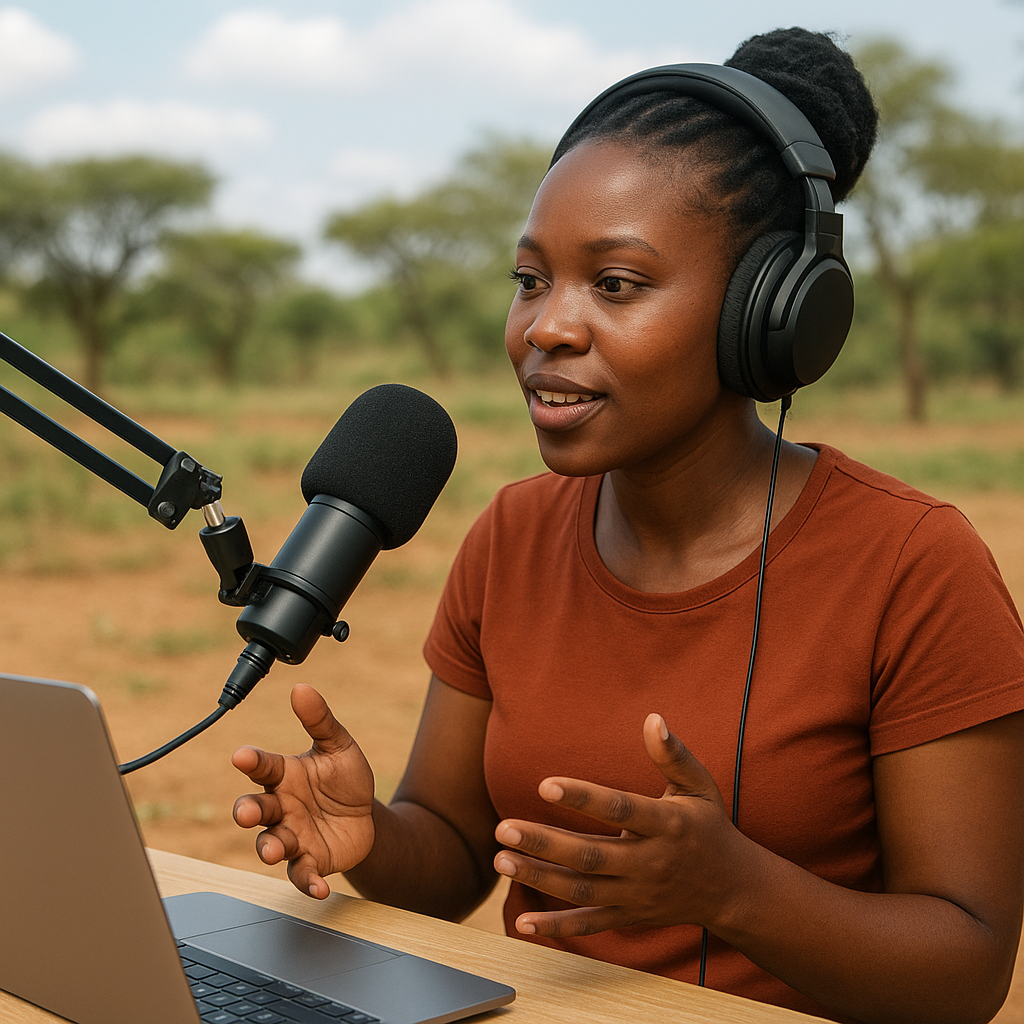
Audio is having its moment across the continent, and few formats crystallize that shift better than podcasts. For marketers, the combination of on-demand listening, niche community building, and the continent’s mobile-first behaviors is opening new pathways to reach audiences who have historically been under-addressed by traditional media. From Accra to Nairobi, Lagos to Cape Town, brands are tapping creators who speak the language—literally and culturally—to deliver content that wins attention, builds trust, and converts curiosity into customers.
The forces powering Africa’s podcast boom
Several structural dynamics are aligning to make podcasts a potent channel in African digital marketing:
- Mobile ubiquity: The smartphone is the primary screen in Africa, and audio is friendlier to bandwidth constraints than video. The GSMA has consistently documented rapid growth in smartphone adoption and mobile broadband coverage in Sub‑Saharan Africa, with 3G and 4G networks covering the majority of the population and smartphone penetration forecast to pass the 60% mark in the mid‑2020s. These infrastructure improvements matter because podcasts are lightweight, tolerant of spotty connectivity, and easy to download for offline listening.
- Youth demographics: The United Nations estimates that more than 60% of Africa’s population is under 25. This cohort is digitally native, social by default, and hungry for voices that reflect local realities. Podcasts slot naturally into their habits—listening during commutes, chores, or gig work—without demanding a full screen or heavy data spend.
- Platform availability: Spotify’s expansion to dozens of African markets in 2021, alongside Apple Podcasts, YouTube, and regional platforms such as Afripods, dramatically improved access and discovery. For marketers, this means programmatic and host-read inventory are no longer confined to a few urban hubs.
- Local nuance at scale: Africa’s linguistic and cultural diversity is often a barrier for one-size-fits-all content. Podcasts thrive in the long tail—there is room for hyperlocal shows in Swahili, Yoruba, isiZulu, Hausa, Amharic, and more, alongside English- and French-language content for regional and diaspora reach.
- Radio DNA: Radio remains a dominant medium across many African markets, and podcasts feel familiar: intimate voices, serialized narratives, call-in style segments, and community participation. This reduces the education curve for new listeners and eases cross-promotion between radio and digital audio.
Add to this the practical realities of life in major cities—commutes that often exceed an hour, power cuts that restrict screen time, and multitasking routines—and the appeal of on-demand audio becomes obvious. Podcasts give marketers a high-attention, low-friction way to show up consistently without competing with the visual noise of feeds and videos.
What podcasts do uniquely well for marketers
Audio’s power isn’t just reach; it’s the quality of attention. In survey after survey of digital channels globally, listeners report higher recall and brand favorability for host-read messages compared to display or skippable video. In African contexts, several strengths stand out:
- Intimacy and credibility: A trusted host in Nairobi or Lagos who speaks candidly feels like a friend. That makes ad reads sound less like ads and more like advice. The result is higher engagement and deeper memory encoding than many visual formats.
- Context over interruption: Because podcast consumption is intentional, sponsorships are contextual rather than disruptive. A fintech ad in an entrepreneurship show or a skincare brand in a women’s health series fits the listener’s mental model and intent.
- Language and cultural resonance: Code-switching, proverbs, humor, and locally relevant case studies help brands feel native. This is more than translation—it’s localization that respects norms and references that only insiders recognize.
- Economic efficiency: Production costs for podcasts can be a fraction of video. You can record in a small studio or even a treated room and still deliver professional results. For small and midsize African businesses, this cost profile is a major advantage.
- Long-tail discoverability: Episodes compound over time. New listeners binge back catalogs, exposing them repeatedly to your brand. Searchable show notes, transcripts, and chapter markers create SEO surfaces that keep working months after release.
- Community flywheel: Podcasts spark conversations in WhatsApp groups, Twitter/X threads, Telegram channels, and offline meetups. This cross-pollination creates a durable community touchpoint that can be activated for launches, surveys, and referrals.
Audience and platform snapshots: what the numbers suggest
Reliable cross-country podcast statistics are still emerging, but several signals point to meaningful momentum:
- South Africa has repeatedly ranked among the higher podcast listening markets in emerging economies in studies such as Edison Research’s The Infinite Dial and the Reuters Institute Digital News Report, reflecting a maturing ecosystem of creators and advertisers.
- Nigeria counts well over 100 million internet users, according to national regulators and industry trackers—a large addressable base for audio, particularly in urban centers like Lagos, Abuja, and Port Harcourt.
- Kenya’s mobile-first routines and robust payment rails (e.g., M‑Pesa) simplify subscription and tipping models where creators and brands experiment with premium feeds or paid communities.
- GSMA trendlines show steady growth in smartphone adoption and mobile broadband across Sub‑Saharan Africa, which correlates with rising audio streaming and downloads.
While methodology and samples vary, the directional pattern is clear: awareness and monthly listening are growing across key African markets, inventory is expanding, and advertisers are moving budgets accordingly, especially in categories like fintech, education, CPG, and entertainment.
Creative playbook: formats that work
Winning in African podcast marketing is as much about format design as it is about media buying. Consider these approaches:
- Branded editorial series: Produce a show that solves audience problems first and introduces your brand organically. A savings app might build a money culture series featuring local entrepreneurs, street vendors, and side-hustle stories.
- Host-read mid-rolls: Partner with shows your customers already love. Provide talking points, but give hosts freedom to personalize. Authenticity drives results here; overly scripted copy undercuts that authenticity.
- Segment sponsorships: Own a recurring segment—“listener Q&A,” “market update,” or “myth-busting”—with consistent branding cues and sonic logos.
- Short-form explainers: Micro-episodes (5–10 minutes) with practical tips perform well for busy listeners and are cheaper to produce at scale.
- Multilingual runs: Record regional versions with local hosts or co-hosts rather than relying on dubbed tracks. Transcreation beats translation for nuance.
- Hybrid radio-podcast distribution: Co-produce with a radio station to air edited versions on FM while publishing extended cuts on podcast feeds. This bridges mass reach with on-demand depth.
- YouTube-first audio: Publish full episodes on YouTube with static or lightweight visuals. Many African listeners “listen” on YouTube because of data bundles or familiarity.
Discovery and distribution: get found, get shared
Great content still needs smart distribution. A marketing plan for African podcasts should include:
- Platform spread: Submit RSS feeds to Apple Podcasts, Spotify, YouTube, and regional directories (e.g., Afripods). Consistency matters—publish on the same day and time each week.
- Show notes and transcripts: Optimize for search with clear titles, detailed notes, and local keywords (place names, slang, and brand synonyms). Transcripts also improve accessibility.
- WhatsApp as a channel: Share episode highlights and 60–90 second audiograms in WhatsApp communities. Encourage members to forward to friends; word-of-mouth is powerful in tight-knit groups.
- Influencer swaps: Trade guest spots between podcasts in adjacent niches—parenting with education, fashion with career coaching, football with betting responsibility content. Cross-pollination drives net-new listeners.
- Out-of-home cross-promo: In transit-heavy cities, posters and QR codes in coworking spaces, campuses, cafes, and bus stops convert surprisingly well when paired with a clear freebie (e.g., downloadable toolkit).
- Community touchpoints: Build meetups or live recordings. Physical gatherings deepen loyalty and generate shareable clips for social.
Measurement, attribution, and proving ROI
Measurement is both the promise and pain point of podcast advertising in Africa. Data is getting better, but teams must combine qualitative signals with pragmatic analytics. Anchor your strategy in the following:
- North-star KPIs: Define whether the campaign is for brand awareness, education, or direct response. For upper funnel, track reach, completion rate, and brand lift. For lower funnel, emphasize attributed site visits, sign-ups, and sales.
- Attribution tactics: Use a layered approach—unique vanity URLs, episode-specific offer codes, last-click UTM tagging, and post-episode surveys that ask “How did you hear about us?”
- Incrementality: Where possible, run geo-split tests (e.g., city A vs. city B) and compare lift in organic branded search queries, app installs, or web sessions.
- Brand lift studies: Light-touch surveys after 4–6 weeks can quantify increases in ad recall, consideration, and intent. Partner with research panels or embed in-app questionnaires if you have an owned audience.
- MMM for the pragmatic: Even simple media mix models using weekly spend and KPI trends can reveal contribution shares of audio relative to paid social and search.
- Quality signals: Track average listening time, audience retention over episodes, and listener location. High completion rates amplify the value of each mid-roll impression.
Expect to iterate. In newer podcast markets, smaller but more loyal audiences often outperform raw impression volume. Your measurement framework should therefore privilege cost per quality minute, content resonance scores (e.g., survey-based), and cohort retention over vanity metrics.
Monetization models and brand partnerships
For creators and brands, the business side is diversifying beyond simple CPMs:
- Host-read and pre-produced ads: The classic model. In early-stage markets, rates vary widely; negotiate on both CPM and performance incentives where direct response is a goal.
- Branded content: Full-series sponsorships with co-created editorial often yield the strongest outcomes for consideration and preference lift.
- Affiliate and partnerships: Track sales via promo codes or deep links; scale budget where ROAS is proven.
- Community revenue: Ticketed live shows, workshops, and courses turn loyal listeners into paying participants—relevant for education, career, and wellness verticals.
- Premium feeds: Offer ad-free versions, bonus episodes, or early access for a small monthly fee via platforms that support local payment options.
For marketers, treat podcasts as a portfolio: a few big shows for reach plus a constellation of niche podcasts where your message will land with surgical precision. Over time, this diversified approach improves monetization efficiency and reduces reliance on any single channel.
Example campaign architectures for African contexts
Lean-growth plan for a regional e-commerce brand (90 days)
- Weeks 1–2: Identify 8–10 podcasts in Lagos and Abuja focused on lifestyle, small business, and youth culture; brief hosts with product samples and flexible talking points.
- Weeks 3–6: Launch host-read mid-rolls with unique codes. Seed 3 co-branded episodes answering practical shopping and returns questions to reduce friction.
- Weeks 7–10: Run a WhatsApp giveaway tied to a live recording; collect UGC clips for social repurposing.
- Weeks 11–12: Evaluate cohort revenue, code redemptions, and branded search uplift; renew top-performing shows and drop underperformers.
Education startup pan-East Africa (6 months)
- Editorial: Produce a biweekly show in English and Swahili featuring teachers and recent graduates. Each episode includes a 3-minute skills spotlight with clear CTAs.
- Distribution: Spotify, Apple Podcasts, YouTube, and Afripods; transcripts posted to a blog for SEO.
- Measurement: Track app sign-ups by episode, run city-level lift analysis in Nairobi vs. Dar es Salaam, and survey listeners on perceived skills gains.
These are illustrative structures rather than prescriptive templates. The key is to tie formats to audience jobs-to-be-done and to build an experimentation cadence where each quarter yields fresh learnings about messaging, hosts, and placements.
Creative best practices for African podcast marketing
- Lead with human stories: Avoid generic corporate speak. Use customer anecdotes, street-level examples, and cultural touchstones. It’s about storytelling, not slogans.
- Respect data realities: Offer low-data or offline options—lightweight links, text-only summaries, and downloadable resources that can be shared without heavy bandwidth.
- Shorten the path to action: Use short, memorable vanity URLs; enable USSD or WhatsApp order flows where relevant; support mobile money and debit payments.
- Design for code-switching: Hosts should feel free to switch between languages. Listeners often do; your content should mirror that agility.
- Sonic identity: Create simple audio mnemonics and taglines; repetition across episodes builds mental availability.
- Safety and suitability: Vet shows for tone and values. The right cultural fit matters as much as reach.
Challenges to anticipate—and how to navigate them
- Fragmented discovery: Many listeners still “listen on YouTube.” Solve this by publishing to YouTube, optimizing titles and thumbnails, and pinning your episode links in video descriptions.
- Bandwidth costs: Keep bitrates reasonable, publish low-bandwidth versions, and consider partnerships with telcos for sponsored data on special drops.
- Measurement gaps: Combine qualitative and quantitative inputs; instrument your landing pages; and normalize for smaller, higher-quality audiences. Reframe success in terms of attention, not only impressions.
- Language complexity: Don’t stretch one script across languages. Invest in local writers and hosts. True localization will pay back in resonance and retention.
- Ad fatigue: Rotate creative every 4–6 weeks. Use fresh hooks—listener questions, seasonal tips, or new product angles.
Across categories: where podcasts already shine
- Fintech and savings: Hosts can break down interest rates, fees, and security in plain language—perfect for building trust where skepticism is high.
- Health and wellness: Sensitive topics gain approachable framing through voice. Anonymous Q&A segments perform well.
- Education and careers: Tutorials and interview-based shows help listeners upskill while commuting or working.
- Entertainment and culture: Music, film, and sports pods form loyal followings that brands can activate tastefully.
- SMB enablement: Micro-entrepreneurship content resonates in markets with vibrant informal economies.
From first test to scaled program: a roadmap
- Phase 1 (0–8 weeks): Audience mapping, show selection, and 2–3 creative variants. Define KPIs and stand up tracking (UTMs, promo codes, surveys).
- Phase 2 (8–16 weeks): Launch buys and/or branded mini-series. Collect weekly data, run A/B tests on hooks and CTAs, and add a community component (WhatsApp group or Telegram channel).
- Phase 3 (16–24 weeks): Double down on top hosts, introduce a live event or webinar, expand into multilingual feeds, and begin building your owned channel if initial results are strong.
- Phase 4 (ongoing): Automate reporting, explore dynamic ad insertion, pilot programmatic buys where available, and integrate podcast learnings into broader media mix decisions.
Technology trends shaping the next wave
- Dynamic ad insertion (DAI): More African publishers are enabling server-side ad swaps so creatives can be localized by city, language, or season—maximizing relevance without re-editing episodes.
- AI-assisted production: Transcription, noise reduction, auto-leveling, and translation tools are cutting production time and enabling multi-language versions with careful oversight.
- Shoppable audio: URLs and QR codes tied to limited-time offers, plus WhatsApp deep links, are streamlining conversion from ear to checkout.
- Automotive and wearables: As connected cars and affordable earbuds proliferate, drive-time and gym-time listening windows will expand.
Ethics and inclusion: getting it right
With influence comes responsibility. Brands should approach African podcast marketing with care:
- Fair compensation: Pay creators on time, transparently, and with bonuses for performance where applicable. Many African podcasters operate without agents; treat them like partners.
- Representation: Feature diverse voices—women, youth, and speakers from outside capital cities. This is both morally sound and commercially smart.
- Data respect: If you collect listener data, explain why and how it will be used. Opt for privacy-preserving analytics where possible.
Putting the “why” into action
Podcasts excel because they make room for depth. In a world of micro-views and thumb-stopping images, a 25-minute conversation can do what 10 banner ads cannot: shift beliefs, reduce confusion, and create memory structures that drive purchase. The strategy is simple: show up where your audience already spends time, speak with them rather than at them, and build a rhythm they can rely on. When a brand consistently shows up in a listener’s ear—speaking their language, respecting their time, and offering practical value—it earns the right to ask for the next action.
For Africa’s marketers, the opportunity is not just to chase a trend but to help shape a medium. Done well, podcasts are a channel where storytelling meets service, where attention is earned rather than bought, and where small teams can punch above their weight. With pragmatic planning, thoughtful creative, and steady iteration, audio can become a core pillar in the continent’s digital growth story—delivering measurable outcomes today and building brand equity that compounds tomorrow. In a landscape defined by youthful energy, linguistic richness, and mobile ingenuity, podcasts are more than another format; they are a strategic bridge between culture and commerce, between local nuance and regional scale, and between the fleeting and the memorable.
If you’re mapping your first steps, start with three questions: Who exactly are we trying to help, what problem can we solve in their week, and how can we show up consistently without wasting their data or time? Answer those with humility and focus, and your path to durable engagement will be clearer than any media plan alone. Treat audio as a long game. Build patiently. Iterate relentlessly. And let your hosts be your guides—their authenticity is the engine that turns listeners into advocates and advocates into customers.