6.3 million
Internet Users
35.1%
.ml
4.1 million
Sell online in Mali
Mali’s Economic and Digital Landscape
Geographic Location and Regional Context
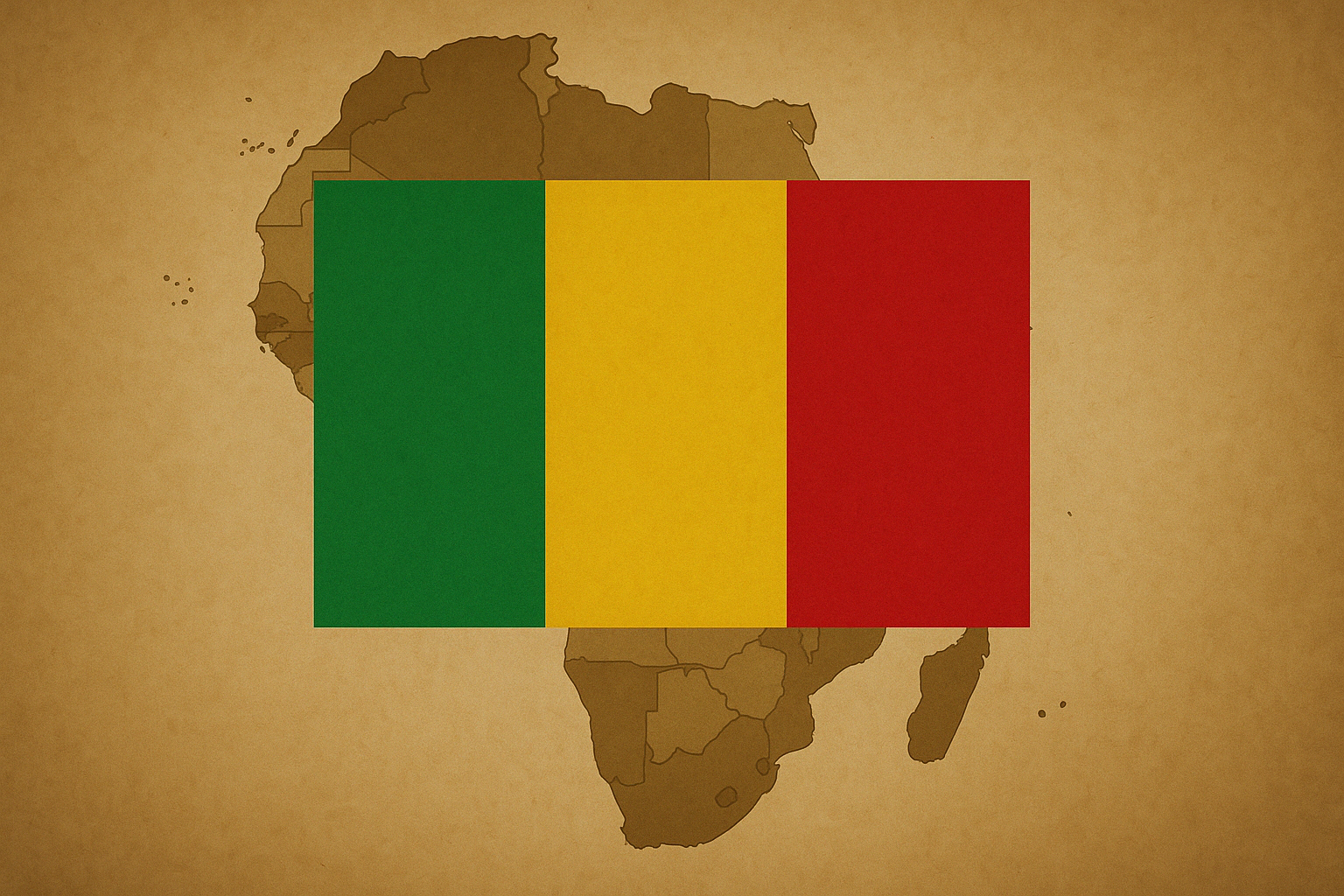
Mali is a landlocked country in West Africa, strategically positioned in the interior of the continent. With an area of 1.24 million square kilometers, it is the eighth-largest country in Africa by land area. Mali’s territory stretches from the arid Sahara Desert in the north to the more fertile Sudanian savanna in the south. It shares borders with seven countries: Algeria to the north, Niger to the east, Burkina Faso and Côte d’Ivoire (Ivory Coast) to the south, Guinea to the southwest, and Senegal and Mauritania to the west. This geographic location places Mali in the heart of the Sahel region, making it a bridge between North and sub-Saharan Africa.
Being landlocked, Mali depends heavily on its neighbors for access to seaports and international markets. Key trade corridors run through Senegal (to the port of Dakar) and Côte d’Ivoire (to the port of Abidjan), which are critical for Mali’s imports and exports. The mighty Niger River winds through Mali’s south and central regions, serving as an important water resource and transport route that historically supported the famous trading cities of Timbuktu and Djenné. Mali’s regional context is also defined by its membership in several West African bodies. It is a member of the Economic Community of West African States (ECOWAS) and the West African Economic and Monetary Union (WAEMU). Through WAEMU, Mali shares a common currency (the West African CFA franc) and economic policies with seven other Francophone countries, fostering regional integration and stability in monetary affairs.
Mali’s location in the Sahel comes with both opportunities and challenges. Culturally, it has been a crossroads of civilizations – from the ancient Mali Empire that once thrived on Saharan trade, to French colonial influence that has left French as the official language. However, the Sahelian climate means much of Mali’s land is desert or semi-desert, leading to constraints in agriculture and a reliance on the southern regions for farming. The country also faces security challenges in its northern and central areas, which can impact economic activity and regional trade. Despite these hurdles, Mali’s central position in West Africa gives it access to a broad regional market and makes it an important player in trans-Saharan trade routes and initiatives aimed at improving connectivity across the Sahel.
Overview of Mali’s Economy
Mali is classified as a low-income economy and remains one of the poorest countries in the world, yet it has significant economic potential in natural resources and agriculture. The country’s gross domestic product (GDP) was approximately $21.3 billion (nominal) in 2023, which translates to a low GDP per capita of around $900. On a purchasing power parity basis, GDP per capita is higher (roughly $2,600), reflecting the lower cost of living, but Mali still ranks near the bottom globally on development indices. Economic growth in Mali has been moderate and resilient in recent years. Prior to 2020, the economy was growing at around 5% annually, driven by gold mining, agriculture, and construction. The COVID-19 pandemic and domestic security issues caused a slowdown – Mali experienced a slight contraction in 2020 – but growth resumed thereafter. By 2022 and 2023, real GDP growth returned to the 3–5% range per year, indicating a modest recovery. However, frequent shocks (including political instability from coups in 2020 and 2021, and sanctions from regional bodies) have made growth volatile. Inflation has generally been kept in check due to the CFA franc’s peg to the Euro, but higher global food and fuel prices in 2022 did lead to increased inflation in Mali, hurting consumers.
GDP Structure and Key Sectors
The structure of Mali’s GDP is a reflection of a developing economy with a large traditional sector. Agriculture is the largest sector, accounting for roughly 35–40% of GDP in recent years. This includes crop farming and livestock. Mali’s agriculture is predominantly rain-fed and focused on a few key crops. Cotton is the flagship cash crop – Mali is one of Africa’s largest cotton producers (often among the top 2 or 3 on the continent). In a good year, Mali produces on the order of 500,000–700,000 tons of cotton, the bulk of which is exported. Other major crops include millet, sorghum, maize, and rice for domestic consumption, and groundnuts and mangoes as additional exports. The Niger River’s inland delta allows irrigation for rice cultivation, making Mali nearly self-sufficient in rice in recent years. Livestock (cattle, goats, and sheep) is another pillar of the agricultural sector – many Malians are pastoralists or agropastoralists, and livestock is a significant export (often through informal cross-border trade to neighbors). Agriculture’s dominance also extends to employment (as detailed in a later subsection), though its contribution to GDP can fluctuate with rainfall patterns and commodity prices.
Industry in Mali contributes between 20–25% of GDP, with mining being the standout subsector. Mali is rich in natural resources, especially gold. Gold mining is by far the most important industrial activity and the country’s largest source of export earnings. Mali is the third-largest gold producer in Africa (after countries like Ghana and South Africa), extracting approximately 60–70 tons of gold per year in recent times. Gold output has steadily increased since the 1990s due to foreign investment in mining. As a result, gold has overtaken cotton to become Mali’s top export. In value terms, gold often accounts for about two-thirds to three-quarters of Mali’s export revenues, depending on world prices. Mining of other minerals is relatively limited but there are deposits of phosphates, salt, limestone, and uranium that are not yet fully exploited. Small-scale artisanal mining (especially for gold) also plays a role in the rural economy. Beyond mining, Mali’s industrial sector includes food processing (like cotton ginning, sugar refining, milling of grains), textile manufacturing (spinning and weaving of cotton textiles), beverage production, and construction materials (cement, bricks). There is also a modest energy sector – Mali produces some hydroelectric power from dams on the Niger and Senegal rivers and has been exploring oil prospects (though no significant oil production yet). Industrial development is hampered by infrastructure constraints and the high cost of energy, but there have been investments in cement plants and gold processing facilities.
Services make up the remaining 35–40% of GDP. The services sector is diverse, ranging from trade and commerce to transportation, telecommunications, banking, and public administration. A large portion of services is informal (small trading businesses, markets, etc.), reflecting Mali’s predominantly informal economy. Retail and wholesale trade in agricultural products and consumer goods is a significant service activity, especially in urban centers like Bamako (the capital and economic hub). Transportation services (trucking, buses, river transport) are crucial given Mali’s landlocked status; these services link farmers to markets and connect Mali to ports in neighboring countries. Telecommunications has been a dynamic part of services in the past decade, with the expansion of mobile phone networks (more on this in the digital sections). Financial services remain underdeveloped in Mali – banking penetration is low, but microfinance and mobile money services have expanded to fill the gap. Tourism used to be a budding service sector (Mali is famous for its cultural heritage, music, and historical sites like Timbuktu and the Djenné mosque), but conflict and instability in recent years have severely reduced tourist arrivals. Government and public services (administration, education, healthcare) also constitute a notable portion of the service sector, as Mali is working to improve human development.
It’s worth noting that informal economic activity is huge in Mali. From smallholder farming and artisanal mining to street vending and informal transport, a significant share of economic output and most employment occur outside the formal, recorded economy. This means official GDP figures might understate actual livelihoods. Conversely, the dominance of a few commodities (gold and cotton) in the formal sector means Mali’s economy is not very diversified, which makes it vulnerable to commodity price swings and climatic shocks.
Trade and External Balances
Mali’s trade profile is characterized by a narrow export base and heavy reliance on imports for many essentials. Exports of goods are dominated by primary commodities. Gold is the single largest export earner by far – in recent years, gold has comprised roughly 70–80% of export revenues. The second most important export is cotton, often contributing around 10–20% of export earnings (depending on global cotton prices and annual production volumes). In addition to these, livestock (cattle on the hoof, goats, sheep) exported to neighboring countries is significant, though much of it is informal and not always fully captured in official statistics (estimates put livestock and animal product exports at around 5% of total exports officially). Other minor exports include sesame seeds, gum arabic, and artisanal products. Mali’s export partners reflect these commodity flows: Switzerland and the United Arab Emirates are frequent top destinations (they are major gold trading hubs where Mali’s gold is refined or traded), while Bangladesh and other Asian textile hubs import Malian cotton for their garment industries. Regional neighbors like Senegal, Ivory Coast, and Ghana also appear as export markets, partly for re-export of gold or for livestock and agricultural products.
On the import side, Mali is highly dependent on foreign goods for both consumer and capital needs. Petroleum products (fuel, diesel, gasoline) are among the top imports, as Mali has no domestic oil production and needs fuel for transport and electricity generation. In fact, imported fuel is critical for Mali’s economy and any oil price spike can strain the budget and trade balance. Machinery and equipment (for construction, mining, and agriculture) form another significant import category, reflecting investment in infrastructure and mining. Vehicles and spare parts are also major imports given Mali’s need for transport equipment. Additionally, although Mali produces food, it still imports significant foodstuffs – notably rice and wheat to supplement domestic staples, as well as processed foods and beverages. Consumer goods like electronics, pharmaceuticals, and textiles are imported for the urban population. The main import partners are China, France, and neighboring African countries. China exports machinery, manufactured goods, and cheap consumer items to Mali; France (and the broader EU) supplies equipment, refined fuel, and various goods, reflecting historical ties; and neighbors like Senegal and Côte d’Ivoire supply goods that arrive through their ports (for example, goods shipped from overseas and then trucked into Mali count Senegal or Ivory Coast as the last transit partner).
Given this structure, Mali typically runs a trade deficit for goods, because earnings from gold and cotton often are outweighed by the cost of imported fuel, machinery, and other needs. Services trade (like the import of professional services, telecom services, etc.) also often shows a deficit, although remittances from Malians abroad help offset the external imbalance. Mali receives considerable remittance inflows from its diaspora in France, Ivory Coast, and elsewhere, which provide foreign exchange and household income support. Furthermore, foreign aid and development assistance are important for Mali’s external finances. The country relies on international aid and concessional loans to fund infrastructure projects and social programs; donors include the World Bank, IMF, European Union, France, and other bilateral partners. Aid flows and debt relief (such as the Heavily Indebted Poor Countries initiative in the 2000s) have helped stabilize Mali’s external accounts.
Because Mali is landlocked, the efficiency of regional trade routes is vital. Any disruption in neighboring coastal countries (like port strikes or political crises in Côte d’Ivoire or routes through Burkina Faso) directly affects Mali’s ability to trade. For instance, during past instability in Côte d’Ivoire, Mali had to rely more on the longer route through Senegal for its imports/exports, which increased costs. Mali’s membership in ECOWAS and WAEMU means it benefits from common external tariffs and easier movement of goods within West Africa, though non-tariff barriers and infrastructure gaps still pose challenges. The country’s use of the CFA franc (XOF) provides currency stability and no exchange risk with seven other WAEMU countries, facilitating regional trade. However, it also means Mali cannot unilaterally devalue its currency to boost competitiveness, and it must maintain fiscal discipline to uphold the monetary union’s convergence criteria.
Employment and Workforce
Mali’s population is growing rapidly and is very young, which has direct implications for the labor force and employment patterns. As of 2025, Mali’s population is about 24.8 million people, with a median age of only around 16 years. This means a huge portion of the population is entering working age each year. Providing jobs and economic opportunities for this youth bulge is one of Mali’s biggest challenges. The labor force remains predominantly rural and agrarian. An estimated 70–80% of Malian workers are employed in agriculture, mostly as subsistence farmers or pastoralists on family farms. This includes millions of small-scale farmers who depend on seasonal rains and basic farming techniques. Agricultural work in Mali is often not formal employment – it is family labor with incomes tied to harvest outcomes. During the dry season or in drought years, underemployment is common in rural areas, prompting seasonal migration to cities or neighboring countries for work.
Outside of agriculture, informal trade and services employ a large share of the remaining workforce. In cities like Bamako, Sikasso, and Ségou, many people make a living as traders, market vendors, artisans, drivers, or day laborers. The informal economy (small shops, street selling, crafts, repair services, etc.) provides the majority of non-farm jobs. Only a small fraction of the workforce has formal wage-paying jobs. Those formal jobs are typically in the public sector (government ministries, public schools, state-owned enterprises) or in a few large private sector entities (banks, telecom companies, mining companies, and NGOs). Unemployment in the formal sense is hard to measure in Mali because so many people work informally to get by. Official unemployment might be around 10–12%, but underemployment and poverty-level employment are rampant. Youth unemployment/underemployment is particularly acute; many young people in urban areas struggle to find stable work, leading some to pursue migration or informal gigs.
The structure of employment highlights Mali’s developmental stage: few jobs in manufacturing or high-value services exist. Industrial employment (e.g., at mines or factories) is relatively small – for instance, gold mines employ thousands, but not hundreds of thousands. Similarly, the banking and ICT sectors are growing but still only account for a limited number of skilled jobs. Education and skill levels in the workforce are low on average, with adult literacy around only 35%–40% (especially low among women). This skills gap is a barrier to expanding formal employment in newer industries. The government has promoted vocational training and education, but gains are gradual.
Employment in Mali is also influenced by migration. Many Malians work abroad, especially in West Africa (Ivory Coast has historically hosted many Malian migrant workers in cocoa plantations and cities) and in Europe. Remittances from these workers form an important part of household income back home. Conversely, within Mali, rural-to-urban migration is bringing more workers to cities each year. Bamako’s metropolitan area has seen rapid population growth, and with it a swelling informal workforce. The urban labor market often means hustling in trade or transport, or seeking scarce formal jobs in offices and industries.
In summary, Mali’s economy provides livelihoods largely through farming and informal activities. The heavy reliance on agriculture makes the workforce vulnerable to climate shocks (droughts or irregular rains), and the narrow industrial base offers limited alternative employment. Diversifying the economy and fostering private sector growth (for example, agro-processing, textiles, tourism, or digital services) are key to creating more jobs. The digital sector, while still small, is an area that could offer new opportunities for Mali’s youth – this includes mobile telecom-related jobs, online freelance work, and tech startups, which we will discuss in later sections. For now, Mali’s employment landscape remains one where the vast majority depend on low-productivity, informal jobs, and improving this is central to Mali’s development goals.
Internet Accessibility and Infrastructure in Mali
Over the past decade, Mali has made noticeable progress in expanding internet access, although the country still faces significant gaps in connectivity. As of early 2025, there were about 8.72 million internet users in Mali, representing an internet penetration rate of roughly 35.1% of the population. This is a slight increase from an estimated 34–35% penetration in 2023, indicating gradual growth in the number of users. In practical terms, about one in three Malians has some form of access to the internet, while the majority (especially in rural areas) remain offline. The expansion of access is driven almost entirely by mobile broadband; Mali’s internet landscape is heavily mobile-centric, as fixed-line internet infrastructure is very limited.
Mobile vs. Fixed Broadband
Mobile connectivity is the backbone of Mali’s internet access. The country has seen an impressive mobile phone expansion, and by 2025 there were around 23.4 million active cellular mobile connections, equivalent to 94% of the population (nearly one SIM card per person on average). This high number of mobile connections does not mean everyone has a phone – many urban users have dual SIMs or separate data SIMs, and some connections are inactive – but it illustrates how widespread mobile telephony has become. Mobile network operators have rolled out coverage across most populated areas, providing at least basic 2G voice/SMS services and, increasingly, 3G and 4G data services. Mobile internet (via smartphones or basic internet-capable phones) accounts for the overwhelming majority of internet usage in Mali. The affordability and relative ease of mobile deployment (compared to laying fiber or cables for fixed lines) have made it the default technology for getting people online.
In contrast, fixed broadband (such as DSL, cable, or fiber internet to homes/offices) is extremely scarce. Fixed-line telephone infrastructure was limited to begin with, and years of underinvestment mean few households have a copper landline that could deliver DSL. Fiber-optic broadband is available only in select urban zones (for example, certain government offices, businesses, or high-end neighborhoods in Bamako might have fiber or microwave links). As a result, the number of fixed broadband subscriptions per 100 people is well below 1% – effectively, negligible on a population level. Most Malians have never used a PC with a wired internet connection. Instead, internet cafes (which themselves use a mobile data or satellite link) and smartphone access are the typical modes of going online.
The dominance of mobile is also seen in the type of internet usage: mobile broadband subscribers in Mali (people using 3G/4G data on phones or via USB dongles) make up the bulk of those 8+ million internet users. Who are the providers? Mali’s telecom sector has a few key players: Orange Mali (a subsidiary of France’s Orange) is the leading mobile and internet provider, and Malitel (operated by SOTELMA, historically the state telecom, now majority owned by Maroc Telecom/Etisalat under the brand “Moov Africa”) is the second major operator. These operators have deployed 3G across major towns and have been rolling out 4G LTE in the capital and other large cities. Orange, for instance, covers Bamako and many regional centers with 4G, offering mobile data speeds sufficient for streaming and advanced apps. There was also a smaller operator Telecel in the past, though the market is essentially dominated by the two big companies now. Internet service providers for fixed access exist (including Orange itself and a few ISPs offering VSAT satellite connections), but again their user base is limited to enterprises and a small urban elite.
Internet speeds and quality: With the arrival of 4G and some fiber backbone improvements, Mali’s internet speeds have improved, though they still lag global averages. In 2023, median fixed broadband speed in Mali was measured around 22–23 Mbps, which, while a big improvement (up nearly 28% from the previous year), reflects primarily the few fiber users. Median mobile internet speeds tend to be lower – perhaps on the order of 5–15 Mbps on 4G under good conditions, and much less on 3G. Latency and reliability can be issues, especially outside Bamako. The high cost of infrastructure and Mali’s landlocked position (international bandwidth must come through undersea cables to coastal countries and then overland via fiber) mean that data prices are still relatively high for the average citizen. However, competition between Orange and Malitel and the widespread adoption of smartphones have led to more affordable data bundles over time. A basic monthly data bundle of a few gigabytes might cost several thousand CFA francs (several US dollars), which is a significant expense for low-income users. Consequently, many people access the internet sporadically – buying prepaid data in small increments when needed, using social media “lite” versions, or relying on public Wi-Fi hotspots (e.g., at universities or internet cafes) if available.
Urban-Rural Connectivity Divide
A critical aspect of Mali’s internet landscape is the digital divide between urban and rural areas. Connectivity is heavily concentrated in cities, while vast rural regions remain with minimal or no access. As of 2025, about 47% of Mali’s population lives in urban areas (with the rest 53% in rural communities). The urban half of the population accounts for the lion’s share of internet users. In the capital Bamako (a city of roughly 2–3 million people in its metro area), internet penetration is relatively high – many middle-class and even working-class urban residents have mobile phones, and a significant portion use the internet daily for social media, messaging, or work. It wouldn’t be unusual for Bamako’s internet penetration to be above 60–70% among adults, for instance. The city has better network coverage (4G in many neighborhoods, multiple cell towers ensuring capacity) and a greater availability of electricity to charge devices. Furthermore, urban dwellers have better access to smartphone retailers and can afford data packages more often. Other cities like Sikasso, Ségou, Mopti, Gao, and Kayes also have growing numbers of internet users, though on a smaller scale than Bamako. Universities and high schools in urban centers are hubs of internet activity, with students forming a large chunk of the connected demographic.
In stark contrast, rural Mali remains largely offline. Many villages are only covered by 2G networks (good for calls and SMS, but not internet browsing), though operators have been extending 3G coverage gradually along main roads and towns. Even where there is technical coverage, the usage of internet in rural areas is very low due to several factors: the cost of smartphones is prohibitive for very poor households; data prices are high relative to incomes; electricity is often unavailable (making it hard to charge phones regularly); and importantly, digital literacy and content relevance are issues (many rural Malians are not fluent in French or English, the main languages of online content, and low literacy levels make text-based internet less useful). It is estimated that in deep rural zones, internet penetration could be in the single digits (perhaps under 10%). If a household has a mobile phone, it’s often a basic voice phone, and if one person has a smartphone, they might occasionally use Facebook or WhatsApp but not much else. This urban-rural divide means the benefits of the digital economy are very unevenly distributed geographically in Mali.
To address this gap, there have been efforts such as universal service programs by the government and telecom regulator, aiming to fund cell towers in remote areas and provide community internet centers. Projects by international donors also try to improve rural connectivity, for example by introducing solar-powered mobile towers or supporting local radio stations with internet. Nonetheless, as of 2024/2025, a majority of rural communities still lack reliable internet. The divide also correlates with income and education disparities: urban Malians with higher education are much more likely to be online, whereas rural subsistence farmers often haven’t had the opportunity or need to use the internet.
Another aspect of connectivity is international access – being landlocked, Mali relies on fiber optic links through Senegal and Ivory Coast to connect to submarine cables. There are fiber backbones that connect Bamako to the coast (for example, the ACE cable via Senegal, or connections via Côte d’Ivoire). Any disruption in those routes (whether technical faults or political issues) can affect internet access nationwide, showing the dependency on regional infrastructure. Inside Mali, fiber networks have been expanded along some corridors (e.g., Bamako to Ségou to Mopti, and towards Ghana through Sikasso) which helps improve backhaul capacity for mobile networks.
Affordability remains a key challenge in internet accessibility. The Alliance for Affordable Internet (A4AI) benchmarks show that even though prices have been coming down, the cost of 1GB of mobile data in Mali can be a significant portion of a low-income user’s monthly earnings. This is why many Malians access the internet in a very bandwidth-conscious way: using compressive browsers (like Opera Mini), avoiding data-heavy services, or using free basics if offered. In recent years, operators have offered social bundles (free or discounted access to certain sites like Facebook or Wikipedia), which can help bring first-time users online but also tend to silo the internet experience.
In summary, Mali’s internet infrastructure is advancing thanks to mobile technology, with about a third of the citizens now online at least occasionally. Virtually all of these connections are via mobile networks, given that fixed broadband is limited to a tiny elite. The capital and cities are experiencing a growing digital life – evidenced by smartphones on the streets of Bamako, mobile money agents using data services, and cyber cafés where youths gather. Meanwhile, broad swathes of the countryside remain disconnected, highlighting a digital divide that mirrors Mali’s broader development divide. Bridging this gap will require continued investment in network coverage, electricity, affordable devices, and locally relevant content (including services in local languages like Bambara), so that the benefits of the internet can reach Mali’s rural majority in the years ahead.
Popular Digital Platforms and Online Services in Mali
For the segment of Mali’s population that is online, a distinct digital culture and set of preferred platforms have emerged. Malians primarily access the internet through mobile phones, and their online behavior is shaped by social media, messaging apps, and a mix of global and local content platforms. As of 2024/2025, social media and search engines rank among the most visited online services in Mali, alongside a handful of local news sites and government portals.
Social Media Usage and Communication Platforms
Social media is extremely popular among Mali’s internet users, albeit the absolute numbers are modest compared to the total population. At the start of 2025, there were about 2.20 million social media user accounts in Mali, which is roughly 9% of the population. The vast majority of these users access social media via mobile apps. The most dominant platform by far is Facebook. According to data from Meta’s advertising tools, Facebook had on the order of 2.2 million active users in Mali in early 2025. In other words, essentially every Malian who is on social media is on Facebook. This makes sense given Facebook’s appeal as a general-purpose platform for communication, news, and entertainment. Facebook is available in French (Mali’s official language) which most educated Malians read, and it has a relatively lightweight app that can run on inexpensive Android phones. Malians use Facebook to keep up with friends and family, to join discussion groups (for example, diaspora groups, local community forums, or interest-based groups like those for music or sports), and increasingly for business purposes (small businesses often set up a Facebook Page to reach customers). Facebook Messenger is also commonly used for private chats, though many prefer dedicated messaging apps.
One such messaging platform is WhatsApp, which is incredibly widespread in Mali as in much of Africa. While exact user numbers for WhatsApp in Mali aren’t publicly reported (since WhatsApp doesn’t provide country-level user data via ads like Facebook does), anecdotal evidence and surveys suggest that WhatsApp may be the most widely used mobile app in Mali in daily life. Virtually anyone with a smartphone will have WhatsApp installed. It’s used for everything from simple texting and voice messages (popular in a country where literacy is low, voice notes in local languages allow easier communication) to family group chats, to sharing photos and videos. WhatsApp’s end-to-end encryption and low data usage make it ideal for Mali, where people often communicate across long distances (e.g., urban relatives with family in the village). It has essentially replaced SMS for most smartphone users and also serves as a platform for informal business (people sell goods by posting in WhatsApp groups, for instance). Although WhatsApp is technically a social platform, users often don’t think of it as “internet” – it’s just a necessity of modern communication.
Apart from Facebook and WhatsApp, a few other social platforms have a presence in Mali but with smaller user bases:
Instagram (also owned by Meta) has a growing but still relatively limited user base, around 200–250 thousand users as of early 2025. That’s about 1% of the population. Instagram is mainly popular among urban youth, fashion enthusiasts, artists, and influencers who use it to share photos and short videos. The uptake of Instagram has been slower, perhaps due to its heavier data usage and focus on visuals (which doesn’t appeal as broadly as Facebook’s mix of text and media). However, for the younger generation in Bamako, Instagram is increasingly a place to showcase lifestyle and follow trends.
YouTube usage in Mali is significant, although it’s tricky to quantify. YouTube is one of the most visited websites because Malians love music and video content. Many use YouTube without necessarily having accounts – for instance, to watch Malian music videos, comedy skits, news clips, and international content (soccer highlights, foreign music, etc.). Data from Google indicates that a substantial portion of Mali’s internet traffic goes to YouTube, making it a top site. YouTube’s popularity ties in with Mali’s rich music culture; local artists often release their music videos on YouTube, and those become viral domestically. However, streaming video requires more bandwidth, so it’s mostly those with a decent data plan (often urban youth or those connecting over Wi-Fi) who partake heavily in YouTube viewing.
TikTok has started making inroads among Mali’s young internet users. While not as ubiquitous as in some other countries, short-form video content has appeal in Mali’s urban areas. You might find Bamako-based content creators posting on TikTok – often doing dance challenges, comedy in Bambara (the most widely spoken local language), or snippets of daily life. By 2024, TikTok had an audience in Mali, but there isn’t an official figure for user count. It might be in the tens of thousands of active users, primarily teens and twenty-somethings. The viral nature of TikTok content means a funny video can spread widely even outside the app via WhatsApp forwards or Facebook shares.
Twitter (X) usage is relatively niche in Mali. The platform (now rebranded as X) tends to attract politicians, journalists, NGOs, and a segment of educated youth. Conversations on Malian Twitter often happen in French or occasionally English, and revolve around news, sports (live-tweeting soccer matches, for example), and political commentary. The user base is likely small (perhaps a few tens of thousands of active users at most). Twitter does not publish easy-to-find user numbers for Mali, but its influence is more elite-centric. That said, during major events (like elections or crises), Twitter serves as a real-time information source for those connected.
LinkedIn has a surprisingly notable presence in Mali’s professional circles. Advertising data shows around 400–420 thousand LinkedIn members in Mali as of early 2025. This number likely includes many who signed up seeking job opportunities or networking. Given Mali’s formal employment is limited, LinkedIn’s active usage might be lower than the sign-ups suggest, but it is an important platform for those in banking, telecom, and international development sectors to maintain contacts and follow industry news.
Other platforms like Snapchat or Pinterest are present but not mainstream. Snapchat is used by some urban teenagers for private sharing, but its reach is limited compared to WhatsApp’s broader appeal. Pinterest or other niche networks have minimal following in Mali.
It’s also worth mentioning local or regional social platforms. One notable home-grown platform is Lenali, a social network and app launched by a Malian entrepreneur a few years ago. Lenali is unique in that it is voice-based and designed for users with low literacy – it supports local languages and allows people to create voice profiles and posts. While Lenali received international attention as a novel idea to include non-literate populations in the digital conversation, its adoption at scale has been limited. It has a few thousand users and some small communities, but it hasn’t achieved widespread usage compared to global giants. Nonetheless, Lenali represents the kind of innovation that caters to Mali’s specific context (many languages and low literacy) and could grow with more support.
In summary, Facebook and WhatsApp are the kingpins of Mali’s social media scene, effectively serving as the primary gateways to the internet for many users. Most Malians who come online start by creating a Facebook account or getting on a family WhatsApp group. The network effects ensure these platforms remain on top: if your friends are there, you will be too. Other social networks like Instagram and TikTok are carving out their space among the youth, and content consumption platforms like YouTube are very popular for entertainment. The gender balance on social media in Mali skews male (around 75% male vs 25% female on Facebook, for example), reflecting broader gender gaps in digital access due to socioeconomic factors. But overall, social media use is rising as internet penetration increases, and it’s influencing Malian society – from how news is disseminated (Facebook is a major news source for many) to how businesses market themselves (through Facebook pages or WhatsApp catalogs).
Top Websites and Local Content Platforms
When looking at the most popular websites in Mali, one finds a mix of global sites (primarily search, social, and video platforms) and a few prominent local websites. Based on web traffic patterns in 2024, the top visited web domains for Malian internet users included:
Google – This is usually the number one or two website in almost any country’s rankings, and Mali is no exception. Malians use Google not just for search, but also for accessing Gmail, Google Drive, and Android app downloads via the Play Store. Search is vital in both French and English (and sometimes for local language queries, though local language content is sparse online). Google’s lightweight homepage is also convenient for users on slow connections.
YouTube – As discussed, YouTube draws heavy traffic due to video content consumption. It is common for Mali’s top web traffic to show YouTube.com in the top three. People might not consider YouTube a “site” in the traditional sense because many access it via the mobile app, but on the network level, it generates significant data usage.
Facebook – Many users access Facebook via the app, but Facebook’s web domain (facebook.com) also registers a lot of hits especially from those on desktop or using a browser on their phone. Facebook’s dominance in social media means its site is among the most frequented.
Wikipedia – For the segment of Malians who are students or information-seekers, Wikipedia is a commonly accessed site (usually the French edition, fr.wikipedia.org, given language preferences, as well as the English Wikipedia for those who read English). It likely cracks the top 10 sites, as Wikipedia is often clicked from Google search results for quick facts.
News and government websites – Among local Malian websites, news portals and official sites feature prominently. Maliweb (maliweb.net) is a well-known online news forum and aggregator that has historically been one of Mali’s most visited local sites. It aggregates news articles from various Malian newspapers and allows user comments, serving as a kind of digital public square (especially popular with the diaspora as well). Malijet (malijet.com) is another popular news site delivering current events, political news, and community announcements in French. These sites have a strong following among Malians looking for local news online. Official news outlets like ORTM (the national broadcaster) have a web presence too; ORTM’s site and its live stream attract users particularly during big news events or sports matches (like national football games).
Government portals – The Malian government has been increasing its online presence. The official government portal (perhaps maligouv.ml or similar) provides news on government programs. Many ministries now have websites under the “.ml” domain (for example, the Ministry of Finance, Ministry of Education, etc., often using the .gov.ml or .gouv.ml format). While these might not be daily destinations for most citizens, they see traffic when people seek specific information (like exam results on the Education ministry site, or public service announcements).
Email and job portals – Webmail services like Gmail are heavily used (as noted, Gmail via mail.google.com or the Gmail app). Additionally, some people use Yahoo Mail or Outlook.com, so those domains still appear in popular sites lists. For job seekers, sites like maliemploi or other recruitment portals get visits from those looking for opportunities.
E-commerce and classifieds – Formal e-commerce is just beginning, but one can find Malians visiting classified listing sites. Jumia, the pan-African e-commerce company, does not have a major operation in Mali (unlike some neighboring countries), but Malians still might access Jumia’s site for curiosity or cross-border shopping. Local entrepreneurs have created online marketplaces or Facebook pages that function as shops for electronics, fashion, etc. One example is Mali Market (hypothetically, or platforms like CoinAfrique which is a Francophone Africa classifieds app that Malians use to buy/sell used goods). While these are not yet household names, the trend of online shopping is slowly picking up via both dedicated sites and social media commerce.
Banks and online services – As banking digitizes, users increasingly visit the websites of major banks (like BNDA, BCI Mali, etc.) for online banking or information, though mobile banking apps and USSD services are more common. Also, the telecom companies’ websites (Orange Mali’s self-service portal, for example) get traffic for customers checking balances or buying bundles online.
Entertainment and others – Some global entertainment sites see Mali traffic: for instance, Netflix usage in Mali is very limited (due to bandwidth and payment barriers), but some wealthier urban users do stream Netflix or use it via shared accounts, so Netflix.com might appear low on the list. Also, sport news sites (like Goal.com or French sports sites) get hits because football is passionately followed. And of course, general communication tools like blogger.com (some Malians run blogs or read blogs) and cloud services (Dropbox, etc., used by professionals) have their niche audiences.
It’s noteworthy that Mali’s local language content online is limited. The majority of Malian web content is in French, which, while the official language, is spoken by perhaps only a third of the population fluently (mostly those with formal education). Websites or social pages in Bambara or other local languages are fewer, although some news sites have sections in Bambara, and initiatives are translating more content. The dominance of French and international platforms may alienate some potential users who are more comfortable in local tongues, but gradually more local content (like YouTube videos, Facebook posts) is being created in those languages.
Media consumption habits: Radio and television are still the primary media for most Malians; however, among internet users, digital media consumption is rising. Malians follow news on Facebook (many radio stations and newspapers post updates to Facebook or Twitter which people follow instead of visiting separate websites). Video content, as mentioned, is largely through YouTube or Facebook videos. There’s also an increase in influencer content – popular figures (musicians like Salif Keita or Oumou Sangaré, younger pop artists, comedians, or activists) have large followings on social media and their posts often spread widely across Malian social networks.
One challenge in the local digital ecosystem is trust and misinformation. As with many places, Mali has had issues with the spread of rumors or fake news on social media, especially given the ongoing security conflicts. The government at times has even shut down or throttled social media during sensitive periods (there have been instances of social media blackouts during unrest). Despite that, online platforms remain a critical source of information and interaction for connected citizens.
In conclusion, the popular digital platforms in Mali mirror global trends with a localized twist. Malians who are online gravitate to the big international platforms like Facebook, Google, WhatsApp, and YouTube – these fulfill most of their communication and information needs. Local websites, chiefly news sites and a few government and service portals, occupy the next tier of popularity, catering to the need for country-specific information and services. Over time, as internet penetration grows, we can expect the local digital content ecosystem to expand, with more Malian businesses, media, and creators establishing an online presence to engage the population.
Adoption of the .ml National Domain
Every country has its own Internet top-level domain (TLD), and for Mali the country-code domain is “.ml”. The .ml domain is an important part of Mali’s digital identity, and its usage has some unique characteristics. As of 2024, Mali’s .ml domain has seen widespread registration, but a significant portion of .ml domain usage is actually driven by international registrants due to the domain’s unusual free registration policy.
Background and Global Usage: Unlike many country domains that charge a fee, the .ml domain has been offered free of charge for certain basic registrations for much of the past decade. Around 2013, Mali’s government (through its Information and Communication Technologies Agency, AGETIC) partnered with a domain management company to make .ml domains freely available to anyone worldwide (similar to what some other countries like Tokelau [.tk] and Gabon [.ga] have done). This move was aimed at increasing the visibility of Mali’s domain and perhaps monetizing through ad-supported models or paid premium domains. The result was a massive uptake of .ml domain registrations, primarily from users outside Mali. Millions of .ml domain names were registered within a few years, because when domains are free, people around the world often grab them for various purposes. Some were used legitimately by individuals or businesses, while others were taken by domain squatters or even malicious actors (free domains can attract spam or phishing usage due to the lack of cost barrier). At one point, .ml reportedly became one of the more widely registered country-code domains globally in terms of sheer numbers, though not necessarily in terms of active, reputable websites.
Local Adoption by Institutions: Within Mali, the .ml domain has gradually gained traction among government, organizations, and businesses, but with a cautious approach. The government itself leads by example: most official government websites use .ml domains, specifically the .gouv.ml subdomain (short for “gouvernement”). For instance, the official site for the Primature (Prime Minister’s Office) or ministry websites often have addresses like ministryname.gouv.ml. Government adoption of .ml has been strong for branding Mali’s digital presence. Additionally, public institutions like universities and national agencies use .ml addresses (e.g., the University of Bamako might use .ml, or the tax authority).
For businesses and private organizations, the picture is mixed. Many Malian businesses historically used generic domains like .com or .org, especially if they were set up before .ml became easily accessible. For example, a popular news site Malijet uses .com, and some big companies or banks use .com for familiarity. However, in recent years, local companies have started to embrace .ml for their websites to emphasize their Malian identity. For instance, you might find a Bamako-based tech startup or an e-commerce venture opting for a .ml domain to appeal to local users. The cost (or lack thereof) is also a factor: obtaining a .ml domain can be done at little to no cost, which is attractive for small businesses or personal sites. That said, the very fact that .ml was free and had been associated with misuse globally made some serious businesses initially wary (for brand protection, some prefer a paid domain seen as more “trustworthy”).
Usage by sector: The financial sector in Mali (banks, insurance) tend to use .ml for their official sites now – for example, Bank of Mali might have bankname.ml. Educational institutions also use .ml (like example: instiution.edu.ml format). Media outlets are split; some newspapers use .ml, others stick to .com. Non-profits and NGOs operating in Mali may use .ml if they are local, but international NGOs usually use their global domains.
One particular phenomenon with .ml (and similar free domains like .ga for Gabon) is that the domain suffix .ml has an unintended appeal internationally as a shorthand for “Machine Learning” in the tech community. In 2020s, some developers and AI enthusiasts started using .ml domains for projects related to machine learning, given the coincidental initialism. This had nothing to do with Mali itself, but it did increase .ml registrations overseas. While this doesn’t directly benefit Mali’s digital economy, it has given the .ml domain global visibility.
Recent Developments: It’s worth noting that in mid-2023, Mali’s domain registry operations underwent a change in management. The free domain program paused briefly and then resumed under new oversight by late 2023. The government likely aimed to ensure more control and security over the .ml space after learning lessons from the free-for-all period. As of early 2024, .ml registrations are open again and still accessible to anyone, with options for free registration of certain names and paid registration for premium names or additional services.
Impact on local internet presence: The availability of a local domain has helped more Malian organizations create a web presence. For example, small businesses that might have only had a Facebook page now consider having a simple website with a .ml domain because it’s affordable. A local web development industry has grown around creating sites for clients using .ml domains and hosting them on local or cloud servers. Having emails that end in .ml (e.g. info@company.ml) also lends a sense of national pride and legitimacy for domestic operations.
However, the .ml domain is still in a maturing phase. Some challenges include ensuring that Malian citizens are aware of .ml and see it as the go-to domain for local content. Many internet users, when looking for information about Mali, might default to .com or simply use Google rather than directly typing a .ml domain. Over time, as more essential services (like perhaps e-government services, utility bill payments, or local e-commerce) adopt .ml domains, the local population’s awareness and trust of .ml will increase.
Cybersecurity considerations: The open nature of .ml in the past led to a proliferation of malicious websites using the domain (since anyone globally could register for free, some phishing or scam sites chose .ml). The Malian authorities, with international partners, have an interest in cleaning up the domain’s reputation. By 2024, with the new registry operations, there may be more active management to suspend domains involved in abuse. This would help improve global trust in .ml websites, which in turn benefits Malian businesses who use the domain.
In conclusion, the .ml domain has high uptake in terms of numbers, but it’s a tale of two scenarios: internationally, .ml benefited from a free domain frenzy; locally, adoption has been steady and is becoming mainstream for official and business use. Virtually all Malian government and state websites use .ml, signaling government commitment to the country domain. A growing number of businesses, startups, and media are also using .ml for their online identity. The hope is that .ml becomes synonymous with Mali’s online presence in a positive way – much like .uk for the UK or .ng for Nigeria – and that Mali can leverage its domain space as a digital asset. As Mali’s internet usage grows, a strong national domain can help centralize local content and make it easily identifiable as Malian, which is valuable for digital sovereignty and cultural representation on the web.
Internet-Based Companies and Startups in Mali
Mali’s digital economy, while still in its infancy, has been cultivating a variety of internet-based companies and startups that cater to local needs. These range from branches of international tech firms (like telecom operators) to homegrown ventures in fields such as fintech, e-commerce, transportation, and media. The business environment for tech startups in Mali faces challenges – limited access to capital, a small market of internet users, and infrastructure hurdles – but despite these, a budding entrepreneurial ecosystem is taking shape in Bamako and beyond, aiming to leverage technology to solve Malian problems.
Major Telecom and Internet Service Companies
Any discussion of internet-based companies in Mali must start with the telecommunications operators, as they provide the fundamental connectivity that enables all other digital services. The two giants are:
Orange Mali: Part of the multinational Orange Group, Orange Mali is the largest telecom operator in the country. It offers mobile phone services, mobile internet (3G/4G), and some fixed internet services. With millions of subscribers, Orange Mali is arguably the single most important player in Mali’s digital sector. Beyond just connectivity, Orange has driven mobile financial services through Orange Money, which allows users to send money, pay bills, and even savings/loans via mobile phone. Orange Money has become extremely popular, effectively turning Orange into a fintech player as well. Orange’s dominance means it has considerable influence on internet pricing and rollout. The company also engages in local initiatives like supporting tech incubators or coding trainings as part of corporate social responsibility, recognizing the need to grow the digital ecosystem.
SOTELMA-Malitel (Moov): The historic national operator SOTELMA was privatized and is now operated by Maroc Telecom (branded as Moov Africa Malitel after rebranding). It is the second major mobile network providing similar services (voice, 3G/4G data, and some fixed wireless internet). Malitel has a broad reach and is often competitive in pricing against Orange. Through its Moov affiliation, it has access to regional expertise and investment. Malitel also offers mobile money (a service akin to Orange Money) – historically they had MobiCash, and more recently they might integrate with Moov’s fintech products. These telecom companies, while not “startups,” form the backbone of Mali’s internet economy and have substantial customer bases using their digital services daily.
There are also ISP companies and infrastructure providers: e.g., Mali Telecom (a part of SOTELMA for fixed lines), smaller ISPs like Afribone or Arc Informatique that offer enterprise internet connections, and satellite internet providers for remote areas. Some of these are Malian-owned and count as important internet companies for business and government clients.
Homegrown Startups and Digital Enterprises
In recent years, Mali has seen a surge of entrepreneurial activity in tech, with young developers and business people launching startups to address gaps in the market. While still relatively small-scale compared to tech hubs in larger African economies, a few notable Malian startups and internet-based companies include:
Taxi or Ride-hailing Apps: One pioneering startup is Teliman, Bamako’s first motorcycle taxi hailing service. Launched by young entrepreneurs, Teliman leverages a mobile app to connect commuters with motorcycle taxi drivers in Bamako, providing a safer and organized approach to the ubiquitous motorbike taxis (locally called “Jakarta” bikes). It gained attention for trying to solve urban transport chaos and received support from international programs. Teliman riders wear branded vests and helmets and users can rate rides, bringing a bit of the Uber model to Mali on two wheels. Its progress showcases both the potential and hurdles – regulatory acceptance, driver training, and smartphone penetration – but it remains a poster child for Mali’s startup scene.
Fintech and Payments: Beyond the telco-led mobile money, independent fintech startups are emerging. For example, Birim (hypothetical name for illustration) might be a startup that provides a platform for digital payments or micro-lending targeted at those without bank accounts. Some startups partner with banks to offer mobile banking apps or better user experiences for financial services. There are also tech companies adapting international fintech solutions to Mali, such as enabling e-commerce payments via mobile money. Cryptocurrency trading is not mainstream, but a few tech-savvy groups dabble in it and startups looking at blockchain for remittances or record-keeping have been discussed in Mali’s tech community.
E-commerce and Online Marketplaces: Mali doesn’t yet have a dominant e-commerce platform like Amazon or Jumia specific to it, but several smaller ventures are trying to create online marketplaces. One example is Mali Market (a notional startup which could be a platform where vendors can list products for Mali customers). These sites often focus on electronics, fashion, or imported goods that urban consumers want. They usually combine an online catalog with cash on delivery payments due to low card usage. Some entrepreneurs have launched grocery delivery services in Bamako, which got a boost during COVID-19 lockdowns (people could WhatsApp an order for groceries or meals and get delivery). A platform like Kulikuli (for instance) might specialize in delivering local meals or local produce via an app. While none have yet achieved massive scale, they are planting the seeds for an e-commerce culture.
Agritech and Rural Tech: Given the importance of agriculture, a few startups are focusing on farmer information platforms or market access. There are services that send SMS or app-based weather forecasts, crop prices, and farming tips to rural farmers (sometimes telecom-led, sometimes NGO-led). Startups like Lenali (the voice social network mentioned earlier) also serve a social need in rural communities. Additionally, some Malian innovators are working on solar energy solutions with IoT, or cold-chain logistics apps to help farmers preserve and transport produce.
Digital Media and Content Creation: New media companies have sprouted that exist primarily online. Benbere is one example – it’s a Malian youth-driven digital platform for news and debate (supported by international media development organizations). It publishes blogs and articles on social issues in French and local languages and engages young audiences on social media. Such ventures blur the line between journalism and community activism, using the internet as their primary channel. There are also web TV or YouTube channels started by locals – comedic series, talk shows, or cultural programs that run on social media and gain followers (essentially content startups).
Health Tech and Ed Tech: A few startups have tried to create apps for health (like a doctor consultation booking app for Bamako residents, or maternal health information via SMS for expecting mothers in villages). Similarly, in education, platforms for e-learning are slowly emerging – for instance, apps or websites to help students prepare for exams (perhaps digitizing high school curriculum content or providing quizzes). These are often at pilot stages, but the pandemic period did push some schools to experiment with online classes, which could spur growth in this sector.
Service Marketplaces: Think of platforms that connect supply and demand for services – e.g., a Mali app for finding electricians, plumbers, or freelance tutors. While in very early stages, the idea of an “Uber for X” has not been lost on Mali’s entrepreneurs. There are attempts at creating job portals or skilled trades databases that operate online, to formalize the informal sector a bit.
Tech Hubs and Support System
The rise of startups hasn’t happened in isolation. Bamako now hosts a few innovation hubs and incubators that provide co-working space, training, and networking for tech entrepreneurs. For example, Impact Hub Bamako is part of the global Impact Hub network, offering mentoring and events for startups. Donilab is another local incubator that has supported many early-stage startups with business coaching and sometimes seed funding competitions. These hubs often collaborate with programs run by the government (like AGETIC’s tech promotion programs) or international donors (World Bank, French Development Agency, etc., have funded digital entrepreneurship initiatives). Hackathons and pitch competitions are now relatively common in Mali, encouraging youth to develop tech solutions for problems in agriculture, health, or governance.
One noteworthy success factor in Mali has been regional and diaspora connections. Some Malian startups are founded or co-founded by members of the diaspora who have gained expertise or funding abroad and returned (or operate remotely) to start ventures in Mali. They often bring networks that can help secure investment or partnerships. Also, Malian startups sometimes expand to or collaborate with those in neighboring countries. For example, a fintech solution proven in Côte d’Ivoire or Senegal might be brought to Mali by a local entrepreneur and adapted, and vice versa.
Prominent Internet-Based Companies (Beyond Startups)
Aside from startups, some established companies in Mali have core businesses that are internet-based or heavily internet-reliant:
Online Media: As mentioned, Maliweb and others essentially operate via the internet. They generate revenue through ads or sponsorship and have become fixtures in the media landscape.
Travel and Logistics Companies: A company providing bus ticket bookings online or cargo tracking for trucking companies is using the internet to improve traditional sectors. For example, a bus company like Bani Transport might launch an app or site for seat reservations – turning part of its service into an internet business.
Banks with Digital Services: Major banks (BNDA, BDM, etc.) now all have mobile apps or USSD banking, and while they themselves are not “internet companies,” some have set up digital subsidiaries or partnerships. For instance, a bank might partner with a fintech startup to offer an e-wallet, blurring the line between traditional finance and new digital finance.
Challenges and Outlook: The top internet-based companies in Mali still face an uphill battle in terms of user acquisition and monetization, given the relatively low number of internet users and the fact that those users have limited purchasing power. Monetizing via ads is tough when the online ad market is small; monetizing via e-commerce is tough when few have digital payment means and trust in online systems is nascent. However, the trajectory is positive – each year more Malians come online, and those who are online are gradually becoming more comfortable with online services. Mobile money’s ubiquity is an advantage: it means a large share of the population already has a “digital wallet” which can be used to pay for services, so startups often integrate Orange Money or Malitel Money as payment options for subscriptions, shopping, ride fares, etc.
The Malian government, for its part, has recognized the role of tech companies in economic growth. They have launched initiatives like the “Digital Mali” strategic plan, aiming to improve ICT infrastructure, update laws (for example, a startup act or e-commerce law to make online business easier), and encourage innovation. The state has also invested in expanding fiber optic networks and easing conditions for tech SMEs (perhaps tax incentives or facilitating incubators) – all of which indirectly support internet-based businesses.
In conclusion, Mali’s roster of internet-based companies is growing, led by telecom-driven services and a wave of startups addressing local needs with tech. While none have yet reached the scale of African tech unicorns, some – like the mobile operators’ digital arms, or a startup like Teliman – have captured a significant user base and demonstrated the viability of digital solutions in Mali. As connectivity improves and more of the population comes online, these companies are well positioned to scale up their services. Moreover, their success stories inspire more entrepreneurs to enter the space, creating a virtuous cycle. It’s a small but dynamic ecosystem: today’s popular ride-hailing app or online marketplace might pave the way for tomorrow’s larger e-commerce platform or digital bank in Mali.
Digital Marketing and E-commerce Trends
The rise in internet usage in Mali has given birth to new trends in digital marketing, social media influence, and e-commerce, fundamentally changing how businesses reach consumers. By 2024/2025, even though only roughly one-third of the population is online, that segment – primarily urban youth and the middle class – is very attractive to companies. As such, Mali is experiencing an increasing adoption of digital marketing strategies, the emergence of influencers, and slow but steady growth in online commerce. Here we outline the key trends in this evolving digital marketplace.
Social Media Marketing and Influencer Engagement
In Mali’s major cities, social media has become an indispensable marketing channel for businesses of all sizes. Facebook, in particular, is the centerpiece of digital marketing strategies. Companies create Facebook pages to establish an online presence, since a formal website might attract less traffic than a well-maintained Facebook page given user behavior. On these pages, businesses post updates in French (and sometimes Bambara), showcase new products, run promotions, and directly engage with customers via comments or Messenger. Facebook’s advertising tools are also in use: Malian businesses – from mobile network operators to banks to small boutiques – have started investing in Facebook Ads to reach specific demographics. For example, a new restaurant in Bamako might run a targeted campaign showing sponsored posts to users aged 18-35 in Bamako who have an interest in dining out. The ability to micro-target and the relatively low cost of entry (one can run a campaign for a few tens of thousands of CFA) make social media advertising appealing even to small entrepreneurs.
Instagram marketing is on the rise particularly in fashion, beauty, and entertainment sectors. Boutiques and local clothing brands, for instance, use Instagram to display catalogs of dresses or shoes, leveraging the visual nature of the platform. Makeup artists and hairstylists post before-and-after photos of their work to attract clients. As the user base of Instagram is still limited, many businesses cross-post content to both Facebook and Instagram.
Influencer marketing has started to become a recognizable trend. Mali has a number of emerging social media influencers – individuals who have garnered large followings for their content, and who sometimes collaborate with brands. These include:
Musicians and Artists: Many popular singers and rappers in Mali double as influencers. When they endorse a product or appear at an event, they often share it on Facebook/Instagram, influencing their fans. Companies have tapped into this by having artists promote mobile network promotions, beverages, or fashion lines.
Content Creators/Entertainers: Comedians who make funny videos for YouTube or Facebook, such as those who do skits in local languages, have amassed followers. Some of them partner with telecom companies or consumer goods firms to incorporate subtle product mentions or wear branded apparel in their skits.
Public Figures and Bloggers: Some journalists or bloggers have a strong online presence (like the team behind Benbere or other platforms) and are approached to spread social messages or campaigns (for example, an NGO might enlist them to promote a public health message).
Micro-influencers: Even at the level of local neighborhoods, you might find individuals known for their style or expertise who have, say, 5,000-10,000 followers – they could be popular DJ’s, event hosts, or fitness trainers. Brands like local gyms, cafes, or clothing stores sometimes invite these micro-influencers to experience their service and post about it, effectively word-of-mouth advertising amplified through social media.
One notable pattern is the use of WhatsApp for marketing. While not a traditional “marketing platform” with advertising tools, WhatsApp’s ubiquity has led businesses to use it creatively. Many small businesses maintain broadcast lists or groups where they send promotional messages or new product photos directly to customers’ phones. For instance, a boutique might have a WhatsApp group for its loyal clients where they post pictures of new arrivals for sale. Similarly, event organizers circulate digital flyers via WhatsApp for concerts, workshops, or sales. This method can be very effective in Mali, as WhatsApp messages are more likely to be seen (given they come through like any personal message) and can be forwarded widely, creating viral potential.
Content localization is a key in Mali’s digital marketing. Successful campaigns often incorporate local languages or culturally relevant humor and references. A mobile operator’s ad on Facebook around Tabaski (Eid al-Adha) might use local idioms and greetings to connect emotionally with the audience. Similarly, memes and trendy topics (like a popular song or a football victory) find their way into marketing content as hooks to get attention.
However, the digital marketing space is still learning. Many traditional businesses are new to it. There’s a growing number of digital marketing agencies in Bamako that offer to manage social media accounts for companies, run ad campaigns, and analyze metrics. These agencies are often started by young professionals who recognized a gap in how companies communicate with the online audience. They sometimes have to convince older executives about the ROI of online marketing versus the traditional channels (TV, radio, billboards).
Speaking of traditional media, it’s worth noting that radio remains king in outreach due to Mali’s large rural population and general accessibility. Therefore, many marketing strategies are hybrid: a campaign might run on radio and on Facebook simultaneously to cover both bases. But for targeting urban youth specifically, social media is indispensable.
E-commerce Penetration and Online Shopping Behavior
E-commerce in Mali is still at a nascent stage, but the groundwork is being laid for future growth. A combination of factors – improving internet access, the prevalence of mobile money, and the demonstration effect of e-commerce success in other countries – is slowly shifting Malian consumer habits.
As of 2024, the percentage of Malians who shop online regularly is small (likely well under 5% of adults have made an online purchase in the past year). Those who do are almost exclusively in Bamako and a few big towns, typically with higher income or at least familiarity with technology. Popular categories for e-commerce include:
Electronics and gadgets: Tech-savvy Malians might order phones, accessories, or electronics either through local online vendors or even from international sites that deliver (though delivery to Mali from abroad can be complicated). Some go through personal shoppers or proxies in other countries.
Fashion and cosmetics: There’s an interest especially among young women and men in ordering clothing, shoes, and beauty products online – either from local Instagram shops or even from international platforms. Social networks often serve as the showroom and orders are completed via messaging and delivered by motorbike delivery services.
Food and groceries: A few startups and services now offer grocery ordering with delivery, and certain restaurants provide online ordering or at least ordering via apps/WhatsApp. Uptake is limited to segments of Bamako’s population (like expatriates or upper-middle class Malians, and during Covid lockdowns a wider range).
Airline and travel booking: Buying airplane tickets online through West African travel sites or the airlines’ sites is now normal for those who travel abroad. Similarly, some bus companies or hotels accept bookings via online forms or platforms.
The prevailing model in Mali’s e-commerce is “Facebook-commerce” or “social commerce”. Instead of sophisticated standalone e-commerce websites with payment gateways (which have been slow to materialize), many businesses effectively sell online by posting items on Facebook or Instagram and then transacting offline. For example, an entrepreneur selling imported laptops will post the inventory on a Facebook page; interested buyers comment or message; the seller and buyer then finalize via phone/WhatsApp; and delivery is arranged with payment on delivery (often cash, or possibly mobile money). This model has low overhead and leverages existing platforms. While not captured in official e-commerce statistics (because it’s partly offline transaction), it is a real part of the digital economy.
Mobile Money as an enabler: With millions of Malians using Orange Money or Malitel’s mobile money, paying electronically has become easier even without bank accounts. Many of the emerging e-commerce and online services accept mobile money payments. For instance, a customer could pay for a fashion item by sending the money via Orange Money to the seller’s account, who then dispatches a delivery. This circumvents the low penetration of credit cards (few Malians have international bank cards). It also builds trust since the transaction is traceable in a sense, and no physical cash needs to change hands at delivery if both parties trust the system.
Challenges for e-commerce: Logistics is a major challenge. Addressing systems in Mali are not very precise, which means deliveries rely on the knowledge of local couriers and often involve phone guidance (“the house behind the big market, with the blue door”). However, urban initiatives have started marking street names and numbering houses in Bamako which will aid delivery services. Courier and delivery companies have sprung up – often just fleets of motorcycles – to fulfill the needs of online sellers, creating a small but growing delivery network. Another challenge is building consumer trust – many people are still wary of paying for something they haven’t seen physically, or they worry an online seller might scam them. Cash on delivery and the ability to inspect goods upon arrival is therefore a common practice to ease these concerns.
Despite a small base now, growth in e-commerce is expected. People are getting accustomed to the idea of convenience. A new generation of consumers that grew up with smartphones expects more on-demand services. E-commerce players are also learning from experiences in neighbor countries like Senegal or Nigeria on how to localize strategies (like flexible payment options, heavy use of social media, and partnerships with telcos for promotions).
Digital marketing for e-commerce: Understandably, any e-commerce venture leans heavily on digital marketing to find customers. This means engaging customers in Facebook groups (there are Mali-specific buy/sell groups), using influencers to showcase products (e.g., sending a popular blogger a free outfit to review), and offering referral incentives via online channels.
Emerging online services: Besides product commerce, other digital transactions are picking up:
Online classifieds (akin to Craigslist) have more users now; people list used phones or cars on platforms or Facebook groups and complete the sale peer-to-peer.
Job recruitment has partially moved online, with job ads posted on websites like Mali emplois or LinkedIn and candidates emailing CVs rather than always relying on physical submissions.
Freelancing and remote work: A tiny but growing number of Malians are using global platforms to earn income (for example, freelancers in Bamako taking on graphic design gigs via websites like Upwork, or tutors teaching French online to foreigners via Zoom). This is not mainstream yet but indicates the expanding horizon of the digital economy.
Advertising trends: Companies have begun to allocate larger portions of their ad budgets to online. Telecom companies are the leaders – their flashy campaigns are visible on every medium. Banks and insurance companies also invest in LinkedIn and Facebook content to reach customers. Even the government and NGOs now use social media ads for public service messages (e.g., health campaigns on Facebook that target by region/language).
Metrics and analytics: Another trend is the use of analytics to measure digital campaign success. The more savvy businesses track likes, shares, click-through rates, and conversion rates from their online efforts. This data-driven approach is slowly taking hold, which in turn justifies continued or increased spending on digital by showing results (for instance, an e-commerce post that got 100 orders versus a billboard whose impact is harder to quantify).
In conclusion, digital marketing and e-commerce in Mali circa 2024/2025 are on an upward trajectory. We see businesses actively courting online audiences through social media, and a new cadre of influencers and digital marketers shaping consumer opinions. E-commerce, while currently a small slice of retail, is steadily building momentum, laying the foundation for what could become a significant sector in the future. The trends in Mali echo those in other developing markets: leapfrogging directly to mobile commerce, heavy reliance on social networks for both discovery and transactions, and an ecosystem of services (payments, delivery, content creation) growing to support the digital marketplace. As internet access expands and trust in online services deepens, Mali is poised to see a more robust digital economy emerge, blending local ingenuity with global digital practices to benefit its businesses and consumers.
Conclusion
Mali’s economic and digital landscape in 2024/2025 is one of gradual transformation amid persistent challenges. Geographically and economically, Mali remains a country defined by agriculture, mining, and a largely informal rural economy, yet it is gradually embracing modern sectors and technology. The economy continues to rely on key sectors – with gold and cotton as pillars – and faces the task of diversifying and creating jobs for a young and growing population. Efforts to improve infrastructure and regional integration are ongoing, which will help commerce and trade.
On the digital front, Mali is making noteworthy strides. From virtually negligible internet presence two decades ago, now over a third of Malians are online, predominantly via mobile phones. The expansion of mobile networks by companies like Orange and Malitel has been the game-changer, bringing connectivity even to remote areas over time. While an urban-rural digital divide still exists, initiatives are in play to narrow it and ensure that more Malians can access the opportunities of the internet.
Digital platforms have woven themselves into the fabric of Malian urban life – Facebook and WhatsApp are household names in cities, and they serve not just as communication tools but also as marketplaces, news sources, and entertainment channels. Mali’s own .ml domain has given the country a digital identity, and although much of its use is global, local adoption is increasing with more government and business sites proudly using .ml. The surge of social media use has catalyzed new professions (like social media managers and influencers) and has changed how information spreads in society.
Perhaps most promising is the emergence of Malian tech talent and entrepreneurship. The country now boasts startups and digital services that were non-existent a short while ago – from ride-hailing apps to fintech solutions – indicating that Mali’s youth are harnessing technology to solve local problems. These innovators are gradually building an ecosystem with support from government and international partners, aiming to replicate the tech-driven growth seen elsewhere in Africa but tailored to Mali’s context.
In digital marketing, companies are learning to speak the language of the internet generation, engaging customers in more interactive and targeted ways than traditional media allowed. This not only improves business outcomes but also empowers consumers with more choices and information. E-commerce, although just beginning, offers a glimpse of a future where shopping and services in Mali could be significantly more convenient and connected than today, potentially integrating the vast informal markets into a structured online economy.
It is clear that Mali’s journey is at an early stage on many of these fronts. Official statistics highlight both progress and the work ahead – for instance, an internet penetration of about 35% means 65% still to connect; a social media reach of under 10% means many voices are not yet online. Economic stats similarly show room for growth: per capita GDP under $1,000 and a heavy reliance on a few commodities underscore the need for economic development and innovation.
However, the trajectory is positive. Mali’s government and people have shown resilience through recent crises and a willingness to adapt and modernize. The digital sector, in particular, offers a beacon of hope: it creates new avenues for education (as students can access information online), for entrepreneurship (with lower barriers to entry to start an online business), and for inclusion (as mobile money and social media bring services to people who were previously hard to reach).
In summary, Mali in 2024/2025 is balancing the traditional with the modern. The country’s geographic and economic realities present challenges that require smart policies and investment to overcome – from improving agricultural productivity and value addition, to maintaining infrastructure and peace for trade. Concurrently, the rise of the internet and digital tools is opening up exciting possibilities. Mali’s most recent indicators and trends suggest that, while it has a long way to go in both economic development and digital penetration, the foundations are being laid for a more connected, innovative, and prosperous future. With sustained effort, by the end of this decade Mali could see a significantly higher portion of its population online, a diversification of its economy partly driven by digital industries, and a stronger presence in the regional digital market of West Africa. The resilience, creativity, and youthful energy of the Malian people will be key drivers in shaping this emerging economic and digital landscape.
KORHOGO AGENCY
Do business in Africa
Korhogo Agency - digital marketing company Mali
SEO / SEM / SOCIAL MEDIA
Digital marketing in Mali
SEO Mali
Google Ads Mali
Facebook Marketing Mali
Online Advertising Mali
Search Engine Optimization Mali
Social Media Management Mali
Meet Us
KORHOGO AGENCY TEAM

Chike Okafor
SEO expert in Korhogo

Kwame Mensah

Aminata Diarra
Contact US
Write what you need
We will reply as soon as possible.